

The goals of this article are:
-
Share current ideas about how we treat this problem,
-
Discuss various treatment options,
-
Identify items that really aren’t on your radar right now,
-
And, to give you an algorithm that’s worked for me over the last two and a half decades to help people dealing with this horrible systemic disease process.
My background is that I am an orthopedic surgeon based at Texas Orthobiologics in Dallas, Texas (www.texasorthobiologics.com). I’m a shoulder surgeon at that; so frozen shoulder is something I’ve been forced to love over the last 26 years.
The handout from this webinar can be located from any web browser. Just type in www.Buford.info/Frozen, or you can use this QR code.

What is the problem with frozen shoulder ?
The problem is that a lot of clinicians treat it only as local pathology, as an isolated shoulder problem. Many clinicians treat it just as a chronic pain problem. For patients that come into their office with this complaint, they’re sent off to a chronic pain management, or through a chronic pain management treatment algorithm that really isn’t comprehensive, or effective for frozen shoulder. Unfortunately, frozen shoulder patients have inconsistent outcomes. They go through these horror stories where they’re dysfunctional with their shoulder for one year, two years, and even three years or longer. That really isn’t necessary. The focus is to give both the clinicians and the patients a challenge; to do better, and to find a better solution.
The reality is this: adhesive capsulitis (frozen shoulder) IS…
-
Truly a systemic immune-metabolism disorder,
-
A systemic disease process…
-
The shoulder is really the victim in this story,
-
The shoulder is not the agitator.
When we talk about this, there are several well-known now, and well characterized systemic causes of frozen shoulder. This is information we didn’t really have 25 years ago when I was going through orthopedic residency, but we now know;
-
There’s a strong hormonal component, particularly with estrogen levels and thyroid function.
-
On the metabolic side, insulin resistance can play a pivotal role in how affected someone is by frozen shoulder.
-
Chronic inflammation is a common final pathway for patients that have frozen shoulder or develop frozen shoulder.
-
Even our vascular health, our endothelial function, can have an impact on whether or not someone develops frozen shoulder, or how long it lasts.
One of the questions that’s been asked for decades, and I think now we have a pretty good answer, is why women? Back when I was in residency, that was the answer.
When we had our board certification exam, one question is, “who is the average patient that gets a frozen shoulder?” The gender was women and the age was 40 to 60, but that’s where our information basically fell off a cliff. We didn’t really know why, and now I think we have a much better understanding of why we see this condition in women more prevalent than in men, and it really comes down to several things.
Estrogen Dysregulation Pathway
One of them, one of the most important ones, is estrogen dysregulation, and in general, we’re going to go through this in a little more detail, but that leads to fibrosis signaling, and changes the pathways for our soft tissues, and particularly for our collagen regulation. This is why decreased estrogen is important, and why you see increases in frozen shoulder incidence in perimenopausal women. When estrogen levels go down, you get increased fibrosis. Fibrosis just means increased thickening, increased collagen deposition.
What happens is decreased estrogen leads to increase in a protein called transforming growth factor beta. That’s been well studied now, that increases fibroblast activation, and the fibroblast is the cell that makes collagen, and so depending on where that cell is, that may be something you want it to do. If it’s in your face, and you’re using PRP to stimulate the fibroblast in your face, because you want it to make collagen, and smooth out those wrinkles, but not necessarily if it’s in your shoulder. Because if you have fibroblasts in your shoulder, and in your shoulder capsule that are making more collagen, it’s going to make that shoulder stiff, and that’s what a frozen shoulder really develops from.
Decreased estrogen also increases inflammation. It impairs tissue healing. It impairs endothelial function through a mechanism where decreased estrogen leads to decreased nitric oxide, and nitric oxide is important for the health of our vascular system, of our arteries and veins.
Finally, as if all of that wasn’t enough, decreased estrogen also plays a role in increasing pain sensitivity. Everyone that has a frozen shoulder that says, this really hurts, and I don’t understand. I’m not doing anything. Part of the reason, if you’re a perimenopausal woman, maybe your decreased estrogen levels, because now you’re at risk for having increased pain sensitivity, not only just from the shoulder being stiff, but just at a central level in your brain. So, things that would hurt far less if you had normal estrogen levels, now hurt more.
Metabolic Pathway
With the metabolic pathway, the first thing, maybe the most important thing to talk about, is insulin resistance. We’re starting to learn more that insulin resistance can have an effect across many different health parameters in humans. It really is an early Metabolic dysfunction.
Patients come in all the time, and say, “the doctor tells me I have pre-diabetes,” and that’s where the conversation stops. My levels are okay, my sugar is okay, but the doctor says I have pre-diabetes, and that’s important if someone has a frozen shoulder, because the person’s blood sugar could still be normal, and it’s normal, because the pancreas is now working double shift overtime to produce more insulin. After all, that person is becoming insulin resistant.
If the normal targets for insulin are not responding, the first response from our body is to make more insulin. So that can still be addressed before it becomes full-blown diabetes, but by the time it becomes full-blown diabetes, that happens, because the pancreas has given up. The pancreas has been worked to the point that it can no longer produce insulin, and now the blood sugars really do start to rise and will be abnormal on testing.
Advanced Glycation End products (AGE) formation is interesting. One of the things to remember in an insulin resistance state is that even though the blood sugar may be normal, there are still abnormal peaks, spikes and valleys in the glucose levels, and so glucose will bind to proteins like collagen, and when it binds to collagen, which is basically just a cross linking, meaning it’ll take collagen proteins, and link them together where they shouldn’t be linked together, and that makes them stiff. It has a direct effect on the tissues that have a lot of collagen in them, and the joint capsule around the shoulder is one of them.
When you combine that with a receptor-based response, that’s where Receptor for Advanced Glycation End-products (RAGE) comes in. This is just sugar binding to a protein. When that receptor gets hit by one of these RAGE products, one of these glycosylated, or glycated proteins, it stimulates that cell to upregulate all the things that lead to fibrosis. That’s not good.
You already have these end products binding collagen, but now when they hit the cell wall, that upregulates things that we know create more fibrosis and create more frozen shoulder. In addition to that, they increase inflammation. All these things become a feedback loop that is only negative if you’re developing a frozen shoulder. Treating it at its root, where the insulin resistance is first diagnosed, is an important aspect to treating someone with a frozen shoulder.
Pain Pathway
With the pain pathway, there are three things to talk about. There’s HPA. There’s HPA axis dysregulation, neuroinflammation, and central sensitization. Starting first with some words that I never thought I’d have to see again once I got out of orthopedic surgery residency, but Hypothalamic, Pituitary, Adrenal axis dysregulation (HPA for short).
Why is this important? HPA controls cortisol. It controls inflammatory regulation, it controls our energy balance, and so some of the things that lead to dysregulation are chronic stress, chronic inflammation, chronic pain, poor sleep, or metabolic dysfunction, like we just talked about.
Any of those things can lead to dysregulation of this cortisol axis, and when that happens in our bodies, we have increased inflammation and increased pain sensitivity. It has a feedback loop where we get worsening insulin resistance, worsening metabolic function, and increased fibrosis. These things tie in together, and this is why it’s much more than just a shoulder problem. Our nervous system gets stuck in this stress loop, where more dysfunction of the HPA axis leads to more metabolic dysfunction, which leads to more HPA axis dysfunction. Diagnosing that, and addressing that, is critically important for patients that need that piece solved to get better.
Frozen Shoulder Phases
I think most of us that are clinicians would agree with that you can have somebody in a particular phase, but they still have some other component. For example, somebody could be frozen in phase two but still have pain. Let’s go through these in general and talk about what the distinguishing features are of these three primary phases.
Phase I is the freezing phase, which usually lasts from zero to six months. Again, these are averages. Everything’s personalized. Once we have an actual patient to sit down and talk with, and sort out. The primary hallmark of the freezing phase is inflammation. In this phase, patients tend to complain more about pain as opposed to stiffness, and the primary treatment goal here is to decrease this inflammation before they get into Phase II.
Phase II is when patients are frozen, or developing a frozen shoulder, and most people, when they say that, they mean they’ve lost motion, and it usually lasts from 4 to 12 months. Its hallmark is this fibrosis, this increased collagen deposition, this decreased collagen clearance, that has its multifactorial, and it is the Hallmark of Phase II. People have stiffness more than they complain of pain, and the main treatment here is to break up that fibrosis that’s happened.
Phase III, the thawing phase, lasts typically from six to 24 months or longer. It’s important to remember that not everyone gets all the way better, and I’m not happy until our patients are back with a normal shoulder, and no complaints, and if we stay diligent in Phase III, we can get most people there, but it’s important not to just hit Phase III and then go on cruise control. There’s remodeling going on, meaning that joint capsule, instead of being ten times thicker than normal, that fibrosis is going away, and the joint capsules returning to their normal thickness and normal elasticity, if you will.
The hallmark of Phase III is there’s a gradual return to motion, which we can accelerate in Phase II by doing some of the interventions that we’re going to talk about later. Our goal here, ultimately in Phase III, is to restore normal function. If you add all of that up, it is an incredibly long time. If somebody’s at the upper end of these ranges, six months plus 12 months, that’s a year and a half, plus another two years, that’s three and a half years.
Somebody could be bothered by this if we just say this will take care of itself, and I’ve had conversations online with people who say this is a self-limited disease, everyone gets better. Not true, but they think that everyone gets better. I don’t have to do anything. It’s just a little bit of therapy and some steroids. I believe that’s a horrible treatment plan for patients in 2026.
We must remember, no matter what phase somebody shows up in our office at, there are systemic activators and systemic drivers that are present in every phase. Regardless of when that first office visit is, you have to ask these questions about insulin resistance, and decreased estrogen levels, thyroid function, the HPA axis, and endothelial dysfunction.
If that’s not part of your clinical practice, then you need a good partner who you can refer these patients to and make certain that is sorted out and being addressed for them. In a nutshell, that’s what we do wrong with treatment for patients that have frozen shoulders, it’s not universal.
Using steroids alone for their anti-inflammatory effect is not enough. Physical therapy alone is not enough. Ignoring these systemic factors completely is often a decision, or an unconscious decision, that will lead to patients not fully recovering from this process.
We need to identify and correct the systemic drivers first and foremost. They don’t have to be completely corrected before we start the rest of our treatment, but we have to at least start paying attention to them, so that we’re in the process of correcting them, and then after we’ve done that, whether it’s part of our practice, or referral to a clinician who specializes in that, we then have to personalize our treatment to the clinical phase, or phases that the patient presents in.
Let’s look at lab work. This is how we start to sort out the systemic drivers. We’re looking at insulin resistance, we’re looking for thyroid dysfunction, estrogen imbalance, and chronic low-grade inflammation. This is how we identify it with metabolic, or insulin resistance. We often are looking for fasting glucose levels and insulin levels. Hemoglobin A1C is another test that we will often order, and we will often get a lipid panel again, trying to determine if this patient is potentially insulin resistant. Are they pre-diabetic?
Thyroid function can be tested with some standard panels. The two most common tests for inflammation would be C-reactive protein or CRP, and the SED rate, which is abbreviated ESR. These are typically non-focal, meaning they don’t say that your shoulder’s inflamed. They say that you’ve got increased inflammation in your body.
On the hormonal side, there’s, there’s some well-known tests for estradiol progesterone. For men, we need to look at total testosterone and free testosterone on the vitamin and nutrient status testing. I think one of the tests I did years back, something like 40% of the people that I operated on in Dallas were vitamin D deficient. With that result, we started supplementing everybody with vitamin D, that was going to surgery. Probably should supplement everybody that walks through our door, or really, that even walks through our building, needs vitamin D supplementation. It’s cheaper to supplement vitamin D than it is to test for it!
These are some of the ways that we can treat the systemic drivers. Again, it’s a little bit outside my specialty as an orthopedic surgeon and regenerative medicine specialist, but I have to know about it, because I need to ask patients what they’re doing to address these things if I’m going to be the best doctor I can for them and get them better in the time frame that I want to get them better in.
Insulin resistance is usually treated with nutritional changes and exercise. Metformin is a medication that’s commonly used. GLP1 agonists are now commonly used to help with weight loss and other things. For thyroid dysfunction, we need to optimize thyroid function, so if someone’s hypothyroid or hyperthyroid, both of those need to be addressed to get the thyroid function as optimized as possible.
Low estrogen is critically important to know this. We need to potentially consider hormone replacement therapy. We must also address progesterone balance levels. For chronic inflammation, we start to get into some things like sleep, weight loss, anti-inflammatory nutrition. Things like omega-3s, turmeric, other supplements that may be anti-inflammatory. As I mentioned for vitamin D deficiency, supplementation is relatively easy and cheap. For the HPA axis dysregulation, remember the cortisol pathway. Poor sleep is a very common source of dysfunction when talking about inflammation and cortisol levels. Sleep is critically important.
With anti-stress, there’s many modalities. A lot of them are going to be in much more detail in Dr. Burke’s book. There’s circadian rhythm correction, and so these are all things that we do to try and normalize these axes and these functions so that we can get the best result.
Let’s just take all that and set it aside. We’ve asked the proper questions, we’ve made sure that these are being addressed, and now we need to look at how we personalize treatment for this person according to their clinical phase to get them better within three months.
In Phase I, remember this is the phase that is tied to freezing, where there’s more inflammation and pain than there is loss of motion. We don’t want to lose motion, do gentle sleeper stretches. If you’re going to use physical therapy, you need to be specific in the prescription that it needs to be gentle. We want to avoid pain.
Anything in physical therapy that is over aggressive in this phase has the potential to backfire. If people are going home from physical therapy, and they’ve done so much, or been stressed so much that they’re now in pain. That could lead them into Phase II, where they start to lose motion, because they don’t want to move that shoulder.
Gentle stretches are okay. We don’t want to push through pain in Phase I, with physical therapy, whether it’s home-based or at a facility. Something that’s near and dear to my practice, platelet-rich plasma, is perfect for Phase I, because PRP can be a very good anti-inflammatory. It’s made from your own blood. There’s no downside to it. The dose is critical, though. All PRP is not the same, so part of my soapbox with PRP is to understand how much blood is being drawn, and understand the dose that you’re getting, because the results could be vastly different. It’s an anti-inflammatory, and it also downregulates some of the inflammatory cytokines that are involved in this inflammatory phase.
Many clinicians still use corticosteroids. It’s relatively cheap. It’s anti-inflammatory. Probably the biggest advantage, two biggest advantages it has over PRP are that it’s fast acting, and that it is usually covered by insurance.
PRP is not covered in the United States anyway by any significant insurance companies, and so there’s an investment that has to be made if somebody wants to take advantage of what I think is the best anti-inflammatory injectable treatment option.
In terms of oral medications, in this phase, we have indomethacin, which is the strongest anti-inflammatory that I use. It’s a once-a-day pill. I don’t keep anybody on it for longer than 30 days, because it’s that strong. And furthermore, if someone hasn’t gotten better from their inflammatory phase within 30 days, then I probably need to reassess them at that point and decide what else we need to do to get them on the pathway to recovery. Oral medications like NSAIDs can also be useful. Some clinicians use gabapentin or pregabalin for its neuropathic benefits if they believe that a patient needs that medication for nerve-related pain,
Let’s talk about Phase II: This is when we now have a patient that comes in the office, and they’ve lost motion. and they may still have pain. Remember, these phases can overlap, so they may still have pain, but this is what’s happening underneath the hood. In a normal shoulder, the capsule looks like one black line. In fibrosis, it is literally 10 to 15 times thicker.
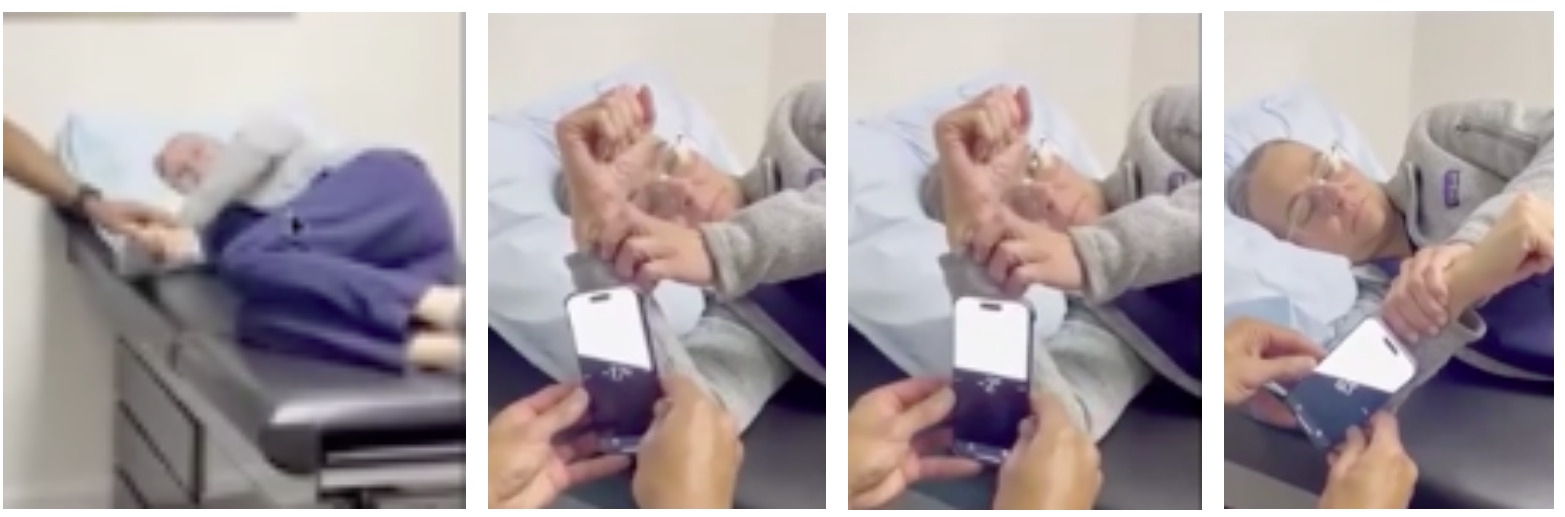
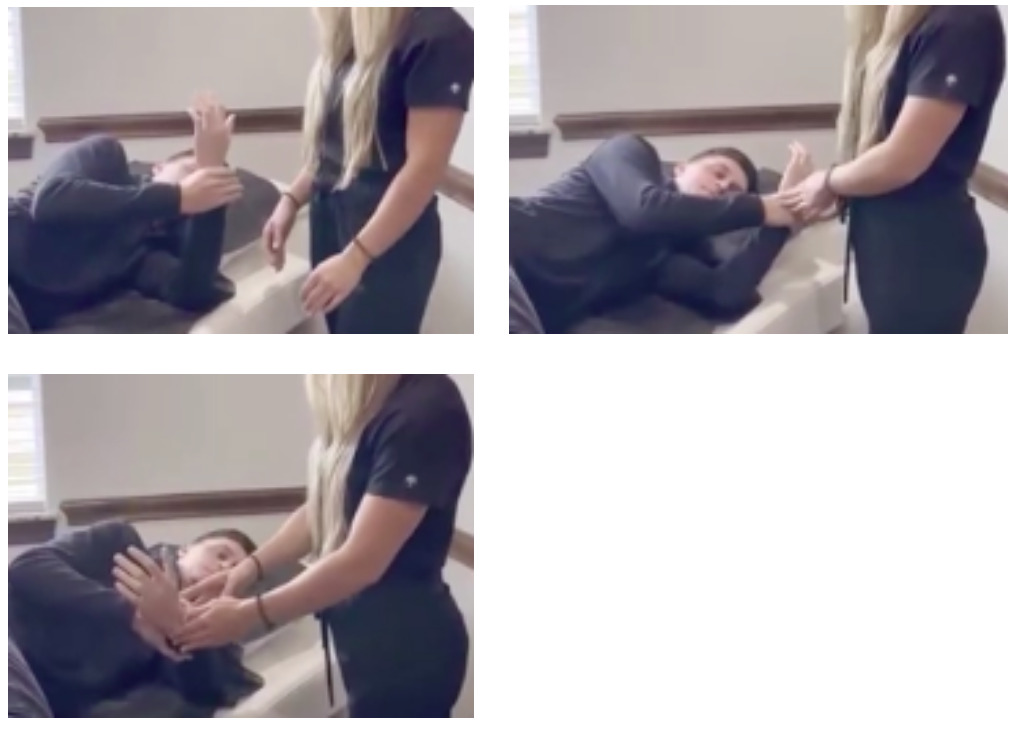
It’s not very complicated at all. Patients can do this at home on their own. This is also how we track our improvement over time, and so this example, this happens to be one of my nurses, and she’s just showing how she’s in this position where she’s lying on her side.
This is called the lateral decubitus position, and this motion is called supine, so she’s lying on her back, but she’s on her side, but it’s supine, abducted external rotation, and abducted internal rotation, and in most humans, that should be 90 degrees this way and 90 degrees that way. (Figures 1A-D) Somebody comes in, and they’re only at 40 degrees.
By definition, they don’t have normal motion. Especially, if we look at the other side, and it’s 90, 90, it should be symmetric, and so any loss of motion is important. Clinically, there are two main reasons why that happened. Number one is frozen shoulder. Number two may be something like arthritis, but we’re talking about passive motion.
I’m not asking her to raise her arm up, because if you lost motion doing that, then you have to throw in some other potential issues, like rotator cuff tear, but if someone’s laying on their side, even with the world’s biggest rotator cuff tear, they should be able to do 90, 90 passively, and if they can’t, it’s, because they’ve got this fibrotic capsule, or they could have advanced arthritis, and that’s easy to sort out in the office, just with an X-ray.
In Phase II, with this problem, which is now a mechanical problem, we’ve now got something that is blocking motion, and this is where orthopedics does well, because we’re not just treating pain. These are the three main interventions that I consider. When somebody shows up in Phase II, or even in Phase III, which we’ll talk about in a minute.
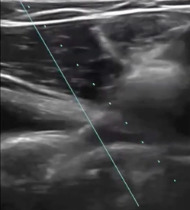
If they’re in the thawing phase, and they’ve plateaued, then we often need to go back to one of these options to get them back on course to get back to full motion. I’m going to go through these one at a time, and let’s talk here about the hydrodilation. This is an ultrasound image. (Figure 2) There is a needle that’s coming in from the back of the shoulder, going into the joint right here.
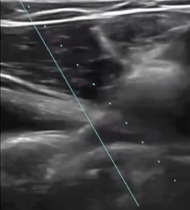
This green dot is tracing the path of the needle, and as we’re injecting. This is just an injection of salt water and the joint capsule. The joint capsule expands as we inject salt water, and for the clinicians, the question is, how much do you inject? I inject until they make me stop. Ideally, I would tear the capsule. We want to break that fibrosis up, and so people will benefit. Whatever you can put in is great. If you can do a nerve block and use some other little tricks that we have in the office, you can get in enough fluid to significantly distend the capsule and significantly help someone’s range of motion right away. This can be repeated in the office, and it’s very safe to do.
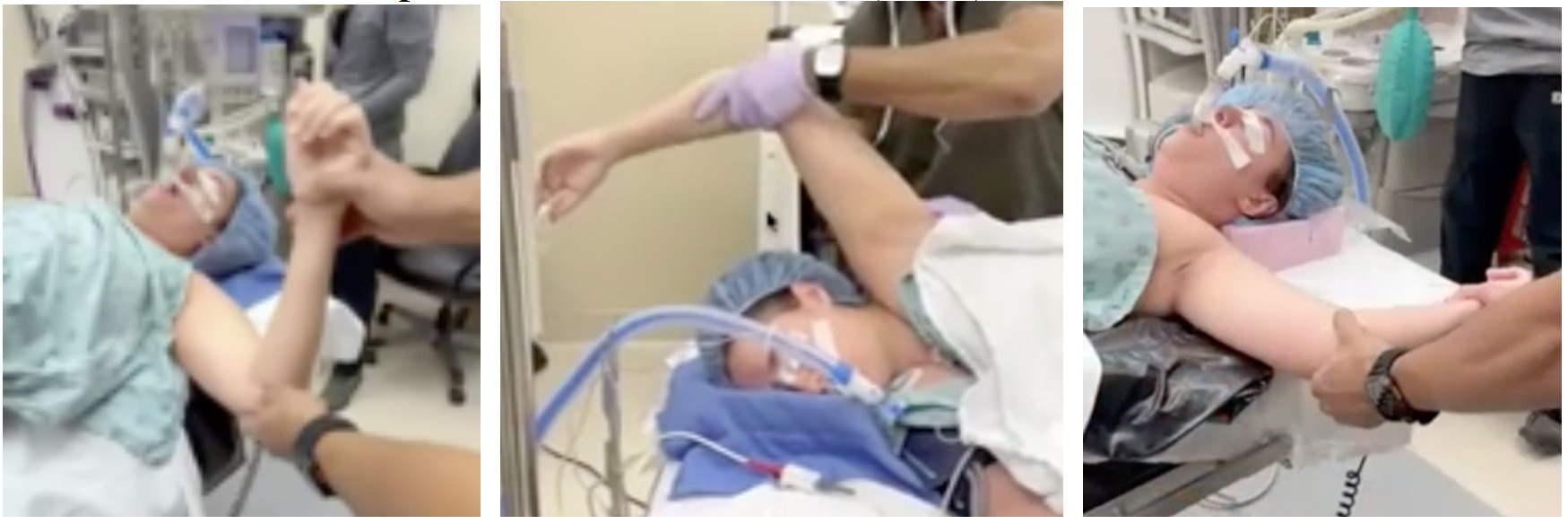
Let’s talk about the second option that was on the initial slide, the manipulation under anesthesia. (Figure 3)
.png)
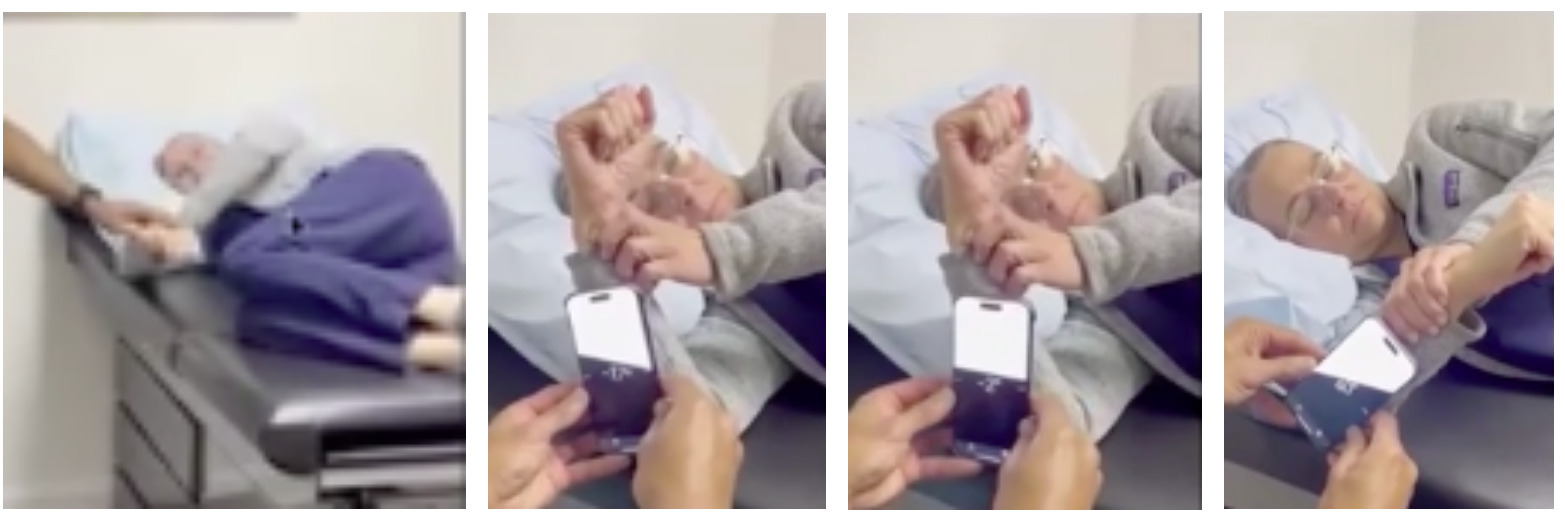
Obviously, this is in the operating room, because you need to give the patient a little bit of anesthesia. (Figure 3A) She’s not completely intubated like a surgery, but she does have what’s called an LMA or laryngeal mask that is protecting her airway. She does not have good motion, and this is my point that, when you’ve got this fibrosis, it’s not because patients are malingering. It’s not because people don’t want to move their shoulder. It’s literally that bad whether they’re awake or asleep. This is the supine abducted external rotation. She’s only going about maybe 10 degrees here, and remember, it should be 90. Her arm should be all the way down, and when you go in internal rotation, she’s not going much farther.
We’re doing the manipulation. (Figure 3B) If you see videos online (and I’ve seen them too), where people are yanking on the shoulder, and jerking it out of joint. That’s horrible, that’s malpractice. That’s not the way we do manipulations. What we should see is that the whole thing in real-time takes two minutes, maybe three minutes to do a proper manipulation.
I want to show you at the end of that manipulation; this is where we’re at. (Figure 3C) Remember where we started, 10 degrees, now she’s back to 90, and this is literally five minutes later. Those five minutes are probably shaved three to six months off of her recovery, and look at internal rotation.
This has gotten better, too, and the reason why we do these tests with somebody on their side, or flat on their back is, because it eliminates the scapula thoracic motion, so your scapula back here, it can move, and you could have a very stiff shoulder, because your scapula is moving. That would make it hard to track progress and outcomes. If you stop your scapula from moving now, anything I do is just the glenohumeral joint, and that’s why it’s a much better test than just the Apley Scratch Test, putting your hand behind your back. But when you do that, your scapula is involved in that motion too. It’s a little bit more precise to have somebody lying on their side, and that’s also why the sleeper stretches work better if you’re lying on your side.
One of the things that’s come up a lot in Dr. Burke’s group; how much is a cash pay manipulation, and how much should it be? An example from a couple of weeks ago, this patient (MUA Procedure, Figures 3A-C) had to pay three bills: Facility, anesthesia, and me as the surgeon. When you add those all up, it’s $2,600 ($1,100 for the facility, anesthesia is $500, surgeon is $1,000). It’s not cheap, but we’re going to save you months to years removed from your recovery by doing something like this. This treatment is only recommended when I’m confident that we can help somebody. Because by the time they’ve hit my office, it’s already been a year, they’ve plateaued, they’ve tried many other modalities, and nothing’s worked. When I lay them on their side, they can’t move at all. With those people, we don’t delay. There’s no reason to delay them getting better, and decreasing their pain, and increasing their motion, and doing this manipulation that leads to a lot of happy people right away. They don’t keep all that motion, but our goal is that after a manipulation, they get better within three months and get back to their full motion.
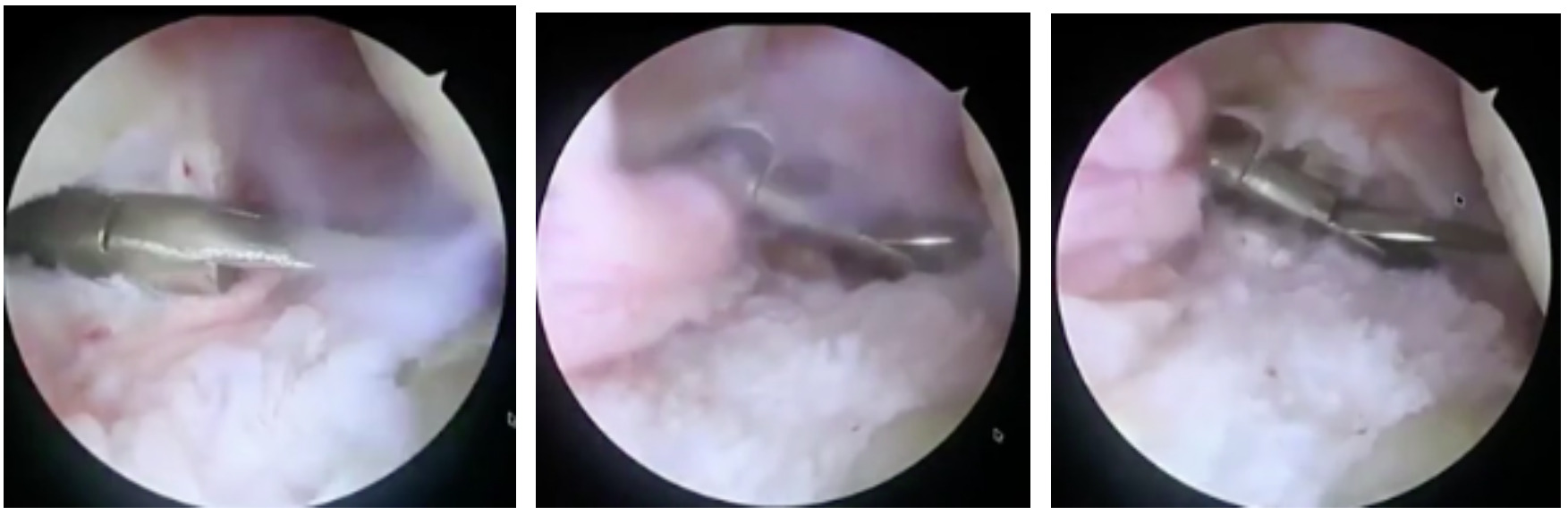
Then finally, the surgical solution, so if it’s surgery, it’s got to involve steel. Here the steel comes in the way of a pair of scissors, and those are scissors coming in (Figure 4A). I know most of you haven’t seen a lot of surgery, but that capsule is super thick. The fact that we can even see the edge of the capsule means that it’s much thicker than it should be, and I’m just cutting from here to here (Figure 4B), and you can see we’ve created a gap (Figure 4C), and that’s exactly what we want to do with the manipulation.
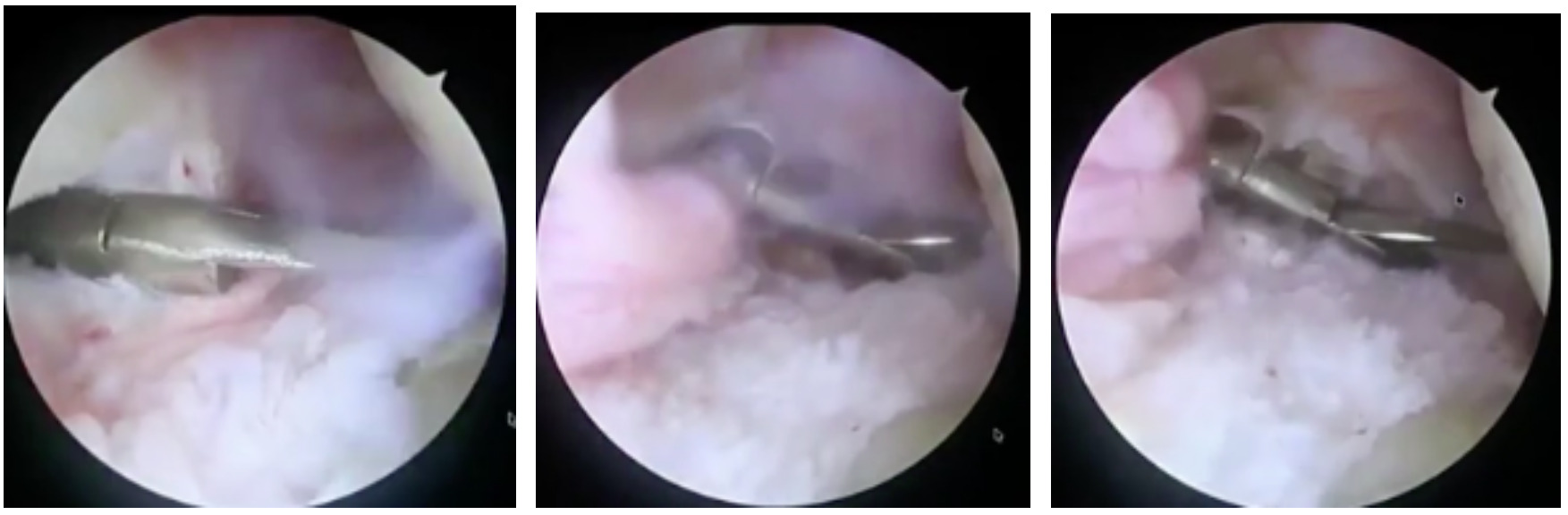
We’ve done hundreds of manipulations, where we then put the scope inside, and it basically tears, just like if we had used a pair of scissors, so whether you’re doing a hydrodilation, manipulation, or an arthroscopic capsular release, the end results should be the same.
I want to give you a couple examples of sleeper stretch, and here we’ll show that he’s going to lay on his side. Again, the reason we do that, the reason you can’t just do it sitting in a chair is, because you must stop the scapula from moving. Not only is this how we diagnose frozen shoulder, this is how we treat it at home with these stretches, and this is also how we measure progress, because as soon as someone gets back to their normal range of motion, they’re done, and so this stretch is something that you do at least twice a day.
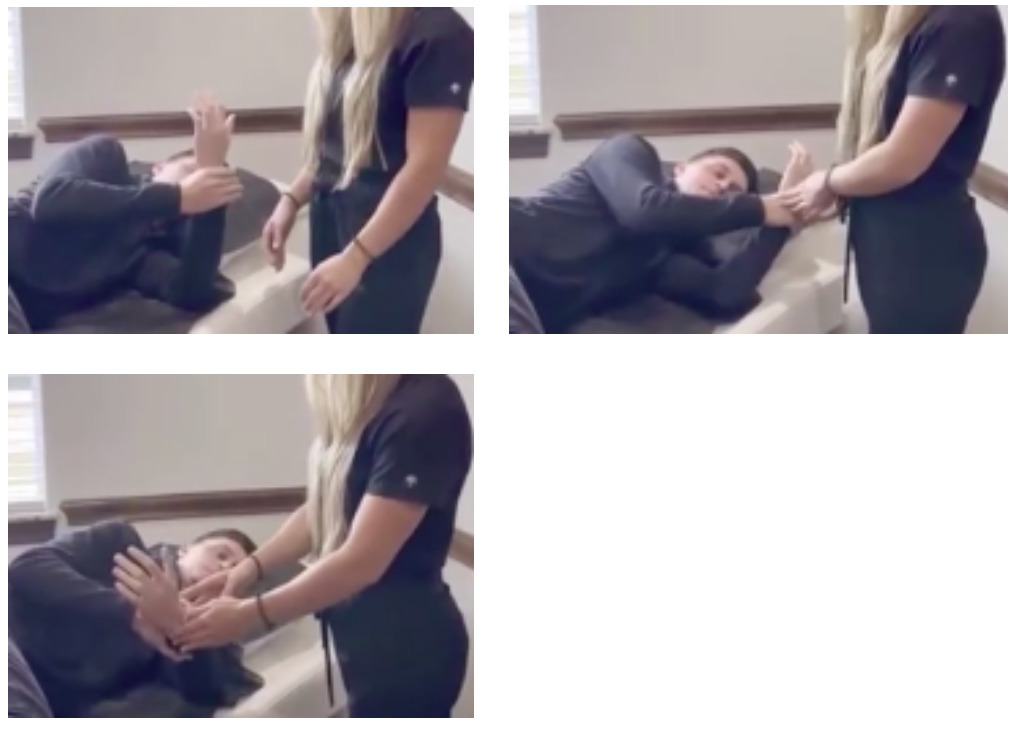
Two sets of 20 repetitions in each direction. Some technical pearls, notice that he’s pushing below his wrist, so he doesn’t hurt his wrist, or his hand, and he’s just going to go to where he feels tightness, and hold it for a 10 count. The whole goal here is to slowly stretch out the remaining tightness, and so we believe in these a lot, because it’s a tried-and-true way for people to get motion back on their own. To the point that I’ve had patients that can’t really afford to go to physical therapy, and as long as they do this three times a day, they get better, they get the same end result.
Let’s talk a little bit about Phase III, so now we’re into the thawing phase, and people are getting increased motion. Again, the caution here is don’t throw the victory party yet. don’t slow down. We still need to be aggressive with our physical therapy. In fact, this is the phase, unlike Phase I, where in physical therapy, you can be more aggressive, you can push things a little bit more. There’s less risk of turning this back into Phase II. So, whether it’s sleeper stretches at home, or working with a therapist at a facility, or both, this is when you can be more aggressive, and now this is how we can also track our progress.
This is just an Apple iPhone (Figures 1A-D). There’s an app called Measure on the phone, and this is just a nice, slick way to measure motion, so you can see here, she’s at negative 18 degrees, and for her normal should be 90, so she’s got about 70 degrees to go in that direction, and in the internal rotation direction, she’s at 40. Normal is 90 for her, so she’s got 50 degrees to go.
Here’s how we use that information. If somebody does sleeper stretches at home, and does it, two sets of 20 repetitions three times a day, they will improve between 5 and 10 degrees per week. If she’s missing 40 degrees of motion, and she gets after those sleeper stretches aggressively, meaning she’s going to get 10 degrees of improvement a week, that’s one month. She’s missing 40 degrees; she’s going to get 10 degrees a week, so we should be able to get her better in one month. She can track her own progress week by week. If somebody doesn’t do it as aggressively, and they only get five degrees of improvement, then it’s going to be two months for them. There’s a definite patient-mediated component to this, where you’ve got to do some of this work at home, where we can’t do that for you.
In terms of putting this all together, we always need to evaluate and address the systemic drivers of adhesive capsulitis. I you’re a patient listening to this again, if it’s you or a family member, or a friend, you need to ask your clinician if they haven’t, we need to look at my labs. I’m perimenopausal, we need to look at these labs, and here’s some ideas, or I need to look at my testosterone levels if I’m a man, or I need to look at my metabolic function. I need to look and see if I might be insulin resistant, or pre-diabetic. All those things need to be addressed as part of the overall package to get someone back to health.
With history and physical exam, is there a history of surgery? For me, that matters, because it may make it much more likely that I do an arthroscopic release with those scissors, because that’s a lot safer than doing the manipulation, if someone’s had surgery.
In terms of the manipulation I’ve had zero complications in 26 years. I was taught by somebody who’s world’s best shoulder surgeon, one of the top three, I think, of all time. I learned a way to do it that was safe and atraumatic. Anything can happen, but knock on wood, it hasn’t happened over the last thousand or 1,500 or however many I’ve done. If I was worried about safety, then we would go to the arthroscopic solution, but a manipulation is not something that anybody on this webinar should fear.
For decreased passive shoulder range of motion. If you have decreased range of motion passively, it’s either arthritis or a frozen shoulder until proven otherwise, and then as a clinician, we need to look at other psychosocial factors.
As a patient, have you had a recent stress in your life, has there been some other emotional trauma? These are things that need to be addressed and sorted out, because they do play a component in the development and perpetuating frozen shoulder.
In terms of imaging, imaging is not needed to diagnose a frozen shoulder, 'm going to say that again: imaging is not needed to diagnose a frozen shoulder. It is a clinical diagnosis. All you have to do to diagnose a frozen shoulder is put someone on their back, and check their range of motion, and if it does not match the other side, it’s a frozen shoulder, or arthritis. If you happen to have an X-ray, you can sort out which one it is between those two with a simple X-ray, an axillary lateral X-ray. We get imaging, though, almost all the time, and so, I know you’re all thinking, Donnie just said, we don’t need imaging to make the diagnosis. Why would you get imaging? The reason is sometimes frozen shoulders happen because your body’s trying to heal some other injury, and the process just goes off the rails. Your body’s trying to heal a small rotator cuff injury, for example, and for whatever reason, maybe you’re predisposed, because of some insulin resistance. Now, your body starts creating this collagen response that is overaggressive, so we get the imaging to look and see if there’s any of these other injuries that we need to be aware of. Like a rotator cuff tear would be a good example.
A slap lesion, which is a biceps tendon anchor tear inside the shoulder, may be a loose body in the shoulder. That’s why we get imaging. It can confirm a frozen shoulder sometimes, but we’re not, at least in my practice, I’m not ordering imaging to look for frozen shoulder in the freezing phase. Remember, our goal is to decrease inflammation and prevent loss of motion.
We use medications and supplements. We use ortho-biologics like PRP, which we inject into the joint, and we use other anti-inflammatory modalities. Things like you’ll hear about DMSO, and some other things in Burke’s book, and then, the sleeper stretches are usually something we can count on in any phase, honestly.
In the frozen phase, this is when we can have the biggest impact on people’s recovery time because they now have a mechanical problem. They have a capsule that is measurably abnormal and thicker. The manipulation under anesthesia is the most predictably effective option here for shortening recovery. There is nothing wrong with the hydrodilation in the office. As I said, it’s easy to do. You don’t need to book time in a surgery center or in a procedure room.
I do a fair number of hydrodilations, and often, if that does the trick, then we never get to a manipulation under anesthesia. Even a second hydrodilation can be done before you go to a manipulation, but for the patient that comes in that’s really locked in, and frozen, we will certainly have the manipulation under anesthesia as an option.
Again, the arthroscopic capsule release is the ultimate option, where we physically cut the capsule and watch that capsule release. My goal is that with an approach that’s focused on first on the systemic drivers, and then using aggressive phase-specific therapies, we can, and even beyond we can, we should shorten the time frame from one and a half years, or beyond, to three months from the time that any patient hits my door. If I can’t get someone back in three months. I’m not happy, and obviously, they’re not happy either. But that is our goal, and we meet that goal. Oh, a large percentage of the time, above 80% of the time. It’s a study that we probably need to do, but we have a lot of testimonials and patients who will attest to that.
Remember, though, that this is a partnership. I can do some of these things, and clinician can do some of these things, but you’ve got to take the medication, you’ve got to make some lifestyle changes. If those are important on the systemic side, on the stretching side, you must do those stretches on your own, so it’s a partnership, and work is required by both of us.
This is the book that Dr. Burke has. It’s up on Amazon (paperback, kindle and audiobook) and lists many more treatment options, and some fantastic ways to think about frozen shoulder that will help a lot of you in this journey to get better. (Burk L, Northrop C (2025). Frozen Shoulder Healing. Healing Imager Press, Durham, NC, USA. ISBN-13: 979-8281282451)
The Facebook Group
https://www.facebook.com/groups/412872845743931/
If you’re not in the Facebook group, and you’re on this call, please join. This has almost 61,000 members now. It’s the frozen shoulder healing group, and it’s a great place to exchange ideas, to look for support, to post questions. It’s been a tremendous resource for me, just to see what people are struggling with, and to see what the most common questions they have need answering.
Thank you, you can find me on all these different social media platforms, usually under Dr. Don Buford. I’m probably on LinkedIn and YouTube the most.
LinkedIn: https://www.linkedin.com/in/drdonbuford/
YouTube
All of the videos you see in any of the talks that I give, including a lot of the talks, are actually on YouTube, under my name, and if you want to see patients that have had frozen shoulder at various stages, and had various treatment options, you can go to our website,
Web Site: www.texasorthobiologics.com
QUESTIONS
-
When you are going through the freezing state, should you do physio to try and maintain your range of motion, and just allow the process to take place?
-
If you do physio, should you still do exercises, stretches?
-
If they cause the deep cramping pain in your arm, how do you know the right amount to push yourself without making the situation worse?
That’s something I talked about in Phase I. In the freezing phase, it is important to maintain your motion, and so gentle, but the key is gentle. Remember, you don’t want to come home from therapy or even finish a session at home where you’re hurting. One of the guidelines I give people is, you shouldn’t be hurting the next day from a therapy session.
Not in this phase. Maybe in Phase III, but not in this phase, and the reason is you don’t want to create any rebound inflammation that would create this loop that would make things worse instead of better, so the answer is yes, I think you should still do physio. I think you should still stretch.
A lot of insurance companies in this country only give people a certain number of physical therapy visits, which is grossly unfair, in my opinion, for the premiums they charge us, but you need to know that, if you only have 24 therapy visits, I’m not going to burn them in phase one for a patient, because you can do sleeper stretches at home, and we may need those physio visits, if we get to phase two.
If somebody’s doing sleeper stretches at home, and they’re doing fine in phase one, we’ll stick with that. If, for some reason, it looks like they’re not getting better, that might be the time you start to incorporate formal physical therapy, so we got that one.
-
How many times should you repeat hydrodilation?
-
How many times should you repeat steroids before you go to MUA?
I will repeat a hydrodilation if the patient tells me they got measurable improvement, because there’s no downside to it. It’s low-cost. It’s in the office, and I’m happy to do that. I think the manipulation is a more powerful treatment, but here’s the thing, though. That cash pay cost isn’t for everyone. Somebody could have insurance, or an MUA could cost them $300, or even zero, if they’ve met their out-of-pocket for the year.
We always make sure patients know not only their options but also the relative costs of each option, so they can make the best decision for themselves. I will repeat a dilation if it has a benefit; I don’t like doing a lot of steroid injections in the joint. If there’s any way to do PRP, I greatly prefer that, because we’ve got data now showing that even the very first steroid shot starts a negative cascade for the cartilage, which isn’t part of this frozen shoulder problem, so I hate doing a treatment that potentially will create a problem downstream.
- It’s been two weeks after having the first hydrodilation. How much time do you recommend in between treatments?
After a hydrodilation, you’ve got to give people at least a month to work on their stretching to see where they’re going to end up, and that’s another thing.
Patients with frozen shoulder, I’ll see them monthly. We need to keep track of, and if it’s really bad frozen shoulder, I may even see them every couple weeks, but because I want to make sure that they’re holding up their end, and that I don’t have something else that may potentially help them, but after a month, if they come back in after a hydro dilation at a month and the visit goes something like that really helped, but I think I’ve plateaued.
I’ve gone from 20 to 60 degrees, but this last week, I haven’t gained anything, and that’s when we think, okay, well, we’ve got the same. We can MUA, we can do another hydrodilation. What do you want to do?
- When people ask about repeat steroid shots, is there a recommended interval there?
I wouldn’t do it any sooner than a month, but that’s just my experience and thought. A lot of us in the regenerative medicine world are going to much lower doses of steroid than, we were brought up or taught to do in medical school back in the late 90s, and so instead of doing, like 40 milligrams of a steroid like Depo-Medrol, we’re putting in a half, or most of us actually even sign, like maybe even a tenth of that, and seeing the same benefit.
Trying to minimize the steroid dose is important, and if we do that, then that would be a one situation, where I would do multiple steroid shots, but again, trying to have a month in between for the same reason.
- Does hormone replacement therapy help with frozen shoulder in women going through menopause?
100%, remember that, it’s the decrease in estrogen that leads to the upregulation of inflammation, of fibrosis, of many other things, that the final common pathway is fibroblasts are making more collagen, and that collagen is not normal collagen on top of it, so normalizing that as much as possible, is actually a valuable thing to do for most perimenopausal women.
- I am six months in with a frozen shoulder. I feel I’m starting to thaw but still have much pain some days. Other days are better. Is it too early to be thawing? Range of motion slightly better, but I can lift my arm, but I wonder if that means I can’t lift my arm much at all.
Remember, we said these phases are nice, and especially, if you look at the history of frozen shoulder, and who described it, and it was orthopedic surgeons, and we like very simple ABC. Small, medium, large.
There’s no orthopedic classifications that are 15 long. Actually, it’s not true, but there’s not many of them, and none of us like it, and so we have these phases for frozen shoulder, but that doesn’t mean that every person automatically fits one phase, and so you can have pain and be thawing, you can have pain and be frozen.
You can be in the inflammatory phase, and there’s shades of gray. As you start to get more frozen, you may start to have more pain, so the answer to your question, you could be in the thawing phase, and still be having pain, but the key is, it’s hard to miss a little bit of the frozen phase, and you’ve already hinted at that, because you say your range of motion is slightly better, but you can’t lift your arm much at all.
Given that everything else is already in the works as far as being sorted out, like there’s no other injuries, and some of the systemic issues are being addressed, then I would say, we go after the main culprit right now clinically, which is your lack of motion, so that would put you for me, in terms of treating a patient with this presentation.
We want to get you to where you can move your arm, and we’ve got hydro dilation, MUA, arthroscopic capsular release, and usually it’s hydro dilation and MUA, because again, the ACR is not done very often.
I don’t think it’s too early to be thawing, it’s the ultimate answer to your question, but I do think range of motion is where you need to spend a lot of your time right now.
- Many people have been scared about HRT due to side effects in the past, but do the benefits exceed the risks?
Unfortunately, if they’re going to their doctor and saying, “what does the literature say?” My Duke colleagues showed that if you’re on HRT already, you have half as much chance of getting a frozen shoulder, so that’s a preventative. Unfortunately, there hasn’t been a single paper yet showing that going on HRT will improve your frozen shoulder. Although we have people on in the group saying it did help. Other people say, I’ve been on HRT for three years, and I still got two frozen shoulders.
- How would one manage someone who had chronic rotator cuff tear and frozen shoulder in a 75-year-old woman?
The key in that question is a chronic rotator cuff tear, so someone has not had surgery. It’s not a rotator cuff repair. If someone has a chronic tear, then we basically would politely ignore it if that’s been the treatment decision.
Frozen shoulder is always the number one thing you have to get better, so let’s just say with this question, that somebody came in, and they had a newly diagnosed rotator cuff tear, and a frozen shoulder, I don’t just go to surgery. We must get the frozen shoulder better because surgical results are horrible if you don’t have the frozen shoulder addressed. It doesn’t have to be 100%.
You can get by if someone’s got 70 degrees, because you can do a little manipulation at the time of surgery, and safely do the surgery, but if somebody is deep into the frozen phase, and you operate on that shoulder, which is going to require them being still for anywhere from two to six weeks, you’ve just taken them from frozen Phase II, locked in concrete, and it is really hard to get their motion back, and whatever you tried to fix, has a lower chance to heal, too.
That’s a little bit different. If the tear is chronic, the decision’s already been made that we’re not repairing that. And if that’s been the decision, which sometimes happens, then we just re-treat the frozen shoulder and see how someone does clinically. If you treat the frozen shoulder, and their motion comes back, even with a tear, because people with tears can still have shoulder motion, then. Then, that’s the result that we’re shooting for anyway.
- Is there a recommendation for how much vitamin D to supplement?
If you’re in a situation where you’re getting labs tested, it’s easy for them to throw a vitamin D onto that, but I wasn’t joking when I said it’s cheaper to supplement than it is to test.
Basically, if you go to a pharmacy and buy vitamin D supplement, and just take that as directed on the bottle, that will do the trick. And usually within a relatively short amount of time, unless you’re very deficient.
If you’re having other symptoms, whether chronic disease symptoms or not, then I think it’s worth getting the test. If you’re just getting started in this frozen shoulder diagnosis, it’s of part, part of the workup to evaluate some of these systemic causes.
- Could I have caused my frozen shoulder by starting HRT and then stopping it? I restarted HRT after the diagnosis of frozen shoulder, but I’m already in a lot of pain and loss of range of motion.
It sounds like this patient might have pushed themself into an inflammatory state by stopping the HRT. Getting back on it again, it can’t hurt, but you might have to do some of the other things Don’s recommending.
- Can you please show how far a person in the frozen state can move their arm up and out to the side?
Anything less than normal for me is frozen.
Let’s just say that this is my normal side, and I can come out, and abduct, and I can get behind my back. And on this shoulder, I can get all the way up, and I’m stiff, because this is my throwing arm, and I’ve just got decades of abuse on this shoulder. But let’s just say on my other shoulder, I’m coming in to see myself. I haven’t lost a lot of motion. It’s not the same, so that, by definition, is frozen to me. Especially, if that’s the reason I’m coming in. If I’m coming in, because my knee hurts, and this isn’t even a problem, because it doesn’t hurt, then all bets are off, but that simple decrease in motion meets the definition of frozen shoulder, and then the next little bit of the puzzle I need is this arthritis, or is this truly capsular thickening?
An X-ray solves that, and then any other imaging is really to see any associated problems, whether it’s ultrasound, MRI scan, or whatever else we get, so you literally could be up to here, and still have the beginnings of a frozen shoulder.
Some people come in, and they’re really locked in, then it becomes pretty obvious. If they’re just sitting on my couch in the exam room, I still don’t know because they have a huge cuff tear or a frozen shoulder or something else that’s limiting their motion. But I laid them on their side.
If on their side, they go back, and they can do full motion, it was, because they probably had a cuff tear, and imaging is going to show that. But if they come in and I lay them on their side, and they are still limited, its frozen shoulder, or arthritis, but likely a frozen shoulder because she’s a 50-year-old woman, with no history of arthritis, and the story matches a frozen shoulder. There’s a big range. There’s a range from zero, literally from zero to 90 degrees to all the way close to normal. That could meet the definition of a frozen shoulder.
I read the rest of your message here. The best thing you can do at home right now is probably the sleeper stretch in terms of working on your motion and maintaining your motion. It’s hard for me to give direct advice, and I’m not supposed to, according to multiple legal recommendations from various organizations.
In general, if someone came in with that situation, we would go after the easiest things first to correct, which would be doing a rigorous home stretching program, which again, there’s other stretches besides sleeper stretch.
Just in my experience, that’s been by far the most effective. If somebody can’t move their shoulder at all, then yeah. If someone is locked in, that’s the person that goes straight to an MUA for me.
And on balance, people after an MUA are somewhere in here, and they get from here to there over the next one to two months. That’s our goal. That is the sum, a cheat sheet on how we get people better in about three months.
If they need an MUA, we don’t dilly dally, and if they don’t, because they’re close enough that we think they can get there without it, we do a hydrodilation and make sure they’re aggressive in their physical therapy, whether it’s home or at a facility.