
Introduction
TikTok (ByteDance, Beijing, China) is currently one of the most rapidly expanding social media platforms globally (Xue et al. 2022). While predominantly used for entertainment objectives, its concise video-oriented format holds promise in facilitating the dissemination of health education by medical professionals and physicians, catering to both the general population and peers in the field (Anastasio et al. 2023; Tabarestani et al. 2023; Bethell et al. 2023). The brevity and accessibility of the videos, as well as the application’s algorithmic content curation in the “For You Page” contributes to wide-ranging outreach, particularly with younger cohorts, as 41% of TikTok users are aged between 16-24 years old (Comp et al. 2020; Eghtesadi and Florea 2020).
TikTok also presents as a potential tool for enhancing educational outreach at various training different levels, including those in practice, residents, and students within the field of orthopaedic surgery. This platform may be used to effectively convey medical concepts, similar to the precedent set by other video-based platforms such as YouTube and Instagram (Jildeh et al. 2021; McMahon et al. 2022; Yaradılmış et al. 2020). As the field of orthopaedics continues to evolve, there arises a subsequent necessity for similarly innovative teaching methods. The short video format of TikTok may allow educators to expeditiously engage and inform learners on topics, ranging from case presentations to discussing recent advances in the field. This tool has the potential to be widely embraced by orthopaedic surgeons to succinctly expound upon intricate cases and operative techniques. However, the precise impact of TikTok on the orthopaedic learning experience remains unknown.
Few investigations into the orthopaedic surgery-related content on TikTok have been completed to date (Anastasio et al. 2023; Tabarestani et al. 2023; Bethell et al. 2023). Recent publications have undertaken a targeted analysis, concentrating on videos focusing on exercises and patient education pertinent to specific orthopaedic injuries (Anastasio et al. 2023; Tabarestani et al. 2023; Bethell et al. 2023). Notably absent is a comprehensive investigation encompassing a wider spectrum of content, embracing videos related to orthopaedic surgery more broadly, gauging their overall popularity. A major gap in knowledge exists pertaining to trends and descriptions of the most popular orthopaedic surgery content shared and consumed on TikTok to date. Further, the potential implications of utilizing the platform for topics including case or research discussions between orthopaedic surgeons and trainees, educational videos on different pathologies, recruitment of prospective students to the field, highlight the day in the life of an orthopaedic surgeon have not been assessed. Thus, the aim of this study is to describe and assess the top 100 most-liked videos on TikTok related to orthopaedic surgery through content classification of videos, validity of videos, and viewer engagement rates, including number of views, likes, and comments.
Methods
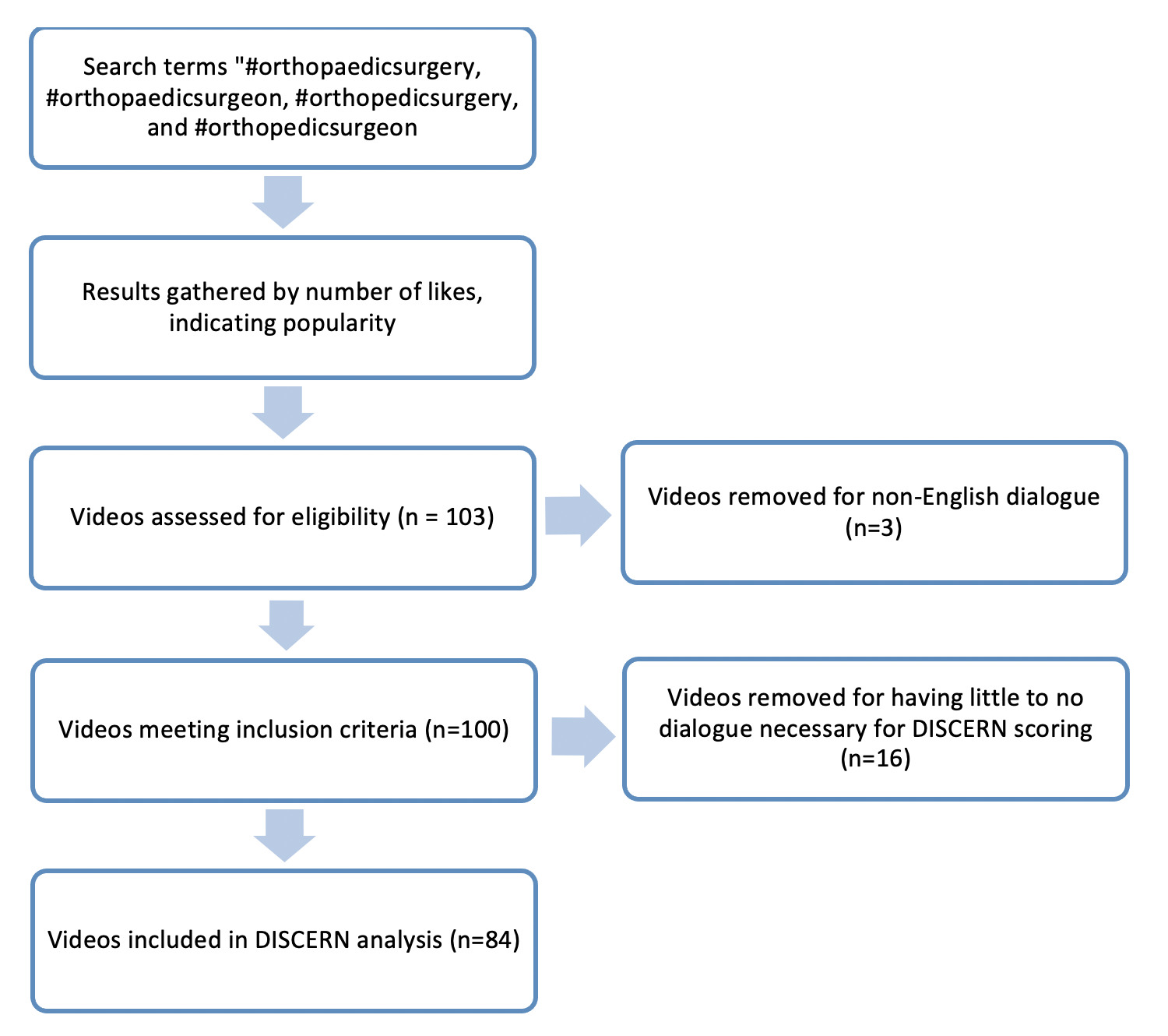
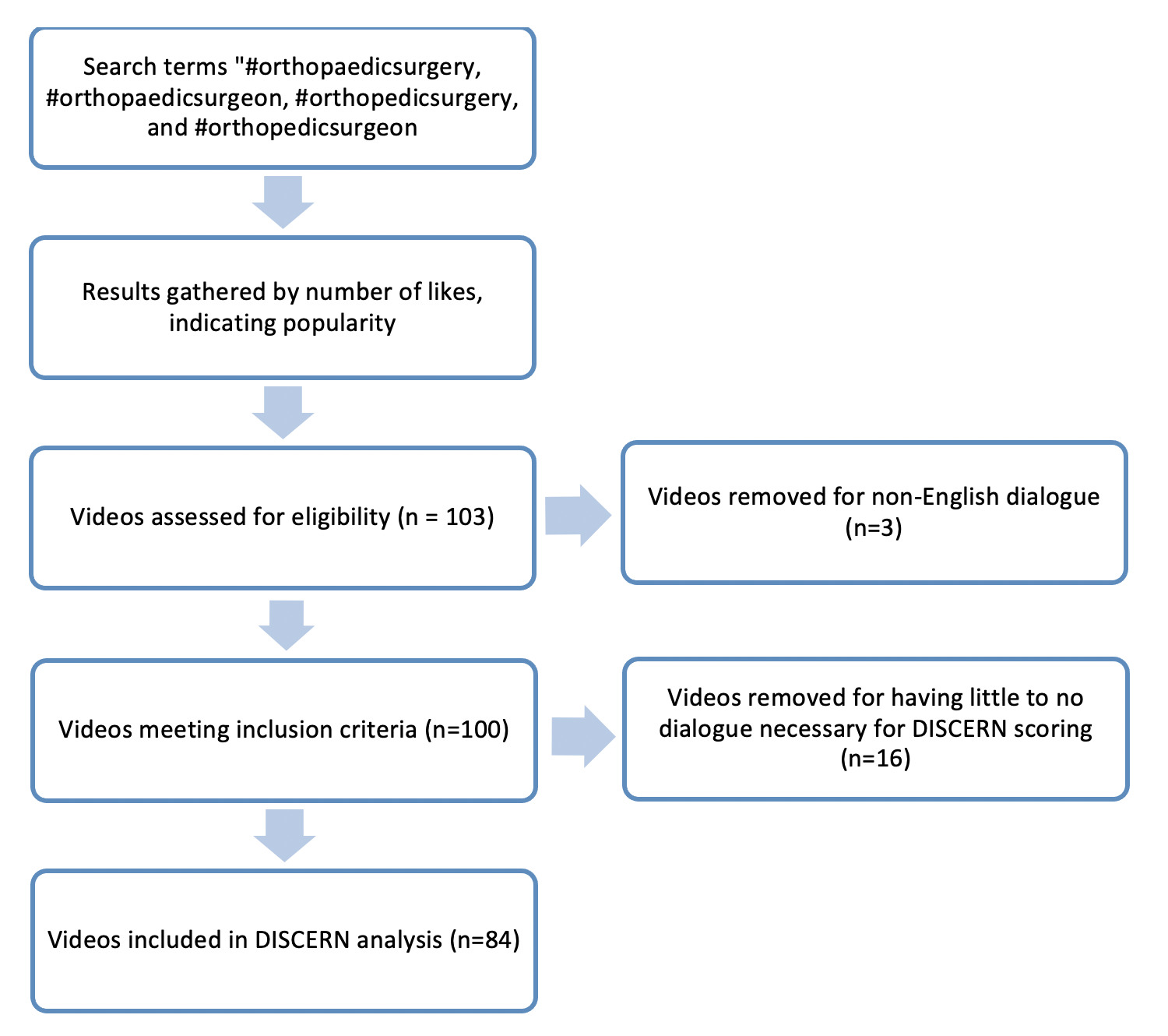
We utilized a hashtag search of the TikTok application on October 16th, 2024 for videos tagged “#orthopedicsurgery,” “#orthopedicsurgeon,” “#orthopaedicsurgery,” and “#orthopaedicsurgeon” (McBriar et al. 2022). A new TikTok profile was created to perform the search to limit influence of the TikTok algorithm that utilizes user preferences to filter types of videos presented on one’s feed. The 100 most-liked videos across the four hashtags on this date were selected for inclusion (Figure 1).
Data collected from each video included time characteristics (e.g., date posted, video duration), content characteristics (e.g., use of audio or combinations with other videos), and engagement characteristics (e.g., number of hashtags, and total video views, likes, comments, saves, and shares). Following video assessments, the video creator profile of each video was assessed for similar content and engagement characteristics, such as type of account, total followers, and total account likes. The type of account was determined to be an orthopaedic surgeon, a non-orthopaedic surgery (non-OS) physician, a non-physician healthcare practitioner (HCP) or student, a non-healthcare practitioner/worker (non-HCP), or an academic institution. Finally, the video’s overall intent was classified as entertainment, educational, procedural, and/or lifestyle. Videos that fit multiple categories were designated as such. Videos designated as entertainment included those with humor, dancing, and/or any other content that was deemed to entertain viewers. Educational designation included videos that taught about specific topics in orthopaedic surgery, discussed clinical cases, evaluated radiographic imaging, or was otherwise determined to provide educational content. A procedural designation was given to videos that went over techniques used for surgical management such as fracture stabilization or device implantation. A lifestyle designation was given to videos that displayed the daily life of an orthopaedic surgeon in clinic or the operating room, life at home, how one became an orthopaedic surgeon, or how one is training to become an orthopaedic surgeon. Video designation was discussed by the three reviewers (CJT, MRB, and EAM) and discrepancies were discussed until a uniform decision was made, with some videos being assigned to multiple categories.
The DISCERN criteria, a previously established reliable and valid method for evaluation of the validity of healthcare video content, was used to assess quality of content (McBriar et al. 2022; John et al. 2022; Rehman et al. 2021; Ward et al. 2019). Each reviewer (CJT, MRB, and EAM) used the DISCERN criteria to independently evaluate the validity of each video based on a 15-question panel and a one to five-point Likert scoring system. The panel included questions to assess the reliability, overall quality, clarity of goals, and delivery of unbiased information. One point was given to videos that did not answer the specific question, three points to videos that partially fulfilled the question, and five points to videos that entirely did answer the question. The final scores ranged from 15 to 75 points with scores between 15-26 rated as very poor video quality, 27-38 as poor quality, 39-50 as fair quality, 51-62 as good quality, and 63-75 as excellent quality (McBriar et al. 2022; Ward et al. 2019). Videos without any specific text or dialogue were excluded from the DISCERN rating and subsequent statistical analyses.
Statistical Methodology
To assess the reliability between reviewer DISCERN scores, a two-way mixed-effects model was performed. Kruskal-Wallis H tests were also performed to identify variation in DISCERN scores between account/creator types and video intent. Follow-up post-hoc Mann Whitney U tests were also performed. All statistical analyses were completed on SPSS Version 28 (IBM Corp, Armonk, NY).
Results
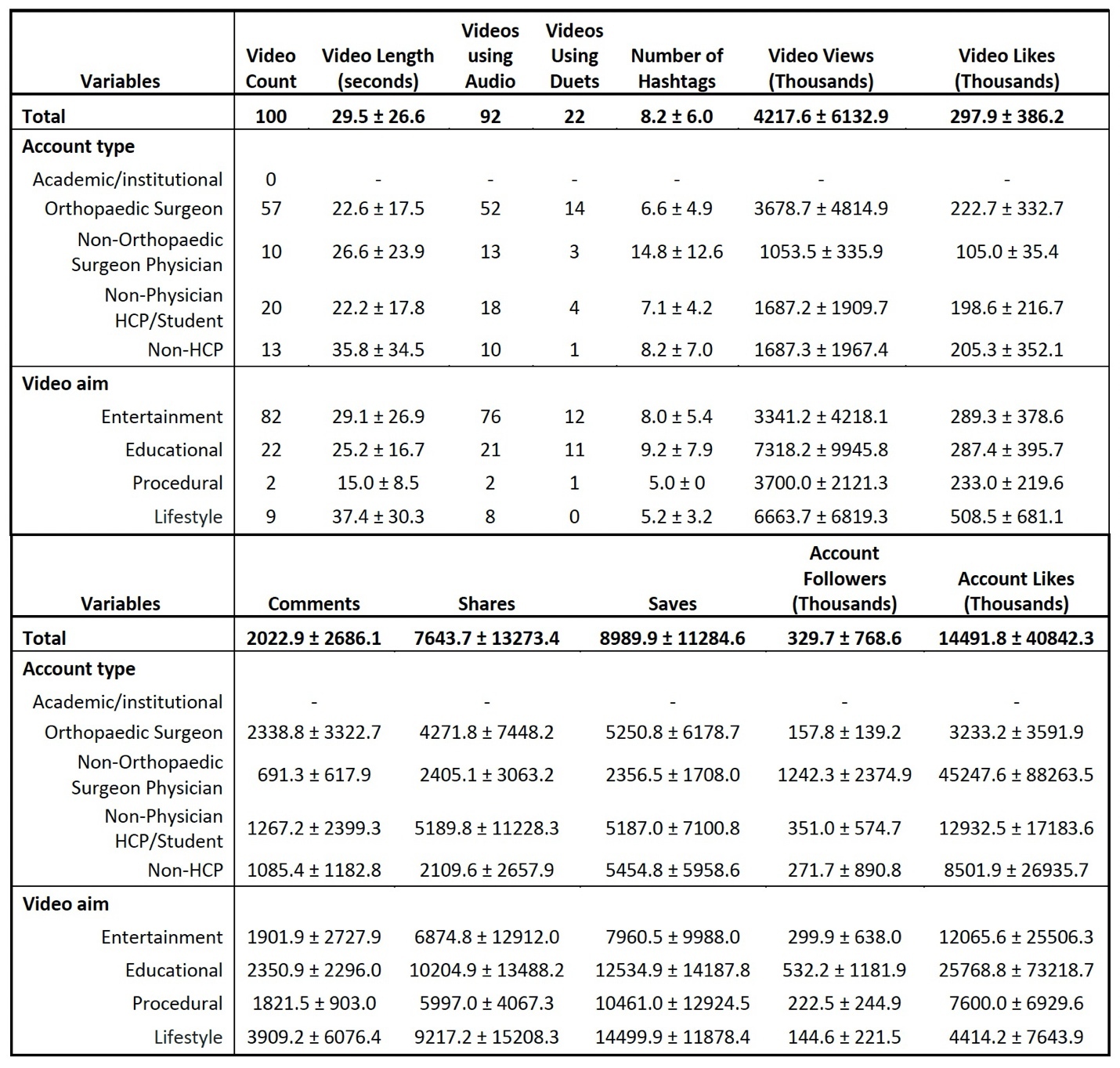
A total of 103 videos were assessed for eligibility of which 100 videos were included (Figure 1). The oldest video was posted on April 15th, 2020, and the most recent on September 7th, 2024. At time of collection, the cumulative totals of all videos were 422 million views, 29.8 million likes, 202,000 comments, 898,000 saves, and 764,000 shares. For the creator accounts, cumulative totals were 33.0 million followers and 1.45 billion likes. Orthopaedic surgeon accounts averaged 157,800 followers and 3.2 million likes. The mean video duration was 29.5 seconds. Audio was used in 92 videos, and duets, where one account makes a video overlaying a separate video, were used in 22 videos. The average number of hashtags per post was 8.2. Of the 100 included videos, 57 were posted by orthopaedic surgeons, 10 by non-OS physicians, 20 by non-physician HCP or students, and 13 by non-HCP. The most common orthopaedic subspecialties represented were joints (n=28/57), hand (n=6/57), residents (n=6/57), and sports (n=5/57). The video content aim included 82 videos designated as entertainment, 22 as educational, two as procedural, and nine as lifestyle. Complete video characteristics cumulatively, by account type, and by video aim are included in Table 1.
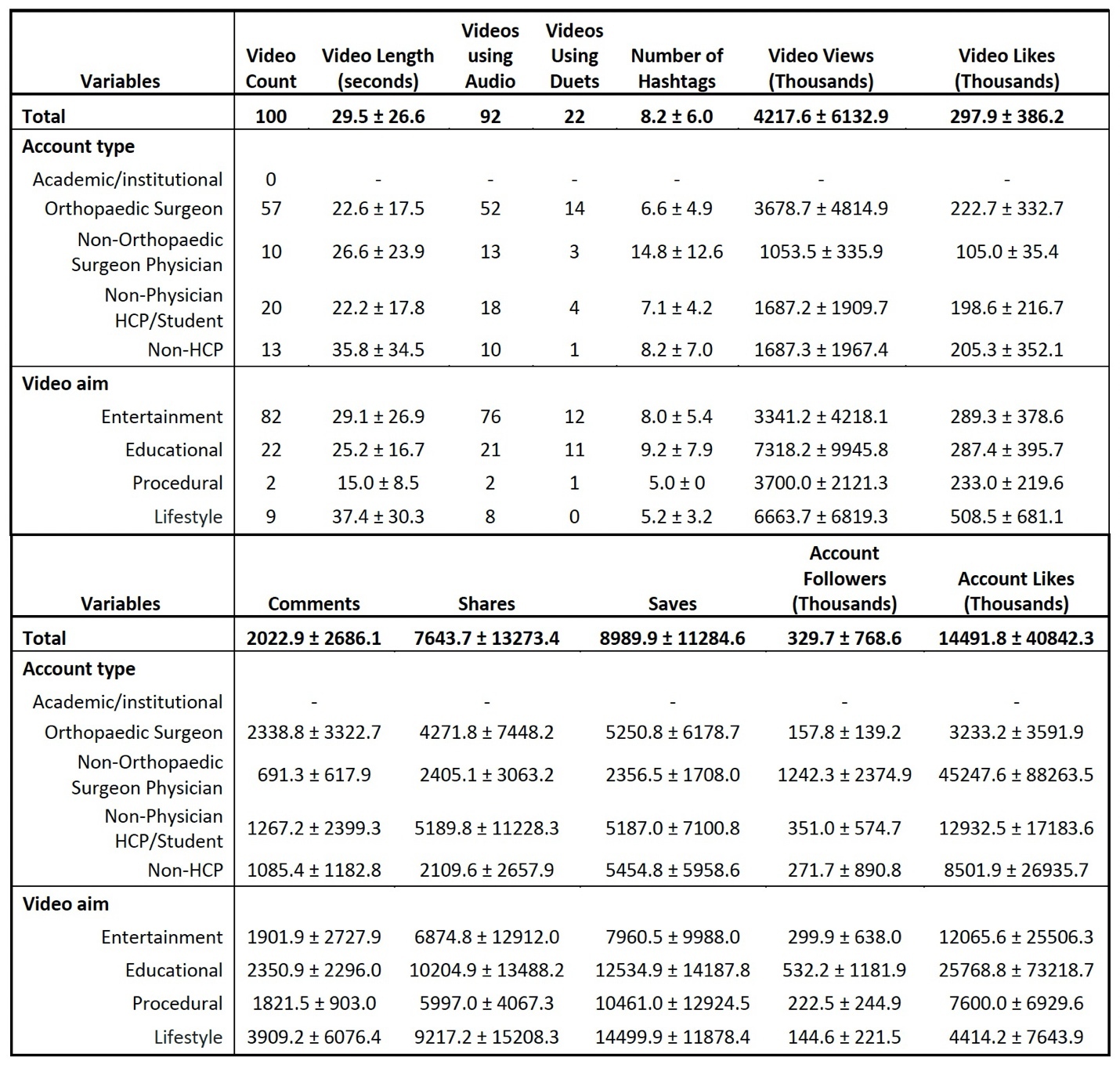
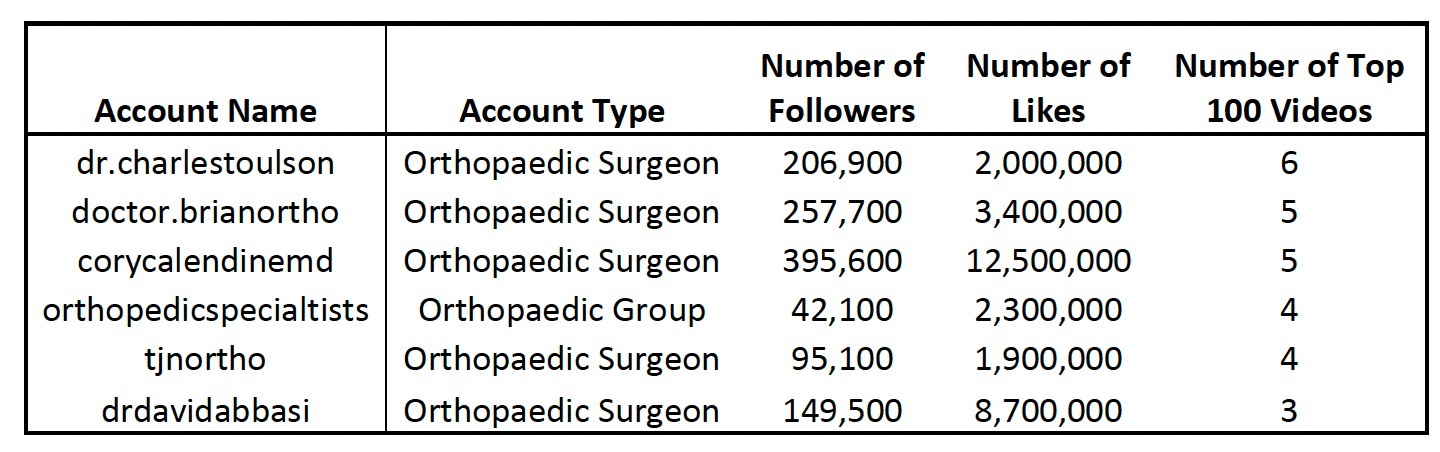
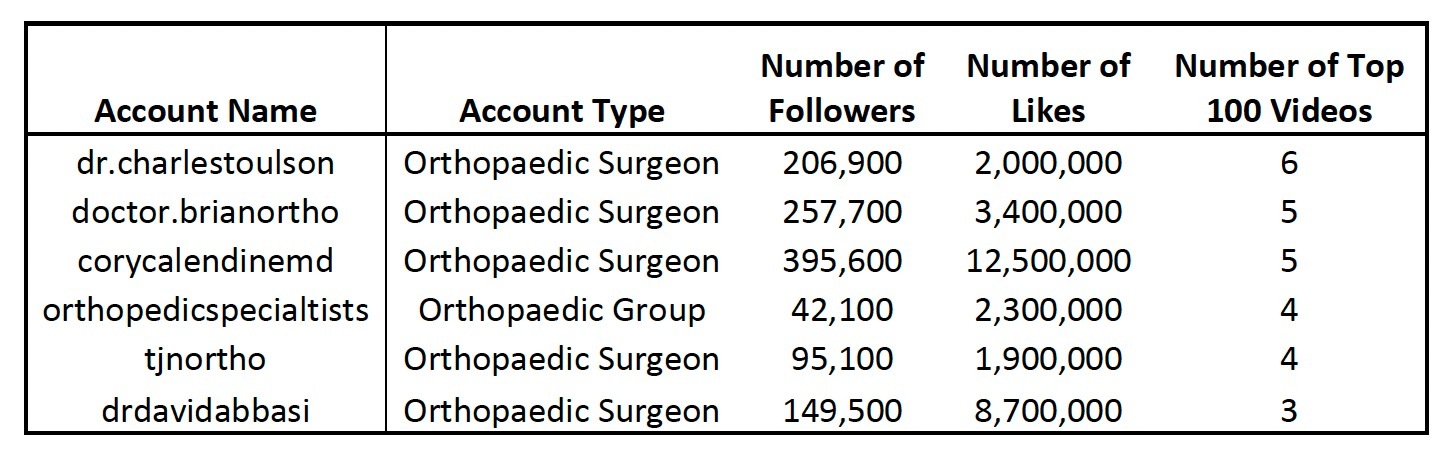
The six accounts with the highest representation, determined by number of videos included, are described in Table 2. These six accounts made up 27 of the 100 included videos. All six creators were orthopaedic surgeons groups with their content predominantly for entertainment purposes. The average number of followers of these accounts was 191,000 and total number of likes on each account averaged 5.13 million.
Of the 100 videos assessed, 16 were excluded from content validity scoring due to having minimal text, speech, or dialogue. The remaining 84 videos were assessed for validity using the DISCERN criteria. The interclass correlation coefficient for consistency in the DISCERN criteria scores between all three reviewers was 0.904 (95% Confidence Interval: 0.869-0.932), indicating good inter-rater reliability (Koo and Li 2016).
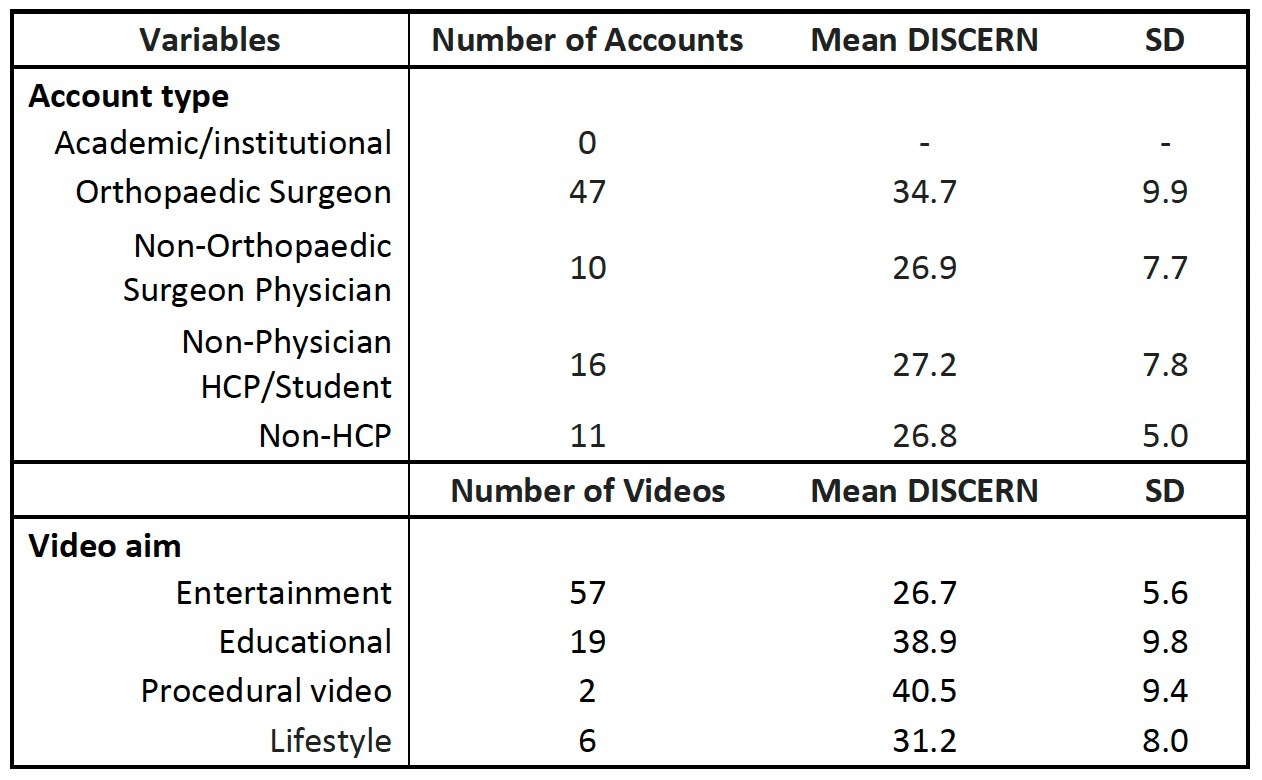
Average DISCERN scores evaluated by content creator type were 34.7 for orthopaedic surgeons, 26.9 for non-OS physician, 27.2 for non-physician HCP or student, and 26.8 for non-HCP. The Kruskal-Wallis H test results between content creator type showed significant differences in DISCERN scores for videos made by orthopaedic surgeons and each other content creator type (H = 59.0-67.1, all p values<0.001), indicating greater validity of videos made by orthopaedic surgeons. No other differences were observed in comparisons between the other groups. Complete data are shown in Table 3.
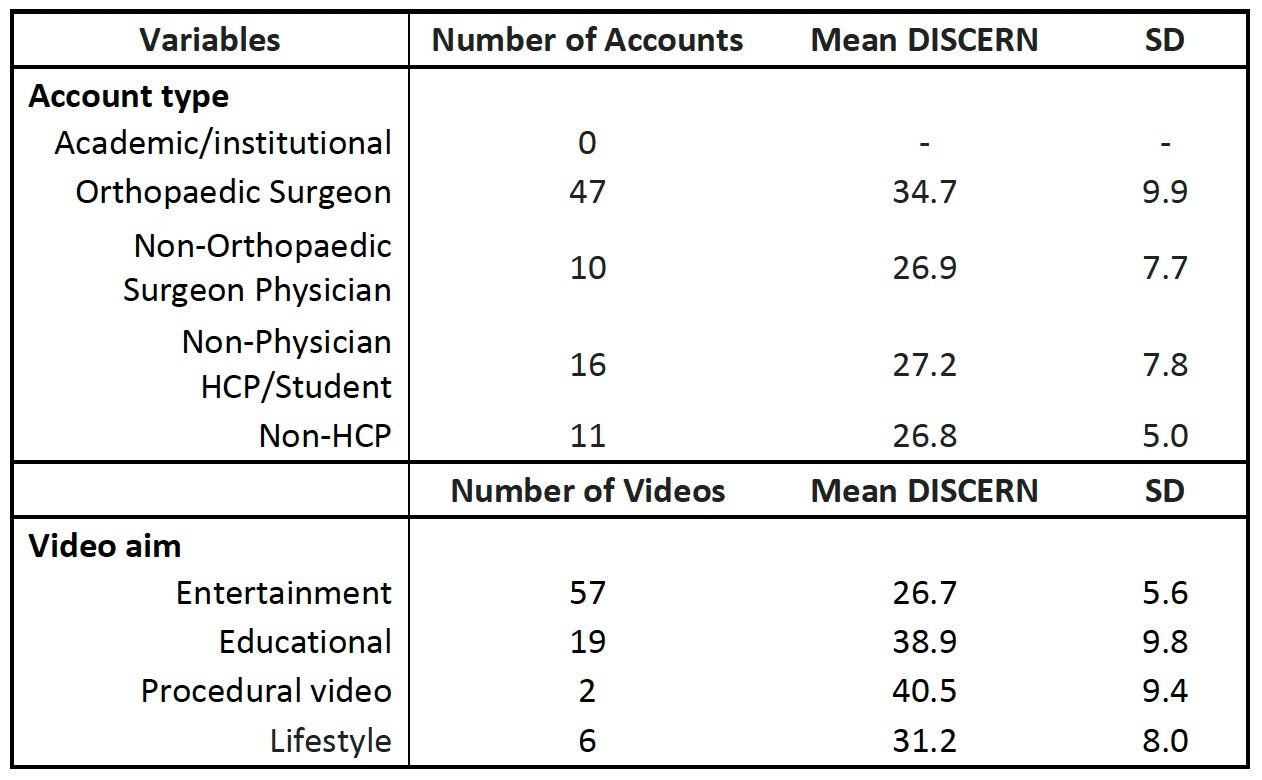
Average DISCERN scores evaluated by video aim or intent were 26.7 for entertainment, 38.9 for educational, 40.5 for procedural, and 31.2 for lifestyle. The Kruskal-Wallis H test results between video intent type showed significant differences in DISCERN scores for entertainment and all other groups, with entertainment videos having a lower DISCERN score in each comparison (H=-56.7 to -113.5, all p values <0.05), which indicates lower validity of entertainment videos. Lifestyle also had significantly different DISCERN score than both educational (H = 57.2, p = 0.008) and procedural (H = 66.8, p = 0.020) videos, which indicates lower validity of lifestyle videos. No other differences were observed in comparisons between the other groups. Complete data are shown in Table 3.
Discussion
While medical TikTok content has been studied in various specialties like dermatology, aesthetic surgery, and neurosurgery, limited research has focused on orthopaedic surgery TikTok and its potential for disseminating orthopaedic surgery content (Anastasio et al. 2023; Tabarestani et al. 2023; Bethell et al. 2023). This assessment draws attention to the wide reach that the orthopaedic surgery community has on the platform and the interest, from laypeople to medical professionals, in orthopaedic topics. The results of this assessment of the top 100 most-liked orthopaedic surgery TikTok videos indicates that orthopaedic surgeons dominate TikTok’s orthopaedic content by creating the majority (57%) of videos. Despite variation in video purpose, with most favoring entertainment while a minority focused on education and procedures, these surgeons’ ability to create popular and accessible content underscores their significant influence on the platform. Their success provides a platform for possibilities of utilizing the platform for a variety of purposes ranging from informational videos on different pathologies to increase layperson healthcare literacy, educational case or research discussion between orthopaedic surgeons and trainees, recruitment of prospective students to the field, and entertaining videos that highlight the day in the life of an orthopaedic surgeon.
Given the ease of access to a wide variety of information on social media platforms, it is unsurprising up to 68% of people utilize social media to access health information as of 2019—a percentage that is likely to further increased with the growth of TikTok (Bryan et al. 2020). However, with the ease of access to information, whether accurate or not, poses a concern about the reliability of health-related videos on the platform. A recent study which analyzed pediatric urology conditions on TikTok reported only 25% of videos were created by physicians and only 22% of videos aligned with urology practice guidelines at the time (O’Sullivan et al. 2022). These results stress the caution that must be taken when viewing health-related content on TikTok and the responsibility of healthcare professionals to reduce the risk of bias and posting accurate information by referencing sources and minimizing statements based solely on opinion. The results of the present study show a greater proportion of physician-made videos (67%) compared to just non-healthcare practitioners (13%). However, the concern inaccuracies must remain high and future research may help find ways to mitigate biased information.
Despite the finding that the majority of the most popular orthopaedic surgery videos on TikTok are made by orthopaedic surgeons, a recent survey of the Pediatric Orthopaedic Society of North America (POSNA), including 1231 total actively practicing members, reported 0% of physicians surveyed had public TikTok accounts (Chiang et al. 2022). These findings suggest there is a small number of active and public accounts made by orthpaedic surgeons on TikTok relative to the total number in practice currently. The scarcity of credible voices in orthopaedic surgery on TikTok is a concern. Yet, this limited presence offers an opportunity for orthopaedic surgeons and residents, academic institutions, and research journals to address gaps in public health literacy around orthopaedic surgery concepts (Anastasio et al. 2023; Tabarestani et al. 2023; Bethell et al. 2023).
Additionally, academic publications and dissemination forums may benefit from utilization of the inherent visual nature of TikTok’s platform. A recent study found visual abstracts posted by a major surgical journal on Twitter resulted in a 7.7-fold increase in impressions, 8.4-fold increase in retweets, and 2.7-fold increase in post visits compared to inclusion of the article title alone (Ibrahim et al. 2017). While this study was limited to Twitter and was photographic in nature, the results and recent commentary suggest a more visual presentation of orthopaedic literature could be beneficial for viewership, interactions, and citations all while educating the general public on the latest research in orthopaedic surgery (Brand et al. 2023). The audiovisual presentation of videos posted on TikTok is less investigated and less widely utilized in presenting academic literature compared to visual presentations. However, the novel approach of using audio to supplement present academic literature mirrors that of sharing research via short oral presentations. TikTok offers a chance for researchers and journals to communicate directly with viewers. This may be executed by the researcher posting a brief video speaking about their project and their findings or the journal posting a short video from the author or an expert in the field discussing the project and its results. The platform’s short, visual format uniquely grabs attention and may be utilized to showcase research effectively.
There were zero videos made by residency programs in this assessment, highlighting a general lack of program activity on the platform. Recruitment of students and incoming residents to the field is also a potential benefit of the platform. Recent reports on TikTok user demographics show the average user is younger than 30 years old with slightly higher rates of females and under-represented minorities utilizing the platform (Haenlein et al. 2020). As students of all ages frequently use the application, TikTok has the potential to increase awareness of orthopaedic surgery to younger and more diverse cohorts. Given that early exposure to the medical field has been shown to be an important factor in recruiting females and under-represented minorities, the TikTok platform, along with other forms of social media, may serve as a mode of increasing early interest and eventual representation in the field (Lamanna et al. 2022; Day et al. 2019; Trinh et al. 2021; Summers et al. 2020; Wang et al. 2023; Rohde et al. 2016). Further, this platform may be of particular interest for orthopaedic surgery residency programs, many of whom are striving to increase the diversity of their program and in the field. It has been established that social media is an effective mode of increasing interest in a specific program, and programs with social media pages have increased applicants and resident diversity (Wang et al. 2023; Brinkman et al. 2022). Despite this, most orthopaedic surgery training programs have been active only on Facebook, Instagram, and Twitter while few are represented on TikTok to date (Bram et al. 2021; Abbas et al. 2021; Malyavko et al. 2021). This poses an opportunity for programs to be among the first to explore this platform to create content to recruit prospective students to the field and applicants to their program.
An additional largely unexplored aspect of the audiovisual platform is case presentation.
Further, a recent report showing that residents believe social media usage for learning about orthopaedic surgery improved preparedness for cases and supplemented learning during residency (Dave et al. 2022). Similar to the collaboration that occurs at academic programs through indications conferences, surgeons may discuss nuances in the surgical management of cases. The audiovisual content of TikTok may also succinct but thorough mode of teaching residents about different pathologies and surgeries. In the structure of the platform’s video creation capabilities, the ability to work collaboratively via comments as well as creating a duet with video overlay may provide an innovative mode of case discussion between surgeons.
This study is not without limitations. First, it is largely descriptive in nature without commentary or in-depth analysis on the content or accuracy of individual videos. Additionally, the use of the DISCERN criteria, though used recently to assess TikTok videos (Anastasio et al. 2023; Tabarestani et al. 2023; McBriar et al. 2022; Rehman et al. 2021; Om et al. 2021; Sun et al. 2023), was originally made for written content and was abstracted to assess videos for this and other similar projects. The inter-rater reliability was strong for this assessment, but nonetheless were still assessed in a subjective manner and, therefore, is innately subject to bias or inaccuracies. Additionally, each rater is in orthopaedic surgery training so bias toward more favorably rating of videos made by surgeons may be present. The cross-sectional nature of the study assesses the available videos at one time, which is an inherently dynamic list of videos. Finally, some videos that highlight orthopaedic surgery topics may have been excluded due to the methodology of search through hashtags. These hashtags were chosen as they most broadly pertain to orthopaedics, but may not have captured videos that highlight more specific topics within the field.
Conclusion
TikTok is a rapidly growing social media platform featuring short audiovisual content. The most popular orthopaedic surgery-related videos on the platform are primarily being created by orthopaedic surgeons for entertainment purposes. However, many of the most popular videos also include content made to educate, describe procedures, and explain an orthopaedic surgeon’s lifestyle. Potential applications of utilizing the platform by orthopaedic surgeons include collaboration via case or research discussions, creation of audiovisual educational videos on different orthopaedic pathologies and treatments, recruitment of prospective medical students to the field, and creating entertaining videos on the day in the life of an orthopaedic surgeon.