
Knee fusions have been around for quite a while and were done back in the “old days” when we didn’t have joint replacements, or if joint replacements became infected. At the time, the only option then was to fuse the patient. Surgeons either plated or used external fixators, put the bone against bone, and hope it healed. The problem with that the leg became very short. Then, the patient had to wear these elevated soled boots to walk around. It was very problematic. Currently, because we can successfully treat infections, fusions are not as common or used to be. Also, many times, surgeons don’t know how to perform a fusion, and additionally, they don’t want to do it the old way where the patient shortened and had ambulatory problems. They don’t know another way how to do it.
We perform fusions for three major reasons:
-
If there is a chronic infection
-
If patients have had multiple surgeries
-
Loss of extensor mechanism
This is especially true if we can’t clear an infection through the standard treatment modalities, we’ll fuse the patient with a large prophylactic antibiotic spacer. What that does is let the tissues to settle down, because when you bend your knee back and forth, it irritates your soft tissues and the lining of the joint, which were inflamed and infected. If that stays irritated, the infection never has time to clear up and remains inflamed and sore for the patient. It can also cause wound problems and delay healing. If you can let that settle down and let the tissues heal over time, we can use fusion as a temporary fix. Once the tissues are settled down and infection cleared, then go back and re-implant.
The more common reason that fusion is used, is if the patient has completely lost his extensor mechanism and he can’t extend his knee, then a fusion is clearly indicated.
Fusion is not an option for standard treatment for patients, except if they’re so debilitated when they have no muscle control in their leg. You create a fusion and they can walk on it. In certain patients, if they have a fixed flexion contracture greater than 10-15 degrees, it takes too much energy for them to walk, and their mechanics are so altered, that a fusion may be the only answer for them. It’s easier to walk with a straight leg than a bent knee. So, there are some other unusual circumstances to use that, but it’s not a very common procedure overall. Mostly, many surgeons don’t know how to do a fusion.
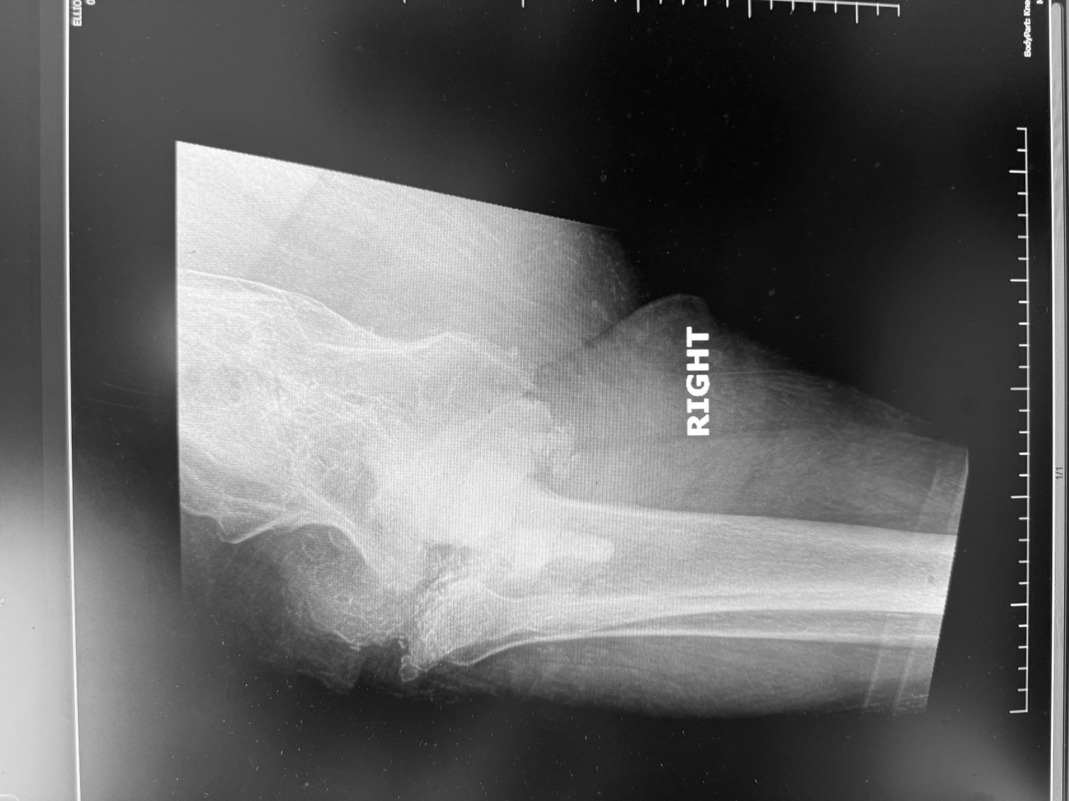
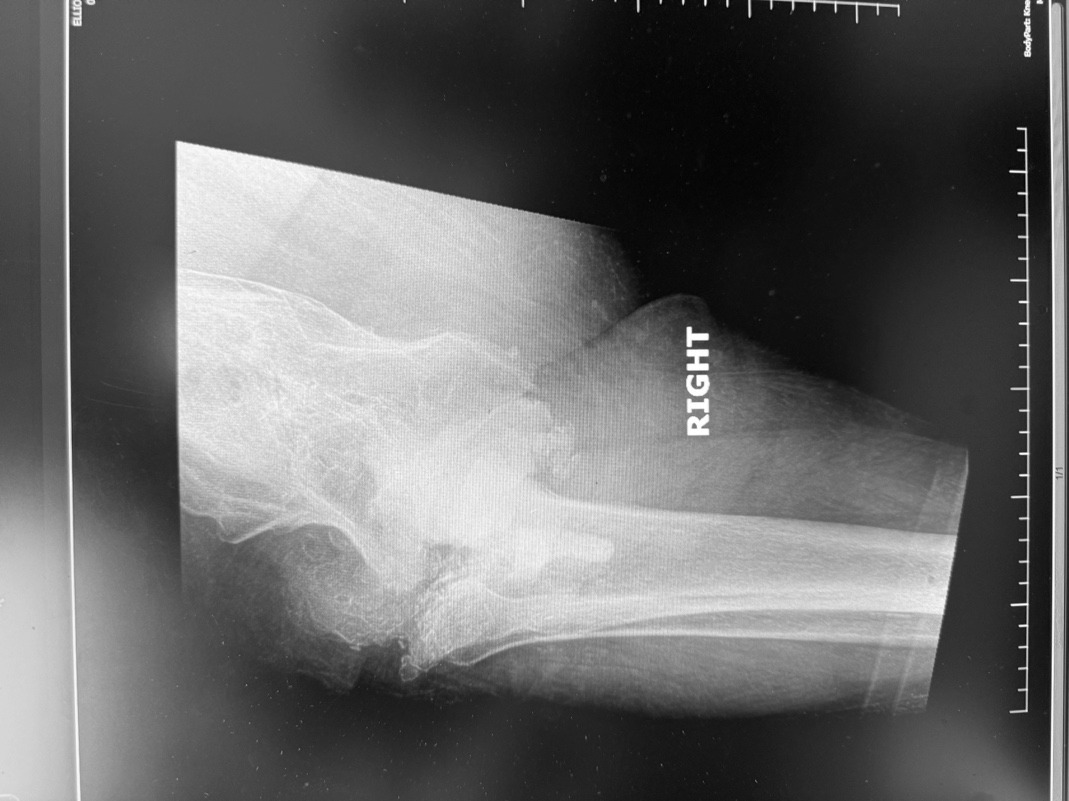
One of the more common case scenarios for a knee fusion in chronic prosthetic knee joint infections. Previously, we did not have options that we considered controlling infection with. In the “old days,” they used to put a big cement block in after you take the prosthesis out and then let them just move around with that. Then they would come back; it all but destroyed the bone. (Figure 1) The patients hated it; it was painful. Then we thought of using Steinman pins. In the old days, we also used rush pins, which were not used common. You implanted multiple pins, and cemented around the knee, giving the patient a fusion.
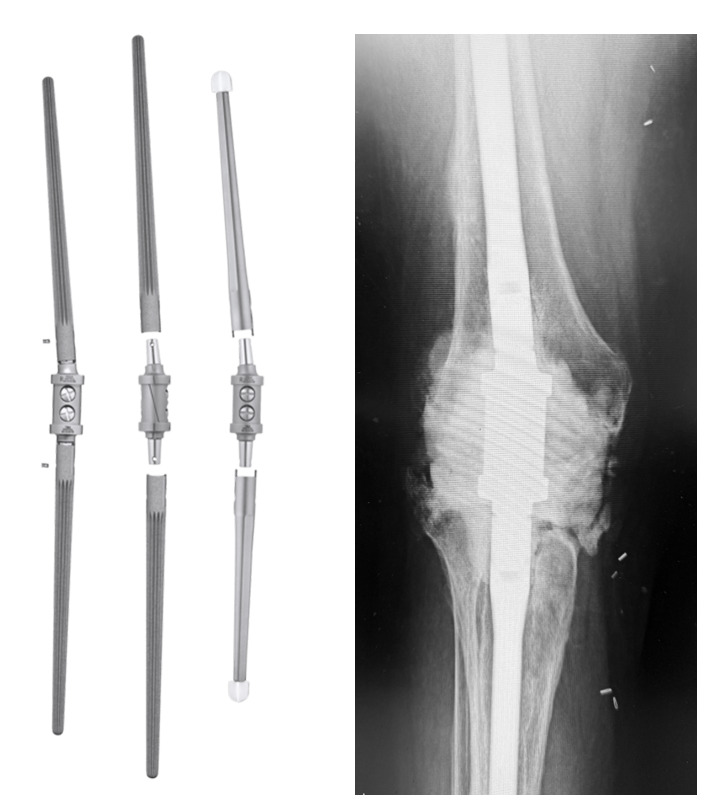
Using a tibial femoral nail between the bones and cementing is just temporary but gives no rotational control. Today, the preferred treatment is some of the fusion nails that are available (I prefer the modular ones). I probably have tried every fusion nail out in the market. From Stryker, Zimmer-Biomet, Merit, all these. The best one I found so far is the one from Link Orthopedics because it’s modular and it’s easy to use. You place the rods down into the femur, there are modular components that you attach to it, connect and screw it together. It’s easy to put build and then take it out if you need to later. The other ones are more complicated and they’re not as robust. So, I could put a rod all the way up and down the femur with that construct going forward.
The only other thing in the old days when we fused patients, we’d call them the “Broomstick Procedure.” We’d take a rod and go from the hip and put it all the way through the tibia and down to the ankle. That’s how we used to do fusions in the old days with Samson rods.
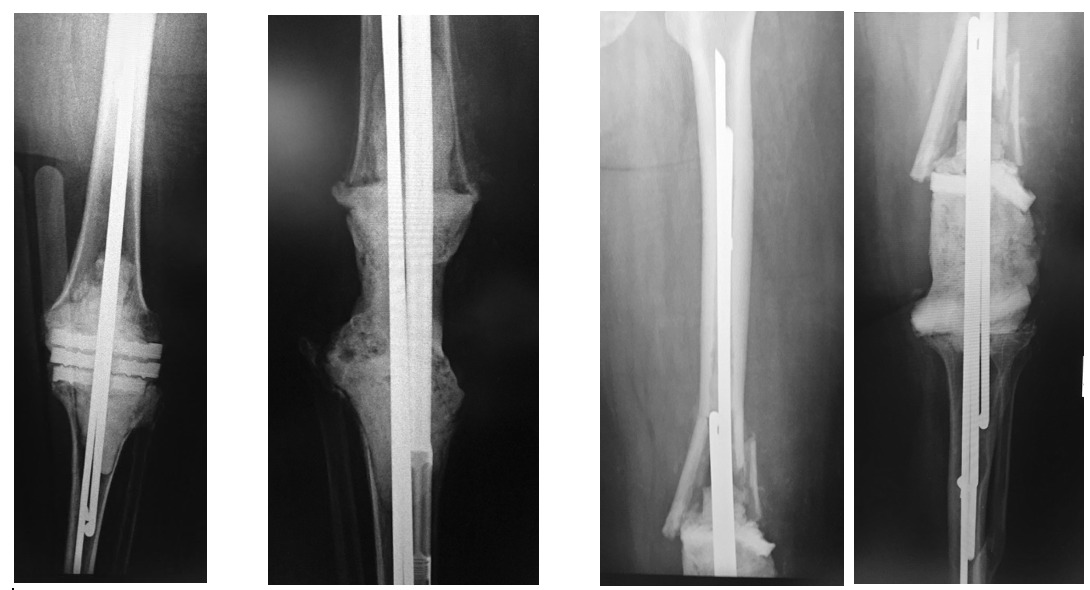
And so, taking those Samson rods out were ridiculous, and no one ever did revisions. Those were our last resort. This modular one, I can put in, and it can last a long time because we’re into the world of the one and a half procedures. For infections, there’s single exchange, which are proponents of Ortho Carolina, which will push that forward, and it works in certain circumstances. But there’s others that are so bad that you must stage them. And so, you can do one and a half this way, which is temporary. But you can cement them in, it can last for months, then go back and revise it.
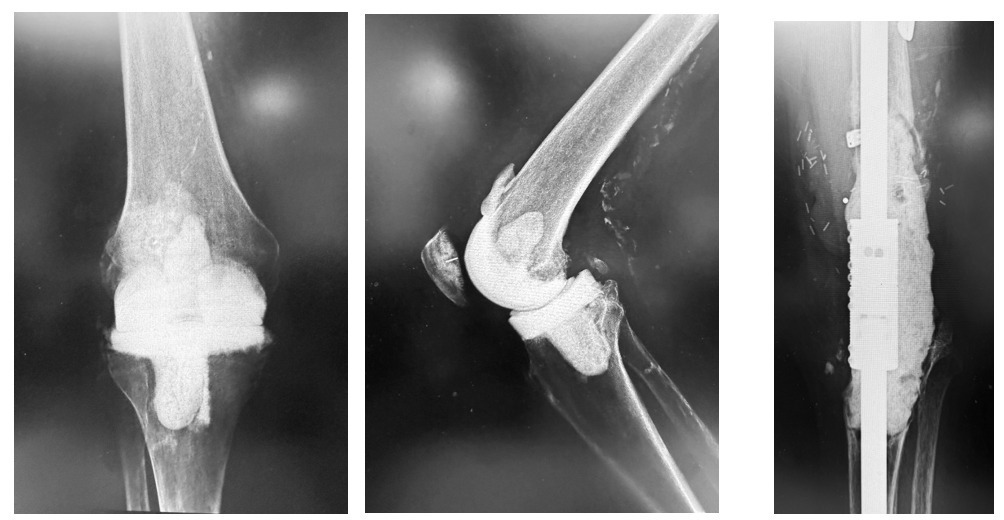
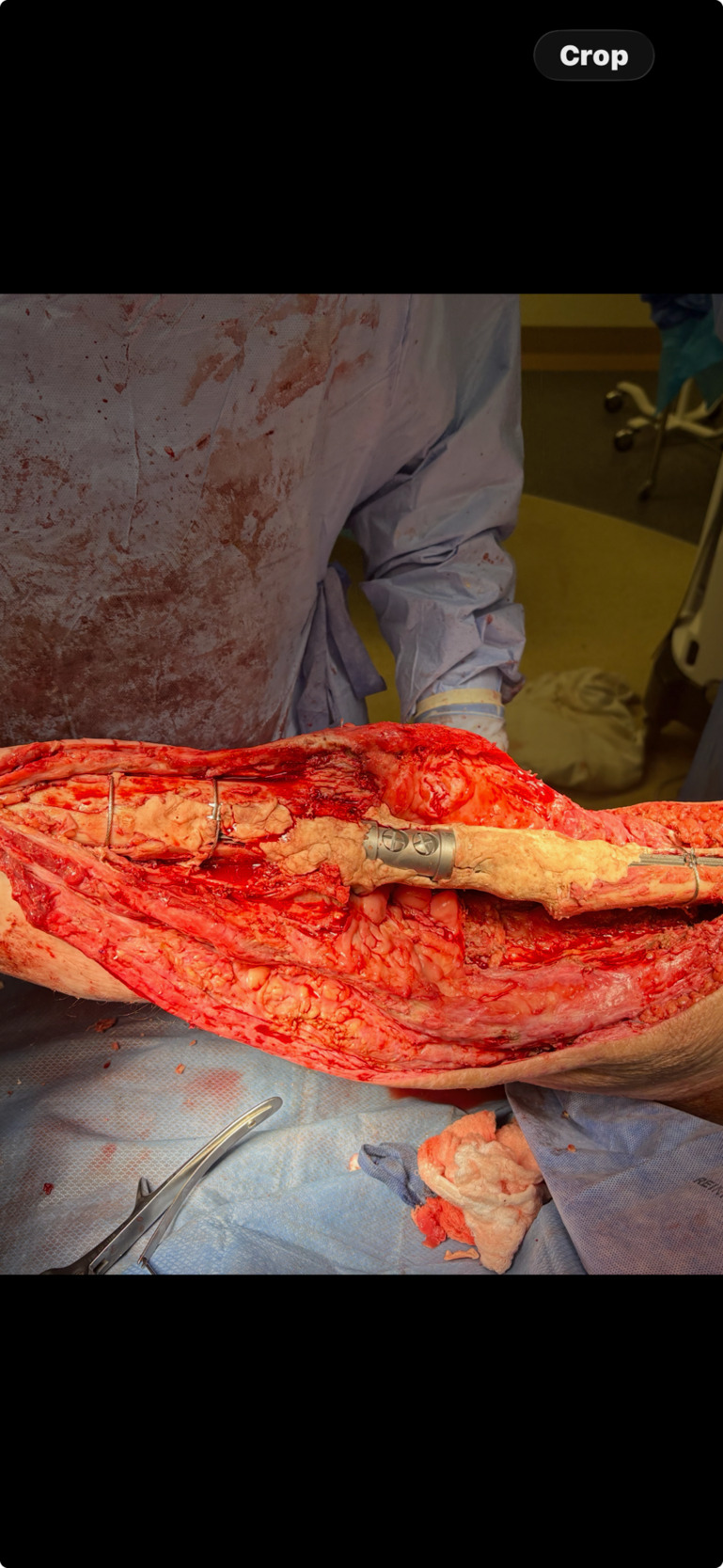
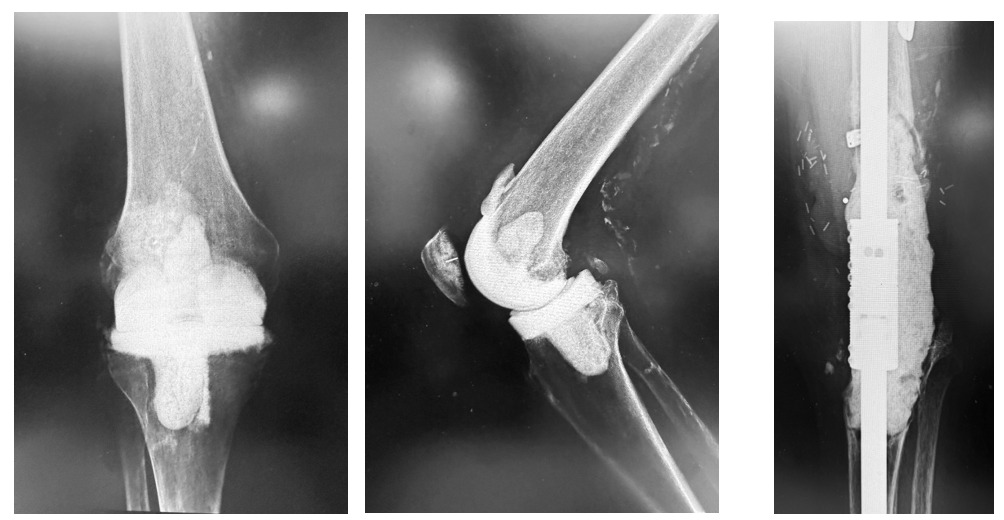
The way I explain a one and a half is kind of like a “crappy two-stage.” You are treating the infection, taking everything out, you put an antibiotic as a spacer, and spanning that defect with something that’s meant to be temporary. There are a couple ways to do this: 1) Articulating Spacer, 2) Fusion. It’s not put in as robust as you would with a permanent option. You implant it just enough so they can get around for as long as they can. (Figures 3A-B) And then the idea is, if it comes loose later, then you take it out and revise it to a total knee. We came up with this one and a half lexicon, which is a relatively new concept. But I call it “kind of a two-stage.”
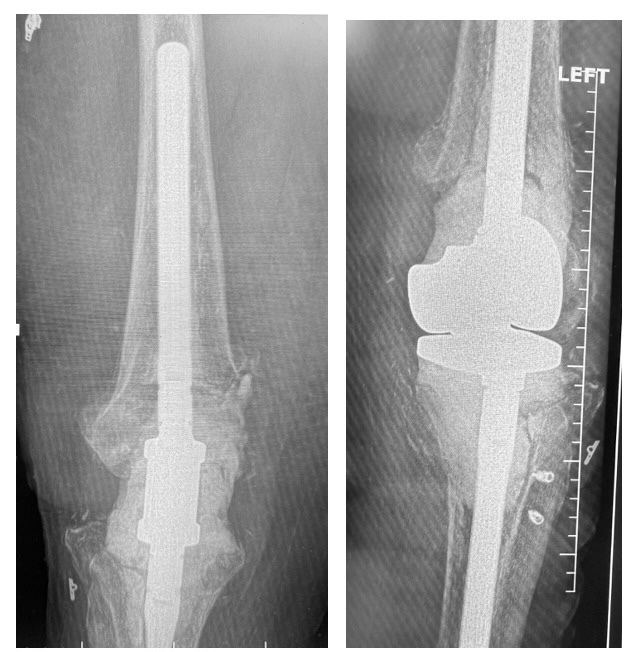
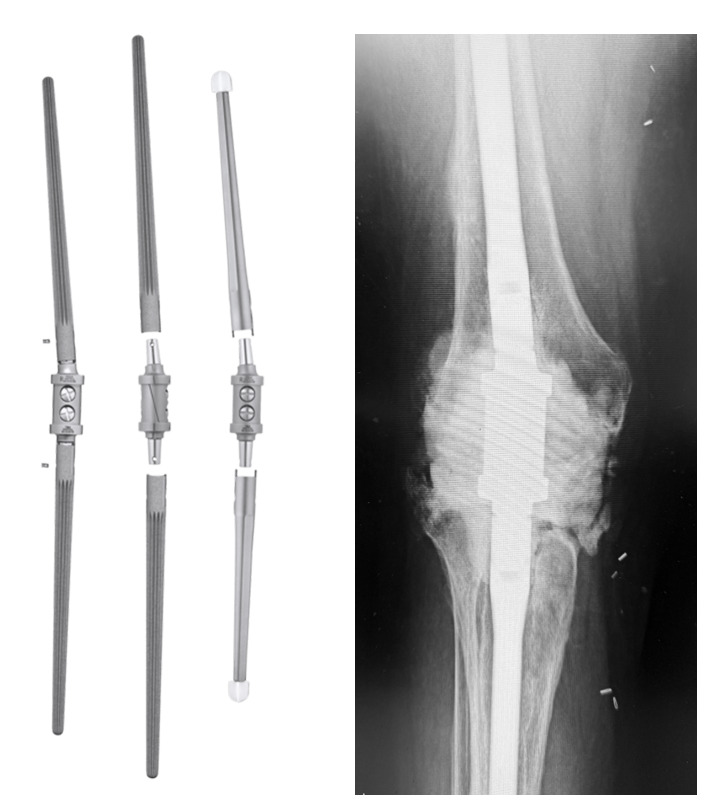
And then there is a two-stage, which you do and fuse the same way, but it’s meant to hopefully last a little longer. What we’ve done is that with some of these, if it’s an infection that’s not a very significantly difficult infection to clear, we’ll put fusion nails on both sides connected them and come back later and exchange that, putting a knee back in while saving the rods. There’s only one company, Link Orthopaedics that has that, but it’s proprietary right now. (Figure 4) We’re trying to come up with a way to get that done. That would be a true one and a half, makes it easy for doctors later. People have experimented with that. We’ve already done few between me and Janet Conway in Baltimore. She has done 12 or 14 of these (and they’ve worked well).
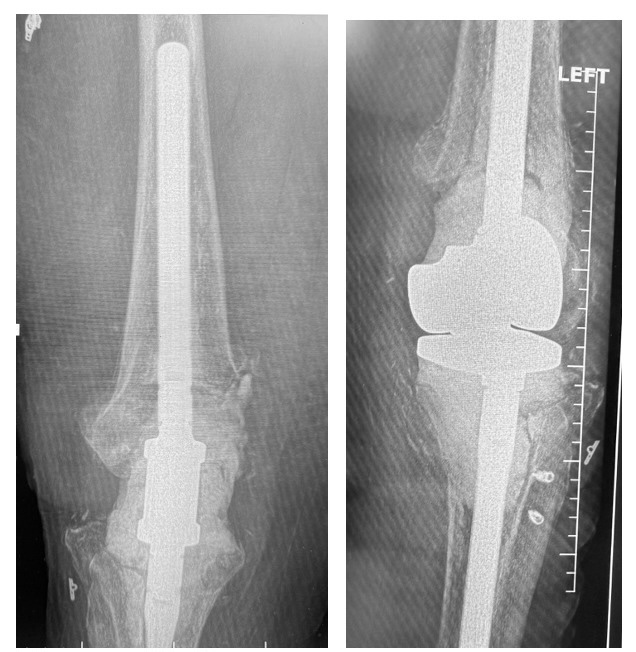
The reason we have done it with this technology; Link Ortho (Hamburg, DE) has a modular fusion spacer which perfectly matches the knee that they make (Link Endo-Model Knee Fusion Nail). So, if I fuse the rod in, I could take the modular parts out, put a tibia and a femur on retained rods and just convert it to a total knee as a simple procedure without cutting and taking everything out (it works even if it’s fused). You just take down the fusion and put the knee back in. Without doing all the work to remove a medullary rod. (Figures 5A-B)
I get ask “how long can these things stay in?” If they don’t come loose and the patients are up and around and doing fine, you can leave it in there as long as you want. In these cases, its removed if they only start having problems with pain. Otherwise, leave it alone. It’s no different than the head spacers we use in hips. Some of the head spacers can stay in there even though they’re considered “temporary.” They’re called “one and a half.” But if the patient’s doing fine, you can leave it in there for years.
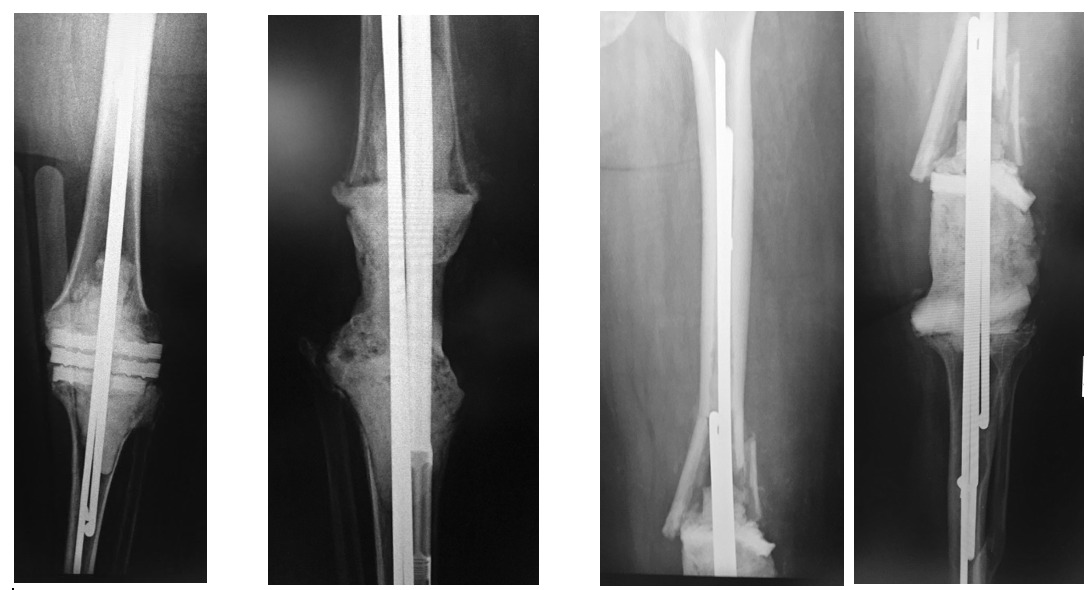
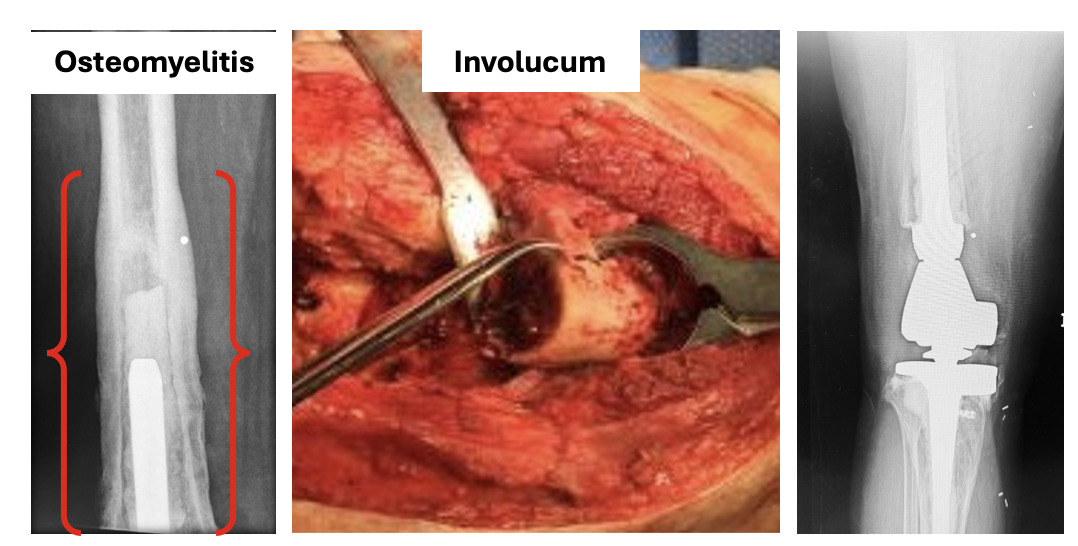
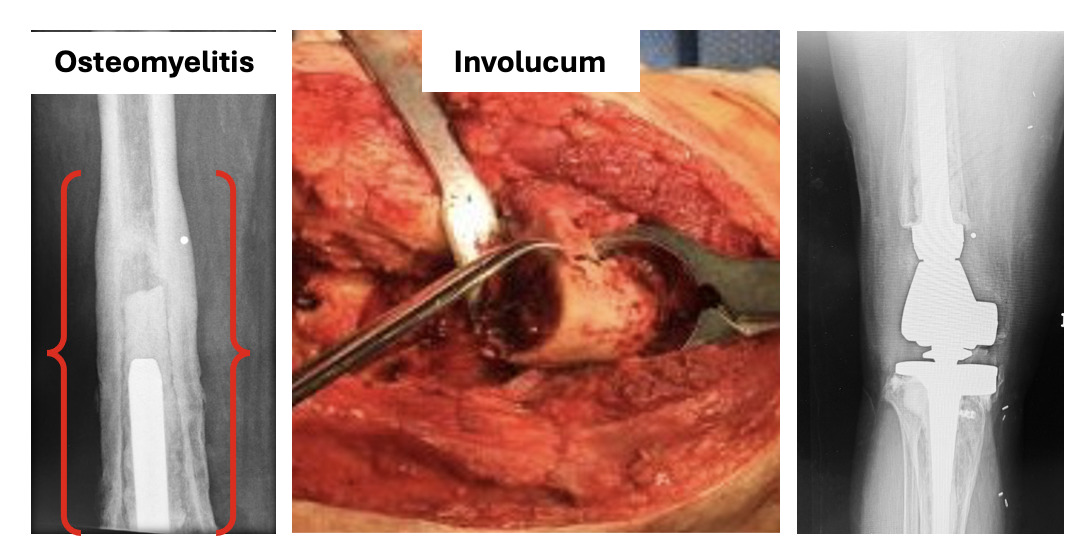
If you have osteomyelitis, you must treat it like a tumor, a cancer. The infected bone must come out because you can’t deliver antibiotics into it to solve that problem. You can put all the spacers and anything you want in there. The bone’s dead, bacteria hide in it, and you got to get rid of it. In many of the failures I see, the surgeons didn’t recognize they have osteomyelitis in the bone. And they keep implanting these spacers or revisions, and they keep failing. I just had one come in the office today. A nice young guy went everywhere in the country looking for a solution. They did all the right things except they didn’t biopsy the bone. You can’t cure that with antibiotics and a spacer. You must take it out. (Figure 6A-D)
When you get somebody that’s had multiple surgeries, they have had flaps, multiple scars, and everything’s failed. You can try one time to fuse them with the antibiotic spacer, leave it, and you may be able to suppress them for quite a while. But those will tend to fail over time. Then you’d maybe deal with an amputation. The luxury of doing it that way, and I have numerous patients like this, I’m basically suppressing them sometimes with a prophylactic antibiotic spacer. And it may work and they have a leg for six months, eight months, but then suddenly, they start draining again. I can go in there, open their knee, take that antibiotic spacer out, leave the fusion rod there and put new antibiotic spacer in there. (Figure 6)
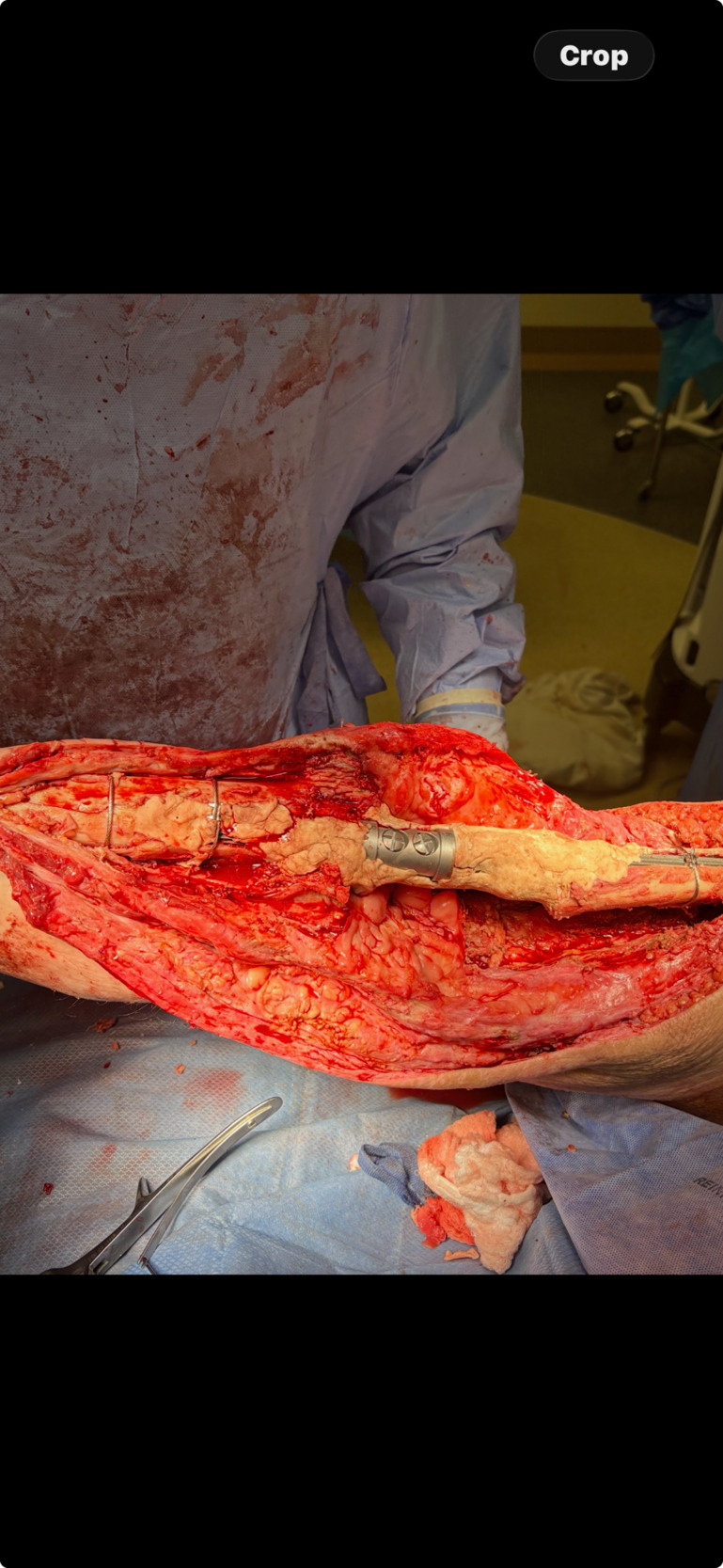
And the antibiotics will leach out over time, and they’ll still have a leg to walk on. And I’ve had patients with chronic infections get around this leg for as long as they can. Because we’re suppressing it, they rarely get septic. Doing it that way, bizarrely there’s always that kind of risk, but if they get infected, they never get septic or it doesn’t last for any period.
Then you are stuck with those kinds of patients requiring an amputation. A lot of those people that you suppress like that have reached seven and ten years. But they usually in an older patient, will eventually succumb to an amputation. You are basically just treating a cancer; but they’re still living on.
In the old days when we did fusions, even when people had limb length discrepancies, they functioned and worked. They went to work or they had somewhat normal activities of daily living. However, many of these people will get infected, then you must do an above knee amputation (AKA).
I don’t think a lot of our colleagues understand when you do an AKA even with modern prosthesis, it requires a lot of energy to use a prosthesis with two joints involved. It can take forty to fifty percent of their energy, just walking around with that kind of prosthesis. And if you are elderly, you’ll probably never wear the prosthesis other than they’ll go out in public and put it away. Most of them don’t put it on; they just get around without it. What if I can give them a leg that they can walk around for a bunch of years and still function in society and get out and do things.
Now they have some problems because they can’t bend their knee in certain spaces. They need to adjust their cars to drive, but it can work very, very well for those patients. And again, I only use this strategy on patients that had chronic failed infections. If it’s a primary infection or one that has more easily, you can still do a single exchange. We do single exchange on those, but we’re talking about the ones that have had multiple surgeries and multiple failures. Those are the ones that if I can give them a leg, they can walk on for several years. They’re happy. And then if it finally fails, you can always do an amputation then. I just saw a patient today that went to five major centers across the country, has eleven surgeries, and they still have problems or pain because they “missed the forest from the trees.”
Unfortunately, doctors tend to think that they’re better than other doctors. If a doctor did this, and he did the right thing, and he knows what he’s doing, and he’s a fellowship trained hip and knee surgeon, why do I sometimes think I am better than him? Maybe, the first thing to do is you ought to call him and find out what happened and why it failed before you do your thing. That always drives me nuts. Guys do that all the time. So go find out what’s going on. You’d be surprised sometimes the things that get missed. I was trained as an orthopedic oncologist and have dealt with infections all my life. I think different than even hip and knee surgeons. And sometimes they miss simple things. They forget, “Hey, I should have done this test.” “I should have done that.” They did all the right things, but there were just some things that they missed going forward. And in this one they missed.
Lymphedema is a big problem. If you get lymphedema, that’s one of the ones that has a high rate of failure. It just does. Lymphedema is one of our big problems in patients because it stays infected. In those patients that I do fusions on, I’ll suppress them with antibiotics for as long as I can because their risk of the high recurrence of infection when you put a knee back in. They start moving with chronic edema and get infected again. Lymphedema is one of the risk factors for maybe when not to do certain surgeries.
You can do a fusion and prophylactic spacer in lymphedema, and the patient can get around that way because you’re suppressing them.
For the technique of modular fusion, it’s all done at the knee. It’s easy. You can ride up the femur. They ride down the tibia, and the locking mechanism connect. They’re Morse tapered. You span the defect from the tibia to the femur with a giant construct of antibiotic cement. You keep them out to length and can get up and around. It gives you some compressive forces and delivers the antibiotic to the area at a high level.
I have plenty of patients with lymphedema. In the two that I convinced to put a knee back in them (failed). They begged me to put a knee back in, but I said, “no, I don’t want to do that. It’s going to get infected again.” And within three months, both were infected again.
In summary, the use of a modular knee fusion system is a great tool in the armamentarium to treat chronic knee infections.