Loading [Contrib]/a11y/accessibility-menu.js

This website uses cookies

We use cookies to enhance your experience and support COUNTER Metrics for transparent reporting of readership statistics. Cookie data is not sold to third parties or used for marketing purposes.

Skip to main content
null
J Orthopaedic Experience & Innovation
  • Menu
  • Articles
    • Brief Report
    • Case Report
    • Case Series
    • Conference Proceedings
    • Data Paper
    • Editorial
    • Meeting Reports/Abstracts
    • Methods Article
    • Product Review
    • Research Article
    • Review Article
    • Review Articles
    • Systematic Review
    • All
  • For Authors
  • Editorial Board
  • About
  • Issues
  • Blog
  • "Open Mic" Topic Sessions
  • Advertisers
  • Recorded Content
  • CME
  • JOEI KOL Connect
  • Resident Research League
  • search
  • RSS feed (opens a modal with a link to feed)

RSS Feed

Enter the URL below into your favorite RSS reader.

https://journaloei.scholasticahq.com/feed
ISSN 2691-6541
Research Article
Vol. 7, Issue 2, 2026October 06, 2026 EDT

Utilization of a 3D Printed Customized Knee Extender Device and An At-Home Video Rehabilitation Program on Patient Outcomes in Rural Areas Following ACL Surgery

Kevin P. Feltz, M.D., Brooklyn VanDerWolde, B.S., Kyle Cochran, B.S., Eleanor Gibbons, B.S., Benjamin C. Noonan, M.D., Nathan Wm. Skelley, M.D.,
ACL reconstructionrehabilitation3D PrintingKnee Extension
Copyright Logoccby-nc-nd-4.0 • https://doi.org/10.60118/001c.162884

Articles in Vol. 7, Issue 2, 2026

Vol. 7, Issue 2, 2026
  • A Human Factors Analysis of Personal Electronic Device Use and Cognitive Distractions in Orthopedic Surgery
    Asfand KhanAlbert Boquet
  • Does Preoperative Suzetrigine Impact ASC Opioid Consumption For Total Joint Arthroplasty?
    Louis BattistaAndrew Wickline
  • Pickleball Pains: A 10-year Epidemiologic Analysis of Rising Upper Extremity Injuries
    Kevin ValdesAghdas MovassaghiJehad Feras AlSamhoriXiomara OrtizJocelyn LubertVani J. Sabesan
  • From Innovation to Inaccuracy: The Impact of ChatGPT on Orthopaedic Surgery Research Citations in Sports Medicine
    Calista StevensAlexander HahnGregory ConnorsShiraz MumtazMartinus MegallaZachary GraceJohn CorviMatthew PartanKatherine Coyner
  • Does CMS Hate Specialists?
    Benjamin Schwartz, MD
  • Voices in Orthopaedics™...The Residency Programs: The Unionized Orthopod: Apprenticeship, Labor, and the Changing Identity of Orthopedic Residency at Jefferson
    Eric R. TecceJalen N. BroomeTyler W. HenryGabriel I. Onor Jr.Daniel A. NemirovDaniel E. DavisJames J. Purtill
  • Cerclage Fixation in Total Hip Arthroplasty: Anatomy, Surgical Options and Clinical Outcomes
    Zuhdi AbdoZachary FullerThomas ChristensenAhmed Siddiqi
  • In My Experience™...Orthopaedics: Then, Now, and Tomorrow: Reflections on a Half Century of Change
    Richard Conn, MD
  • Genicular artery embolization for symptomatic knee osteoarthritis: A narrative review
    Junaid MakdaAhmed SiddiqiKhalid YousufOsman Ahmed
  • Simplifying Orthopedic Patient Education: A ChatGPT-Based Readability Analysis
    Mendel ShloushKlaudia GreerJonathan BruttiBrayden TolmanJacob RosenthalRafael Aldaya BourricaudyMarcia VarellaFernando Aran
  • Digital Fatigue and Orthopedic Injuries: The Postural Burden of the Digital Era - A Narrative Review
    Ambrose Loc NgoNiki Gharavi AlkhansariTruong HoRachana TadakamallaLinda NguyenJared Nichols
  • Concurrent Floating Hip and Open Knee Dislocation: Damage-Control Management
    Sara LowVladislav MuldiiarovMark AyzenbergGermanuel LandfairGene Shaffer
  • Higher Pain Catastrophizing Scores are Associated with Increased Pre-operative Anxiety in Ambulatory Hand Surgery that is not Impacted by Watching a High-Quality Pre-Operative Video
    Christopher G. LarsenMichael J. SayeghAmr TawfikCaroline ApriglianoChloe HeitingKate W. Nellans
  • MOTIV™ and the Next Frontier of Orthopaedic Evidence Generation: A New Model for Physician-Led Clinical Research
    John Mercuri, MDAndrew Wickline, MD
  • Evidence on Demand: OpenEvidence versus Established LLMs on the Orthopaedic In-Training Examination
    Asim A. KhanShaan S. LalvaniSam PourarbabLord J. HyeamangRyan M. LewZaamin B. HussainGregory P. NicholsonGrant E. Garrigues
  • Trends in Orthopedic Surgeons Signing Medicare Opt-Out Affidavits
    Thriaksh RajanAndre RevnewJoshua PortoMonish LavuComron SaifiAtul Kamath
  • Voices in Orthopaedics™...The Residency Programs: Training for the Future of Orthopaedic Surgery: Residents’ Perspective on the UT Austin Dell Medical School Orthopaedic Surgery Residency
    Cassidy ShieldsSemran ThamerAmanda SeymourAlec Giron
  • Preoperative GLP-1 Receptor Agonist Use Improves Thromboembolic, Infectious, and Wound-Related Outcomes Following Unicompartmental Knee Arthroplasty
    Zachary FullerManjot SinghAbhiram DawarJeremiah ThomasAlan H DanielsZuhdi E Abdo
  • Beyond the Breaking Point: Solutions for Burnout in Orthopaedic Surgery
    Aghdas MovassaghiCamryn McIntyreSamir SakariaMitchell J. ChristiansenJocelyn LubertMary MulcaheyVani Sabesan
  • Utilization of a 3D Printed Customized Knee Extender Device and An At-Home Video Rehabilitation Program on Patient Outcomes in Rural Areas Following ACL Surgery
    Kevin P. FeltzBrooklyn VanDerWoldeKyle CochranEleanor GibbonsBenjamin C. NoonanNathan Wm. Skelley
  • Feasibility and Early Experience of Custom Stemmed Tibial Trays in Revision Total Ankle Arthroplasty: A Case Series
    Grant M. ThomasKush S. ModyJoydeep BaidyaCorinne SommiDavid I. PedowitzSelene G. Parekh
  • Postoperative Outcomes by Timing of Total Hip and Knee Arthroplasty Following Coronary Revascularization
    Zachary FullerManjot SinghThomas ChristensenJeremiah J ThomasAlan H DanielsZuhdi E Abdo
  • Tibial Plafond Fractures and the Impact of Social Media Support Groups on Patient Perceptions
    Alexandra F. FlahertyDana PerimAnnie WaiteAlvarho GuzmanErnest N. Chisena
  • Retained Male Component After Intra-operative Dissociation of a Tibial Magnetic Lengthening Nail: A Case Report covering Technical Challenges and Management Strategies
    Eunice Anastasia WiliantoNeeraj MishraDerrick Jun Liang LamKenneth Pak Leung WongBenny Kai Guo LooAshik Mohammad
  • A physician led consensus building intervention at a multi-specialty practice results in meaningful reduction of opioid prescriptions for post-operative patients
    Jenna M. GodfreyJohn Paul BigouetteConnor FitzpatrickJohn W. OverHeather A. CampionErin C. Owen
  • Voices in Orthopaedics™...The Residency Programs...The Role of Networking and Interconnectivity in Building an Orthopedic Career
    Gabriel I. Onor Jr.Terence L. Thomas, MDDaniel Nemirov, MDJalen Broome, MDDaniel E. Davis, MDChristopher C. Dodson, MDJames J. Purtill, MD
  • From My Perspective… The Consent Discussion: The Robot Demands
    Stephen Howell
  • How to Assemble a Well-Fitting, Patient-Specific Antibiotic Cement Hip Spacer for Infection Management
    Ahmed Nageeb MahmoudNicholas BruleCatherine Mary DoyleGabriel MakarDaniel Horwitz
  • At The Conference™...How to Handle Severe Bone Defects in Knee Arthroplasty
    Christopher Grayson, MD
  • From My Perspective...Triple-Tapered Collared Stems: Are They All Equal—and How Have They Changed Primary Hip Arthroplasty?
    David Rodriguez-Quintana, MD
  • On How I Do It™...Attachment Preserving Hinge Arthroplasty vs. ORIF for Complex Periarticular Knee Fractures
    Michael Langworthy, MD
  • About The Innovation™...Arthrolense: Where the Idea Began
    Russell Nevins, MD
  • In My Experience™...Biointegrative Collagen Implant Use in Complex Hip and Knee Arthroplasty: Early Clinical Experience and Second-Look Observations
    Chris Hoedt, MD
  • Force-Modulating Tissue Bridges in Sports Medicine Incision Management: A First 100-Case Experience Evaluating Allergic Reactions and Postoperative Complications
    John A GrottingEge Karadag
J Orthopaedic Experience & Innovation
Feltz, Kevin P., Brooklyn VanDerWolde, Kyle Cochran, Eleanor Gibbons, Benjamin C. Noonan, and Nathan Wm. Skelley. 2026. “Utilization of a 3D Printed Customized Knee Extender Device and An At-Home Video Rehabilitation Program on Patient Outcomes in Rural Areas Following ACL Surgery.” Journal of Orthopaedic Experience & Innovation 7 (2). https://doi.org/10.60118/001c.162884.
Save article as...▾
Download all (14)
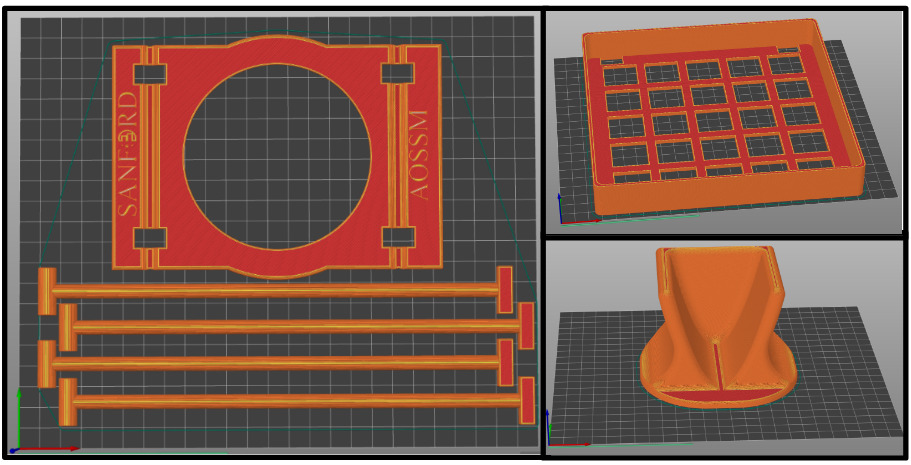
  • Figure 1. 3D models prepped for printing. In the setup used by the authors, all pieces necessary for a complete knee sling device were able to be completed in three prints.
    Download
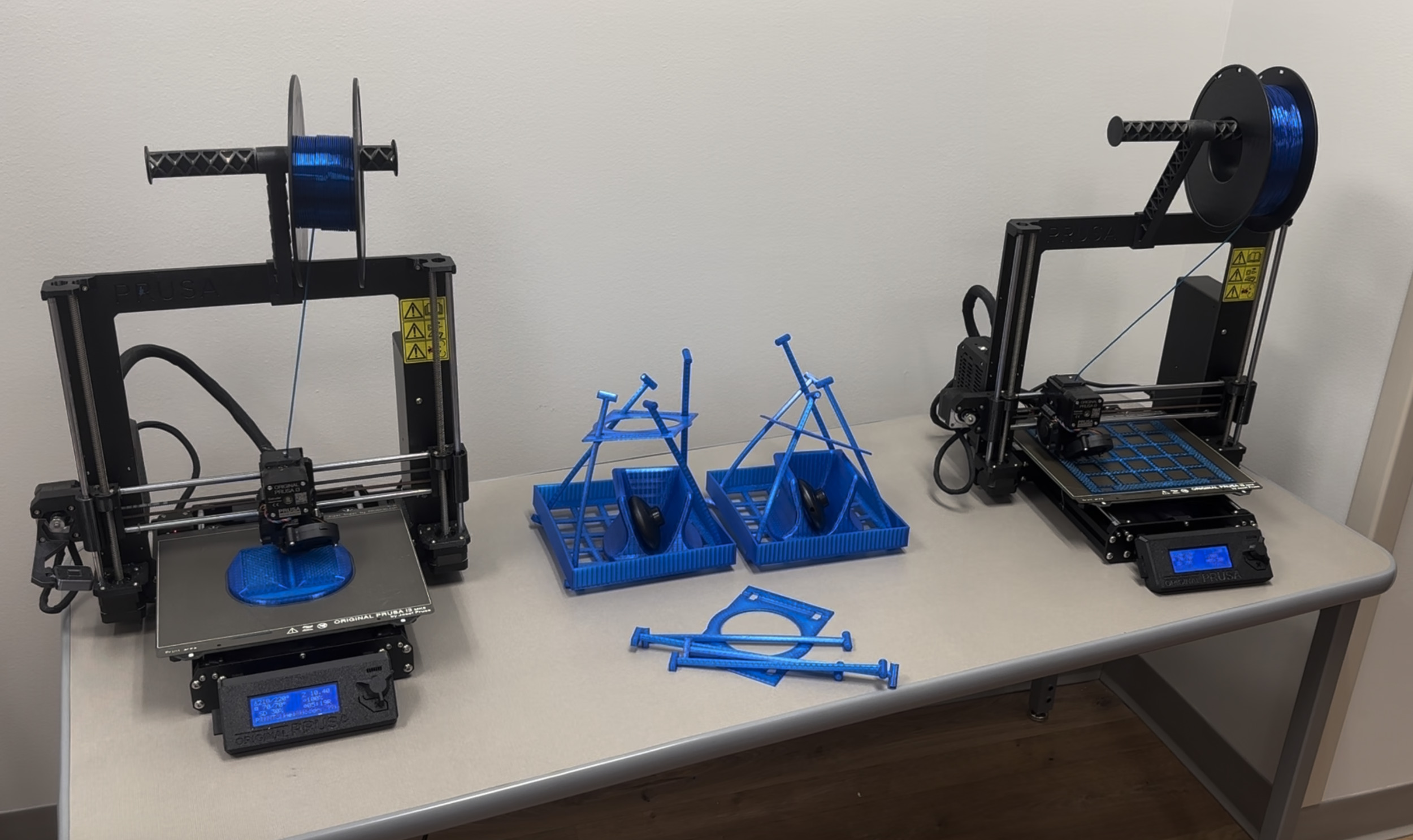
  • Figure 2. 3D printing setup with finished and partially completed knee devices.
    Download
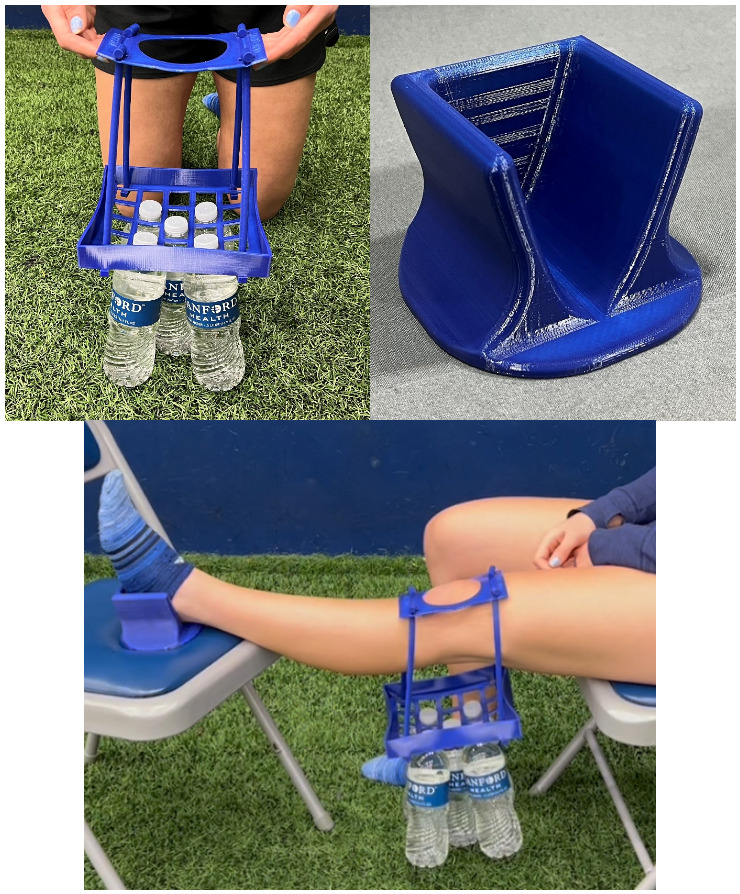
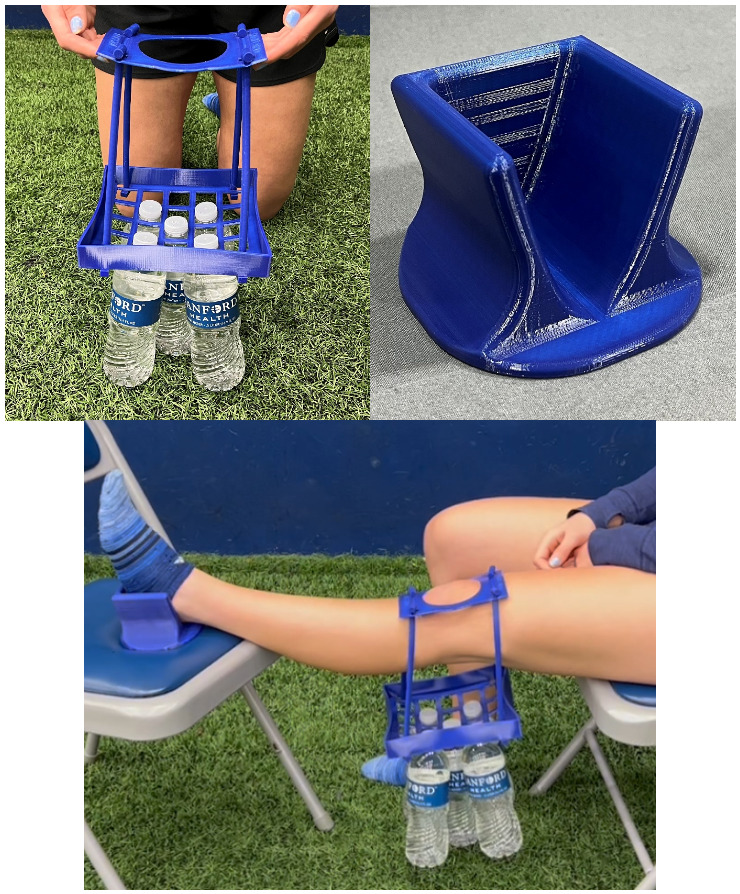
  • Figure 3. Top Left: Assembled knee extension device with water bottles attached as weight. Top Right: Foot holder. Bottom: Knee extension device in use with weight suspended under the knee.
    Download
  • Figure 4. Full knee extension achieved by timepoint.
    Download
  • Figure 5. Knee measurements at the time of surgery (time 0), 2 weeks postop, and 6 weeks postop. No significant differences were noted between groups.
    Download
  • Figure 6. Pain associated with using the 3D-printed device was well controlled throughout the study period.
    Download
  • Table 1: Demographics
    Download
  • Figure 1
    Download
  • Figure 2
    Download
  • Figure 3
    Download
  • Figure 4
    Download
  • Figure 5
    Download
  • Figure 6
    Download
  • Video
    Download

Error

Sorry, something went wrong. Please try again.

If this problem reoccurs, please contact Scholastica Support

Error message:

undefined

View more stats

Abstract

Background

Physical therapy is a critical component of postoperative rehabilitation after ACL surgery. However, access to formal physical therapy is not universal, and patients who do not receive adequate rehabilitation may experience worse postoperative outcomes. The primary objective of this study was to evaluate whether the addition of a low-cost, desktop 3D-printed knee extension device and at-home video program led to an increased rate of obtaining full knee extension following anterior cruciate ligament reconstruction in the early postoperative period.
Hypothesis/Purpose:
We hypothesized that there would be no difference in the percentage of patients achieving full knee extension by six weeks or in overall knee range of motion between the study and control groups. Secondary outcomes included device compliance, device issues, knee effusion, pain levels, usage characteristics, and skin/wound reactions.
Methods
This was a prospective, randomized, controlled pilot study. 32 participants aged 15–48 years with primary ACL ruptures were enrolled and randomized into two groups: a control group that received standard postoperative physical therapy rehabilitation, and an experimental group that received the same rehabilitation supplemented with a knee extension device and an at-home, video-guided exercise program. Patients were assessed over a 6-week postoperative period, recording knee circumference, range of motion, pain scores, time to full extension, safety, and device-related issues. Categorical variables were analyzed using chi-squared tests, and continuous variables were analyzed using t-tests and ANOVA.
Results
There were no differences between groups in six-week knee range of motion, knee circumference, pain scores, or time to full knee extension. Although a greater proportion of patients in the experimental group achieved full extension by Week 2, this difference was not statistically significant (p = 0.70). No adverse outcomes were reported in either group.
Conclusion
Overall, there were no statistically significant differences in outcomes between the control and study group. This study found that incorporating an at home video program and a custom low-cost desktop 3D printed knee sling into the postoperative ACL rehabilitation was safe, utilized appropriately, and had excellent patient compliance.

Introduction

Physical therapy is a critical component of postoperative rehabilitation after anterior cruciate ligament reconstruction (ACL-R) surgery. A comprehensive rehabilitation protocol allows patients to have a gradual and controlled return to activities over time. ACL-R recovery is typically between 9-12 months to return to athletic activity. Missed milestones or delayed progress in this timeline are not optimal and can be a source of frustration and decreased outcomes for patients and their care team. With a multidisciplinary team approach and regular follow-up with medical staff, these setbacks can be identified early and addressed. However, access to physical therapy after ACL-R is limited in many parts of the world, including global care areas and rural areas of the United States. Patients who do not receive physical therapy are at risk of worse outcomes and/or delays to full recovery. With an estimated 150,000 to 250,000 ACL injuries occurring annually in the United States alone, this disparity in care warrants exploration.

The early stages of the rehabilitation protocol can present a struggle for many patients, as postoperative pain and inflammation discourage stretching and exercising, leading to difficulty attaining full knee motion. However, the importance of meeting these goals is critical, as poor or delayed therapy can lead to loss of knee motion (Capin et al. 2019; Cronström et al. 2023; Joreitz et al. 2016; Kotsifaki et al. 2023; Mauro et al. 2008; Shelbourne and Gray 1997; Shelbourne and Klotz 2006). Loss of motion is a potentially debilitating complication following ACL-R, with loss of extension being more common than loss of flexion (Mauro et al. 2008). Inability to regain full extension in the early postoperative period can increase the difficulty of progressing in rehabilitation. Furthermore, inability to obtain full knee extension can cause patients to walk with a bent-knee gait, increasing quadriceps strain and increasing patellofemoral joint contact forces, which can lead to quadriceps weakness, fatigue, and patellofemoral pain (Mauro et al. 2008; Sachs et al. 1989). In addition, loss of knee extension after ACL-R has been associated with development of cyclops lesions within the intercondylar notch of the knee, a significant cause for reoperation (Delaloye et al. 2020; Moran et al. 2023).

In an ideal postoperative course, patients would be regularly seen by a multidisciplinary team. There are regions of the globe where patients do not have access to this type of care. To provide appropriate postoperative care for these patients, an alternative to formal physical therapy must be developed. For some, a home exercise program combined with periodic visits with the surgical team is the solution. For others, a solution could be explored with telerehabilitation or an at-home video rehabilitation program (Dunphy and Gardner 2020). The goals of any effective alternative solution would be to provide guidance, encourage proper exercise technique, and set attainable milestones in order to track rehabilitation progress. This solution would have to be readily available, low in cost to the patient and the treatment team, and simple to use. Additionally, to facilitate and standardize a rehabilitation program, it would benefit medical specialists to have standardized medical devices that can help facilitate the telerehabilitation process remotely.

3D printing technologies are rapidly expanding throughout medicine and in the field of orthopaedics. They offer a potential solution to healthcare disparities with the ability to create standardized devices that can be distributed into rural and remote locations. Low-cost desktop 3D printers are becoming more readily available and can be utilized in outpatient and rural clinical sites with minimal training. This technology has the potential to enable rapid, customized development of medical devices to improve patient care and facilitate treatments. There is significant research supporting the importance of postoperative physical therapy; however, there is no literature exploring the use of a desktop 3D printed knee sling to facilitate or be incorporated into physical therapy programs. This application requires further research and study before widespread clinical application.

The purpose of this study was to evaluate whether the addition of a low-cost, desktop 3D printed knee extension device and an at-home video program led to an increased rate of obtaining full knee extension following anterior cruciate ligament reconstruction (ACL-R) in the early postoperative period. We hypothesized that there would be no difference in the primary outcomes of knee extension and flexion motion between the study and control groups. Secondary outcomes included assessing device compliance, device issues, knee effusion, pain levels, usage characteristics, and skin/wound reactions.

Materials and Methods

This prospective, multi-center, randomized, clinical trial pilot study enrolled 32 participants (16 per group) aged 15–48 years with primary ACL ruptures. This study was conducted at two hospital sites located in rural areas of the United States in 2025. Institutional Review Board approval was obtained for this study. Participants were randomized into two groups: a control group that received standard postoperative physical therapy rehabilitation, or an experimental group that received the same rehabilitation supplemented with a 3D printed knee extension device and an at-home, video-guided exercise program. The devices were provided to the experimental group at no cost.

Outcomes were assessed over a 6-week period following ACL reconstruction. Clinical assessments with knee range of motion and circumference measurements occurred at the time of surgery (baseline), at 2 weeks postoperatively, and at 6 weeks postoperatively. A blinded study team member measured knee circumference at the top of the patella, maximum active knee flexion, and maximum knee extension using a flexible tape measure and a goniometer. Data collection included additional weekly surveys to assess compliance, safety, pain scores, time to full knee extension, and device-related issues. Full knee extension was verified using a quantifiable audible mechanical “click” device placed under the knee; engagement of the click indicated successful full extension.

The 3D printed knee device used in the experimental group was designed for universal fit to support the physical therapy regimen. The author team designed the knee sling over a 6-month period using Fusion 360 (Version 2.0.15995, Autodesk Inc., San Francisco, CA). Each device was fabricated at the orthopaedic clinic using a desktop 3D printer and flexible thermoplastic polyurethane (TPU) at a cost of $7.60 USD per device. The printer used for making the devices was a PRUSA MK3S+ (purchased for $600 USD). The knee extension device consisted of a pad positioned over the knee with a suspended basket beneath it. A fully completed device could be generated with three printing files (Figure 1 & Figure 2). The basket accommodated standard water bottles (1lb/bottle) to apply a downward force, facilitating full knee extension. A 3D-printed foot holder maintained proper leg alignment during passive stretching (Figure 3). Water bottles acted as standard and reproducible weights. The basket allowed for scalability with multiple water bottle attachment points in the bottom of the basket as well as a space in the basket for placement of additional bottles.
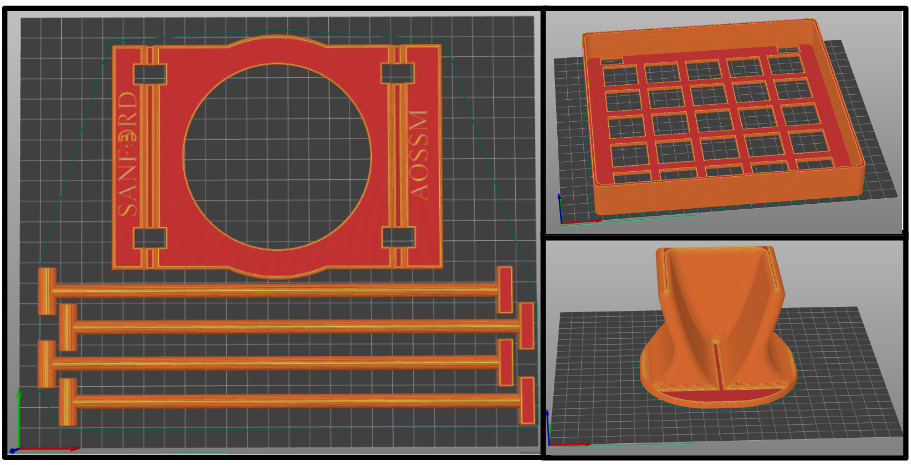
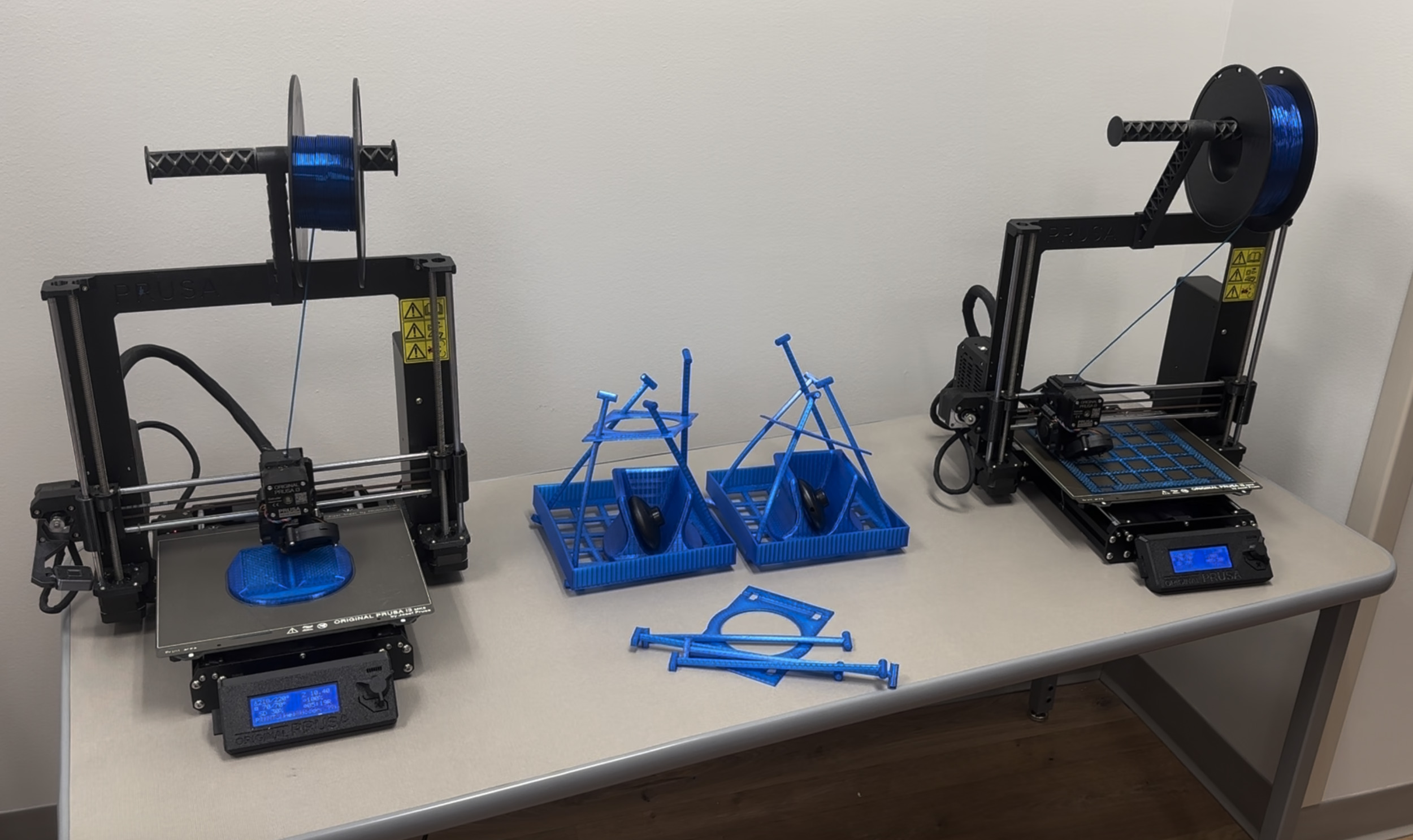
Figure 1
Figure 1.3D models prepped for printing. In the setup used by the authors, all pieces necessary for a complete knee sling device were able to be completed in three prints.
Several blue objects on a table AI-generated content may be incorrect.
Figure 2.3D printing setup with finished and partially completed knee devices.
Figure 3
Figure 3.Top Left: Assembled knee extension device with water bottles attached as weight. Top Right: Foot holder. Bottom: Knee extension device in use with weight suspended under the knee.

Statistical analyses were performed using chi-squared tests for categorical variables and t-tests and ANOVA for continuous variables. Sample size calculations were conducted. While pilot data was not available for sample size calculation, effect sizes were estimated for the analysis. For non-inferiority analysis, we assumed a response rate in the control arm and experimental arm of 0.7 and 0.5 respectively with a delta of 0.2, alpha = 0.05, and beta = 0.2, demonstrating a total of 26 patients needed for statistical power of 80%. A higher sample size of 28 was selected, split equally into the two study groups, with 14 in each group. With an anticipated dropout rate of 50% enrollment was planned up to 56 participants, but this was unnecessary as none of our enrolled patients dropped from the trial. Final enrollment was 32 participants with 16 in each group.

Results

Baseline demographic characteristics demonstrated no statistically significant differences between the control and experimental groups, confirming comparability between cohorts (p = 0.72) (Table 1). There were no statistically significant differences between groups in any primary or secondary outcome measures over the study period. However, several noteworthy trends were identified.

Table 1.Demographic information.
Control (n=16) Experimental (n=16) P-value
Age Mean (SD) 19.4 (4.16) 23.9 (9.54) 0.0987
Median [Min, Max] 17.5 [ 15.0, 29.0] 19.5 [ 15.0, 48.0]
Gender Female 7 (43.8%) 9 (56.3%) 0.724
Male 9 (56.3%) 7 (43.8%)
Race White 16 (100%) 16 (100%) 1
Ethnicity Hispanic or Latino 0 (0%) 1 (6.3%) 1
Non-Hispanic 16 (100%) 15 (93.8%)
Region Fargo 10 (62.5%) 10 (62.5%) 1
Sioux Falls 6 (37.5%) 6 (37.5%)
Affected Knee Left 6 (37.5%) 9 (56.3%) 0.479
Right 10 (62.5%) 7 (43.8%)
Smoking Status Former 0 (0%) 1 (6.3%) 1
Never 16 (100%) 15 (93.8%
Diabetes Status Non-Diabetic 16 (100%) 16 (100%) 1
Work Status Full time 2 (12.5%) 5 (31.3%) 0.17
Minor 9 (56.3%) 4 (25.0%)
Student Full time 5 (31.3%) 7 (43.8%)
Athletic Status Category No 3 (18.8%) 6 (37.5%) 0.432
Yes 13 (81.3%) 10 (62.5%)

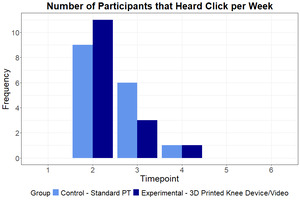
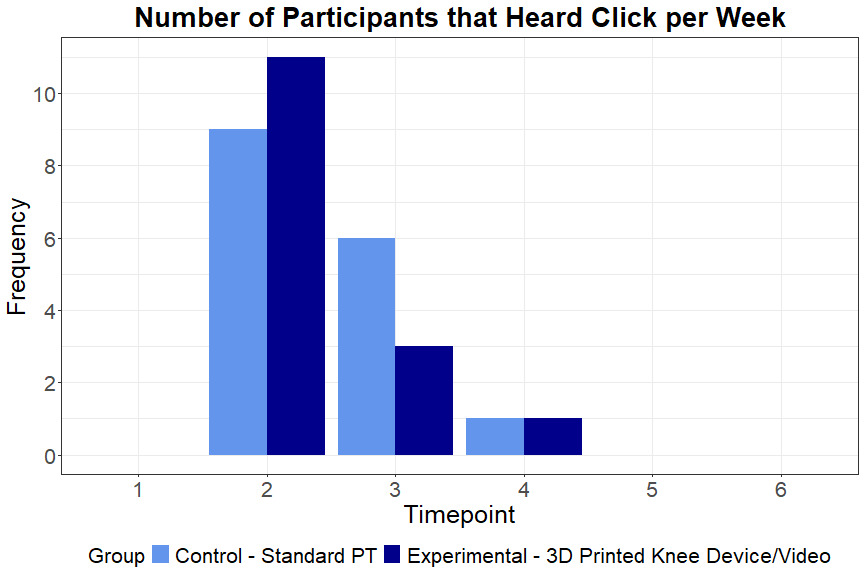
More patients in the experimental group reached full extension by Week 2, but this was not statistically significant (p=0.70). By the 6-week assessment, both groups had achieved comparable extension outcomes (Figure 4).
A graph of a number of participants AI-generated content may be incorrect.
Figure 4.Full knee extension achieved by timepoint.

More patients in the experimental group were able to create the ‘click’ sound using the testing device under the knee to assess for full knee extension before the control group; however, this finding was not statistically significant (p = 0.70).

Postoperative swelling, as reflected by increased knee circumference, was evident at the 2-week postoperative visit, consistent with expected inflammatory response following ACL reconstruction. Knee circumference measurements in both groups trended toward a return to baseline by the 6-week time point (p = 0.71). Both groups experienced a statistically significant reduction in knee range of motion at the 2-week postoperative visit (p < 0.01), reflecting early postoperative stiffness, followed by a statistically significant improvement to near-baseline levels by the 6-week visit (p < 0.01) (Figure 5).

A diagram of a knee extension AI-generated content may be incorrect.
Figure 5.Knee measurements at the time of surgery (time 0), 2 weeks postop, and 6 weeks postop. No significant differences were noted between groups.

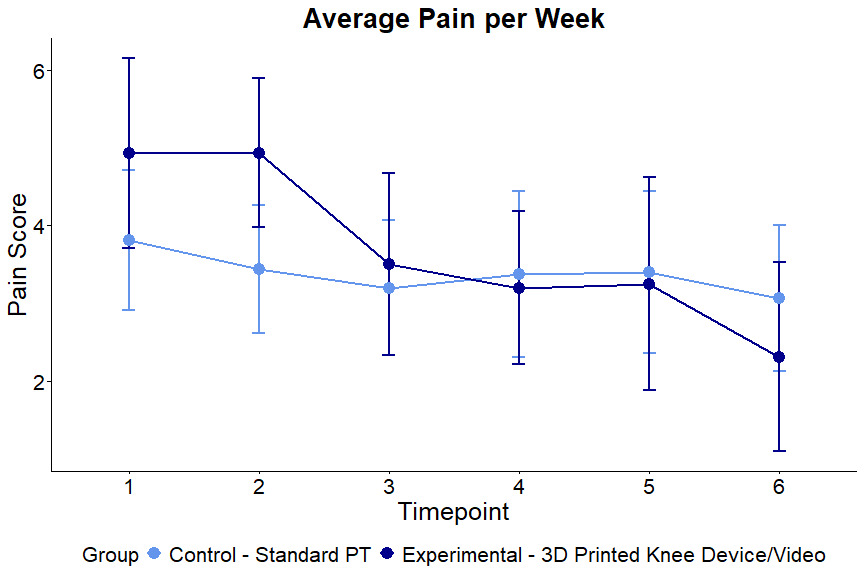
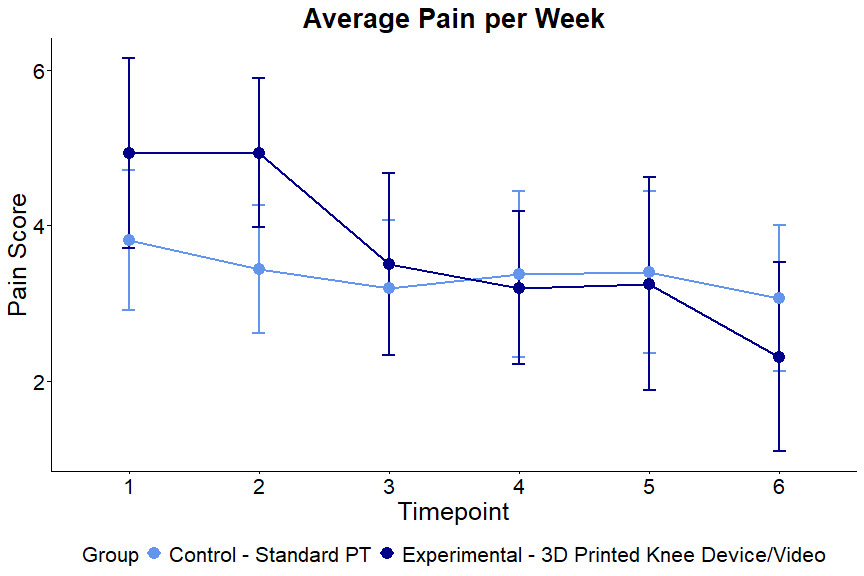
Pain trajectory also differed between groups. Participants in the experimental group reported higher initial pain scores which subsequently declined more rapidly than in the control group. By the final assessment, mean pain scores in the experimental group were lower than those in the control cohort, suggesting a potential benefit of the experimental protocol, although the difference was not statistically significant (p = 0.19). Pain scores in the control group remained stable throughout the 6-week study period (Figure 6).
A graph of pain per week AI-generated content may be incorrect.
Figure 6.Pain associated with using the 3D-printed device was well controlled throughout the study period.

Notably, no adverse events or device-related complications were reported during the study. Device compliance among participants in the experimental group was high, with all participants reporting regular use as prescribed. No device malfunctions, structural failures, or issues with component integrity occurred. Furthermore, no patients experienced wound irritation, skin breakdown, or discomfort at incision sites related to the device’s points of contact.

Discussion

This prospective, randomized pilot study evaluated the safety, feasibility, and preliminary efficacy of adding a low-cost 3D printed knee extender device used in conjunction with a structured, video-guided home rehabilitation program to formal physical therapy following ACL reconstruction. Although no statistically significant differences were observed between the experimental and control groups, several clinically meaningful trends emerged that support further investigation.

Participants utilizing the 3D printed knee sling demonstrated a tendency toward earlier achievement of full knee extension compared to those receiving standard physical therapy alone. Restoration of full extension is a critical milestone in postoperative ACL rehabilitation, as early deficits are associated with poorer long-term functional outcomes. The earlier return to full extension observed in the experimental group, even if not statistically significant in this pilot study, suggests that the device may provide an effective adjunct to conventional therapy by promoting consistent passive extension and patient engagement outside of formal therapy sessions.

Pain patterns also differed between groups. The experimental group reported higher pain scores initially but experienced a more rapid decline in pain by six weeks, ultimately demonstrating lower average pain scores than the control group. This pattern may reflect improved pain related to earlier full extension and decreased stiffness. Improved knee extension may reduce compensatory strain and contribute to pain reduction over time. These findings align with prior studies emphasizing the relationship between early motion restoration and improved comfort and functional outcomes following ACL reconstruction (Gage et al. 2019; Månsson et al. 2013; McHugh et al. 1998; Shaarani et al. 2013; de Valk et al. 2013).

Both groups exhibited increased knee circumference at the first postoperative visit, consistent with expected post-surgical effusion and edema. The subsequent reduction to near-baseline circumference by six weeks suggests that neither group’s treatment regimen exacerbated the inflammation more than the other. Similarly, range of motion demonstrated the expected postoperative course with an initial decrease followed by significant recovery by the 6-week follow-up. This further confirmed that the experimental protocol was safe and did not impair or worsen the rehabilitation process compared to standard physical therapy.

Importantly, no adverse events or device-related complications were reported. The 3D-printed knee sling was well-tolerated with no noted issues with skin breakdown, incisional irritation, or mechanical failure. High participant compliance each week underscores the practicality of the design and feasibility of incorporating 3D-printed devices into early rehabilitation protocols. The total material cost of $7.60 per device in TPU filament and the accessibility of desktop 3D printing technology highlight the device’s potential to provide affordable, readily accessible rehabilitation tools to patients. The TPU material could be chemically sterilized and reused on other patients, however, in our study, all patients utilized new devices in the study population. This reusability application, however, is especially valuable in rural or resource-limited settings where access to rehabilitation may be limited.

Several limitations should be acknowledged. As a pilot trial with a small sample size, the study was not adequately powered to detect small, but potentially statistically significant differences that are present in a large population. Additionally, this study was limited to a six-week postoperative period. This captured data from the short-term postoperative period does not provide insight into long term outcomes. Both populations received standard physical therapy to prevent any safety issues or adverse outcomes. However, a future study to measure the effect of a telerehabilitation protocol with the 3D printed knee sling in comparison to standard physical therapy will better assess the clinical impact of these treatments. Similarly, longer-term assessment of function, strength, and patient-reported outcomes would provide a more comprehensive understanding of the device’s potential benefits. Finally, while compliance was self-reported and appeared high, objective monitoring of device usage would strengthen future analyses.

Despite these limitations, this study supports the safety, feasibility, and potential utility of adding a customized, low-cost, desktop 3D-printed knee device and at-home video rehabilitation program as an adjunct to traditional ACL rehabilitation. The observed trends toward earlier extension, faster pain resolution, and high user satisfaction warrant further exploration and standardization to assess clinical significance and explore the broader implications of custom 3D-printed technologies. Future work should explore the use of the knee extension device and the home video-guide rehabilitation program in isolation compared to traditional rehabilitation, as this would be more applicable to rural and resource-limited settings.

Submitted: April 06, 2026 EDT

Accepted: June 04, 2026 EDT

References

Capin, J. J., L. Snyder-Mackler, M. A. Risberg, and H. Grindem. 2019. “Keep Calm and Carry on Testing: A Substantive Reanalysis and Critique of ‘What Is the Evidence for and Validity of Return-to-Sport Testing after Anterior Cruciate Ligament Reconstruction Surgery? A Systematic Review and Meta-Analysis.’” British Journal of Sports Medicine 53 (23): 1444–46. https:/​/​doi.org/​10.1136/​bjsports-2019-100906.
Google Scholar
Cronström, A., C. K. Häger, K. Thorborg, and E. Ageberg. 2023. “Factors Associated with Sports Function and Psychological Readiness to Return to Sports at 12 Months after Anterior Cruciate Ligament Reconstruction: A Cross-Sectional Study.” The American Journal of Sports Medicine 51 (12): 3112–20. https:/​/​doi.org/​10.1177/​03635465231192983.
Google Scholar
Delaloye, J. R., J. Murar, T. D. Vieira, et al. 2020. “Knee Extension Deficit in the Early Postoperative Period Predisposes to Cyclops Syndrome After Anterior Cruciate Ligament Reconstruction: A Risk Factor Analysis in 3633 Patients From the SANTI Study Group Database.” Am J Sports Med 48 (3): 565–72. https:/​/​doi.org/​10.1177/​0363546519897064.
Google Scholar
Dunphy, E., and E.C. Gardner. 2020. “Telerehabilitation to Address the Rehabilitation Gap in Anterior Cruciate Ligament Care: Survey of Patients.” JMIR Formative Research 4 (9): e19296. https:/​/​doi.org/​10.2196/​19296.
Google Scholar
Gage, A., M. A. Kluczynski, L. J. Bisson, and J. M. Marzo. 2019. “Factors Associated With a Delay in Achieving Full Knee Extension Before Anterior Cruciate Ligament Reconstruction.” Orthopaedic Journal of Sports Medicine 7 (3): 2325967119829547. https:/​/​doi.org/​10.1177/​2325967119829547.
Google Scholar
Joreitz, R., A. Lynch, S. Rabuck, B. Lynch, S. Davin, and J. Irrgang. 2016. “Patient-Specific and Surgery-Specific Factors That Affect Return to Sport after ACL Reconstruction.” International Journal of Sports Physical Therapy 11 (2): 264.
Google Scholar
Kotsifaki, R., V. Sideris, E. King, R. Bahr, and R. Whiteley. 2023. “Performance and Symmetry Measures during Vertical Jump Testing at Return to Sport after ACL Reconstruction.” British Journal of Sports Medicine 57 (20): 1304–10. https:/​/​doi.org/​10.1136/​bjsports-2022-106588.
Google Scholar
Månsson, O., J. Kartus, and N. Sernert. 2013. “Pre-Operative Factors Predicting Good Outcome in Terms of Health-Related Quality of Life after ACL Reconstruction.” Scandinavian Journal of Medicine & Science in Sports 23 (1): 15–22. https:/​/​doi.org/​10.1111/​j.1600-0838.2011.01426.x.
Google Scholar
Mauro, C. S., J. J. Irrgang, B. A. Williams, and C. D. Harner. 2008. “Loss of Extension Following Anterior Cruciate Ligament Reconstruction: Analysis of Incidence and Etiology Using IKDC Criteria.” Arthroscopy: The Journal of Arthroscopic & Related Surgery 24 (2): 146–53. https:/​/​doi.org/​10.1016/​j.arthro.2007.08.026.
Google Scholar
McHugh, M. P., T. F. Tyler, G. W. Gleim, and S. J. Nicholas. 1998. “Preoperative Indicators of Motion Loss and Weakness Following Anterior Cruciate Ligament Reconstruction.” Journal of Orthopaedic & Sports Physical Therapy 27 (6): 407–11. https:/​/​doi.org/​10.2519/​jospt.1998.27.6.407.
Google Scholar
Moran, T. E., E. R. Taleghani, J. R. Ruland, A. J. Ignozzi, J. Hart, and D. R. Diduch. 2023. “An Analysis of the Incidence, Risk Factors, and Timing of Development of Cyclops Lesions after Anterior Cruciate Ligament Reconstruction.” The Knee 40: 1–7. https:/​/​doi.org/​10.1016/​j.knee.2022.11.012.
Google Scholar
Sachs, R. A., D. M. Daniel, M. L. Stone, and R. F. Garfein. 1989. “Patellofemoral Problems after Anterior Cruciate Ligament Reconstruction.” The American Journal of Sports Medicine 17 (6): 760–65. https:/​/​doi.org/​10.1177/​036354658901700606.
Google Scholar
Shaarani, S. R., C. O’Hare, A. Quinn, N. Moyna, R. Moran, and J. M. O’Byrne. 2013. “Effect of Prehabilitation on the Outcome of Anterior Cruciate Ligament Reconstruction.” The American Journal of Sports Medicine 41 (9): 2117–27. https:/​/​doi.org/​10.1177/​0363546513493594.
Google Scholar
Shelbourne, K. D., and T. Gray. 1997. “Anterior Cruciate Ligament Reconstruction with Autogenous Patellar Tendon Graft Followed by Accelerated Rehabilitation: A Two-to Nine-Year Followup.” The American Journal of Sports Medicine 25 (6): 786–95. https:/​/​doi.org/​10.1177/​036354659702500610.
Google Scholar
Shelbourne, K. D., and C. Klotz. 2006. “What I Have Learned about the ACL: Utilizing a Progressive Rehabilitation Scheme to Achieve Total Knee Symmetry after Anterior Cruciate Ligament Reconstruction.” Journal of Orthopaedic Science 11 (3): 318. https:/​/​doi.org/​10.1007/​s00776-006-1007-z.
Google Scholar
Valk, E. J. de, M. H. Moen, M. Winters, E. W. Bakker, R. Tamminga, and H. van der Hoeven. 2013. “Preoperative Patient and Injury Factors of Successful Rehabilitation after Anterior Cruciate Ligament Reconstruction with Single-Bundle Techniques.” Arthroscopy: The Journal of Arthroscopic & Related Surgery 29 (11): 1879–95. https:/​/​doi.org/​10.1016/​j.arthro.2013.07.273.
Google Scholar

Attachments

Powered by Scholastica, the modern academic journal management system