
Introduction
Despite covering over 65 million Americans, Medicare remains a source of frustration among physicians due to declining reimbursement rates and increasing administrative burdens (Geiger and Krol 1991). Over the past three decades, the Centers for Medicare & Medicaid Services (CMS) have steadily reduced payments for medical and surgical procedures, with recent cuts disproportionately affecting specialists (Walter 2024). As of 2024, a 3.37% Medicare reimbursement reduction was implemented, further compounding long-standing financial pressures on providers (O’Reilly 2023). Unlike hospitals and other healthcare services, physicians do not receive annual inflation-based payment updates, forcing them to absorb rising operational costs without corresponding reimbursement adjustments (O’Reilly 2023). Many physicians are responding by seeking alternatives to Medicare’s restrictive payment structure, including opting out of the program entirely to engage in private contracting (Heiney 2013).
Orthopedic surgeons are particularly affected by Medicare reimbursement cuts due to the nature of their patient population and practice model (Pollock et al. 2022). With a high volume of elderly patients requiring treatment for osteoarthritis, fractures, and chronic pain, orthopedic practices rely heavily on Medicare payments (Pollock et al. 2022; Allen et al., n.d.). However, since 2009, Medicare has reduced its total spending on elective total joint arthroplasty by over $1 billion annually, and inflation-adjusted orthopedic surgical reimbursement rates have declined by nearly 40% and is forecasted to decrease 85-86% by 2030 (Catton et al. 2024). Unlike non-surgical subspecialties, orthopedic surgeons face higher overhead costs, more administrative burdens, and increased burnout due to the procedural and volume-intensive nature of their practice (Tornetta, n.d.). These pressures have led some orthopedic surgeons to opt out of Medicare in favor of private contracting, but doing so presents ethical and logistical challenges, particularly in regions with limited provider access (Salazar et al. 2019).
Therefore, this study aimed to analyze (1) trends in the incidence of orthopedic surgeons opting out of Medicare, (2) the demographic and professional characteristics of those opting out, (3) the geographic distribution of opt-outs, and (4) provider characteristics associated with the timing of opt-outs among orthopedic surgeons. Medicare opt-out decisions have potential consequences for patient access to orthopedic care, particularly in areas with limited provider availability. By identifying key trends and risk factors associated with Medicare opt-out, this study provides valuable insights for policymakers, healthcare administrators, and professional organizations seeking to improve physician participation in Medicare and ensure equitable patient access to care.
Methods
Study Design and Setting
We conducted a cross-sectional analysis of orthopedic surgeons who opted out of Medicare using the 2025 publicly available data from the Opt-Out Affidavits dataset provided by CMS, encompassing all 50 states, Puerto Rico, and the District of Columbia (“Opt Out Affidavits | CMS Data,” n.d.). The most recent Census data from the American Academy of Orthopedic Surgeons (AAOS), inclusive of members and non-members, was used to adjust for the overall population of orthopedic surgeons in the U.S (“AAOS Orthopaedic Surgeon Census | American Academy of Orthopaedic Surgeons,” n.d.). By matching opt-out orthopedic surgeons using their National Provider Identifier, additional data on fellowship graduation year, subspecialty, and type of practice were collected from publicly available professional profiles listed on platforms including Doximity and Healthgrades, as well as provider practice webpages when available. Subspecialty designation was determined based on the most recent fellowship training, assuming this reflected the primary focus of their clinical practice since graduating. Given the wide variability in practice model types, the classification was performed using the best available judgment of their available professional profiles, as done in prior research (Anne et al. 2025). Years of experience prior to opting out of Medicare were calculated as the time between fellowship graduation and the opt-out start date.
Participants / Study Subjects
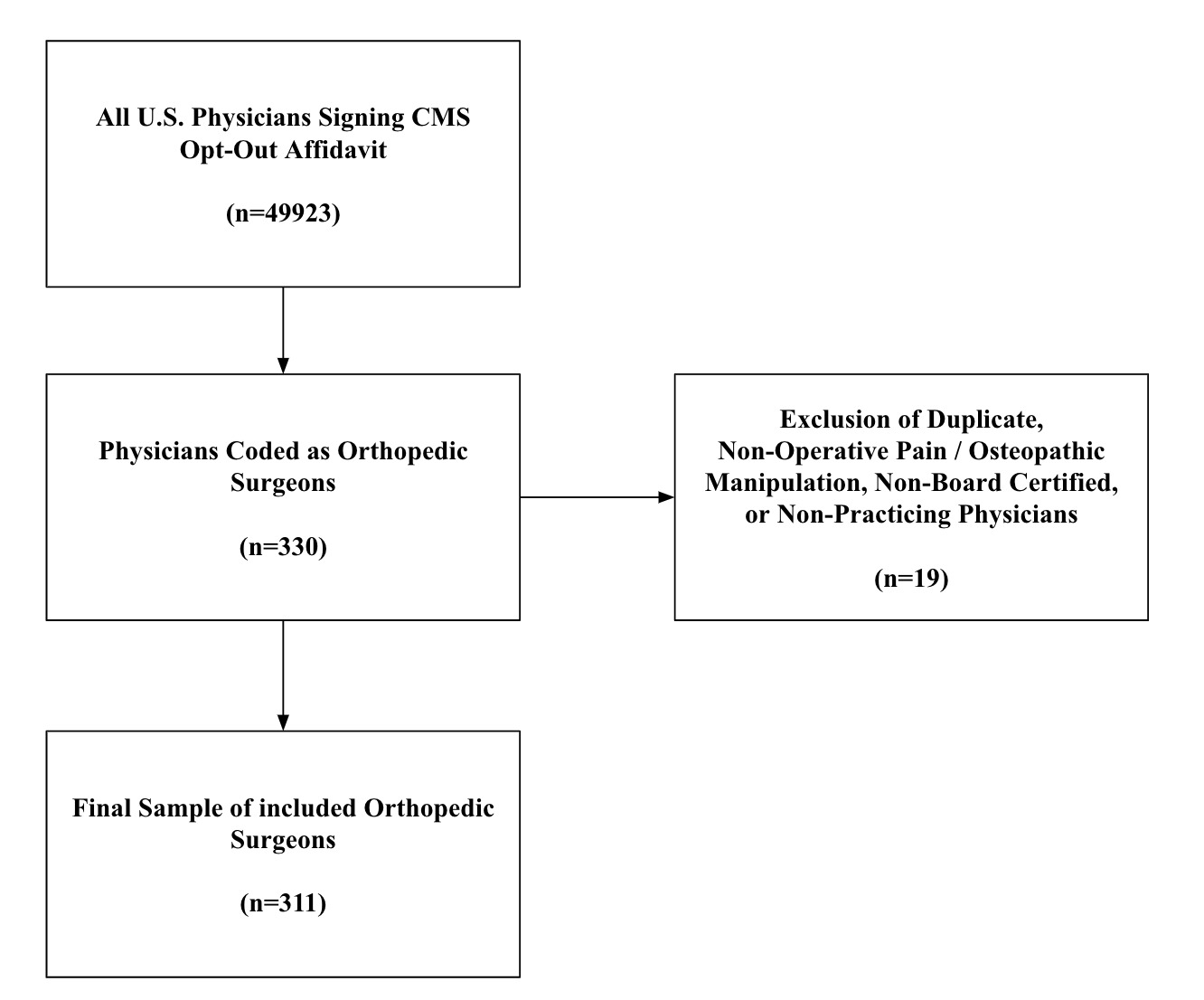
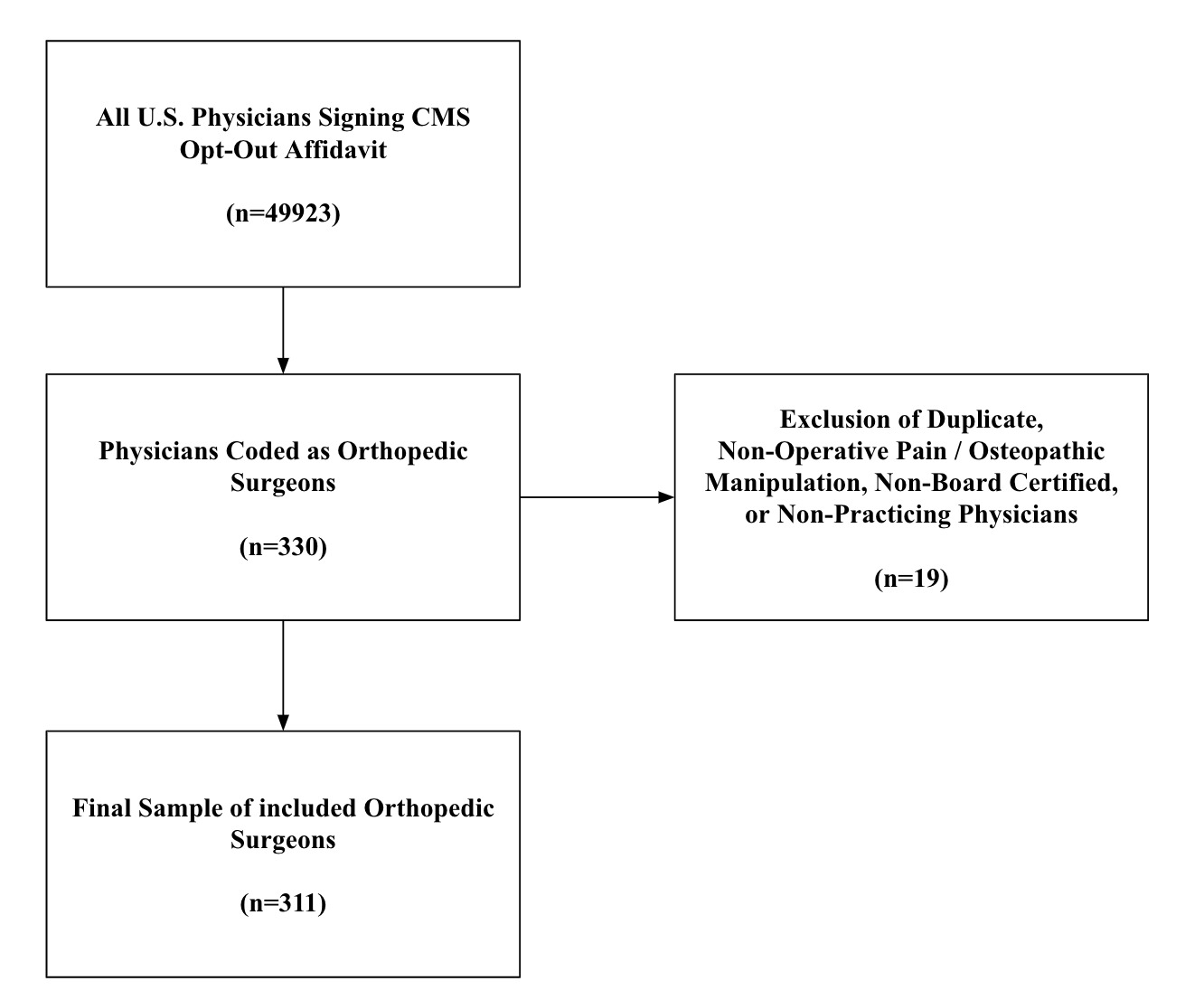
The initial sample included all CMS physicians opting out of Medicare (n=49,923). This dataset was filtered to include only those coded as orthopedic surgeons (n=330). Further review of individual profiles led to the exclusion of non-orthopedic surgeons, including physical medicine and rehabilitation (PMR) specialists and osteopathic physicians, as well as duplicate entries. Some opt-out surgeons were found to have transitioned into non-surgical fields, such as holistic medicine or testosterone replacement clinics, raising concerns about their active engagement in orthopedic practice. These surgeons were excluded from the analysis to prevent confounding effects on opt-out trends. Additionally, a small number of surgeons in the dataset were noted to be incarcerated, retired, or deceased. These individuals were also excluded to minimize potential confounding factors in the analysis. This study adheres to Strengthening the Reporting of Observational Studies in Epidemiology (STROBE) guidelines (Figure 1) (von Elm et al. 2007).
Statistical Analysis and Study Size
The level of statistical significance was predefined at α ≤ 0.05. β coefficients with 95% confidence intervals (CIs) were calculated via multivariate linear regression analysis to identify provider characteristics associated with the timing of opt-outs. All analyses were conducted using R (version 4.3.1) by members of the research team with advanced training in statistical modeling.
Results
Trends in the Incidence of Medicare Opt-Outs Among Orthopedic Surgeons (2002-2024)
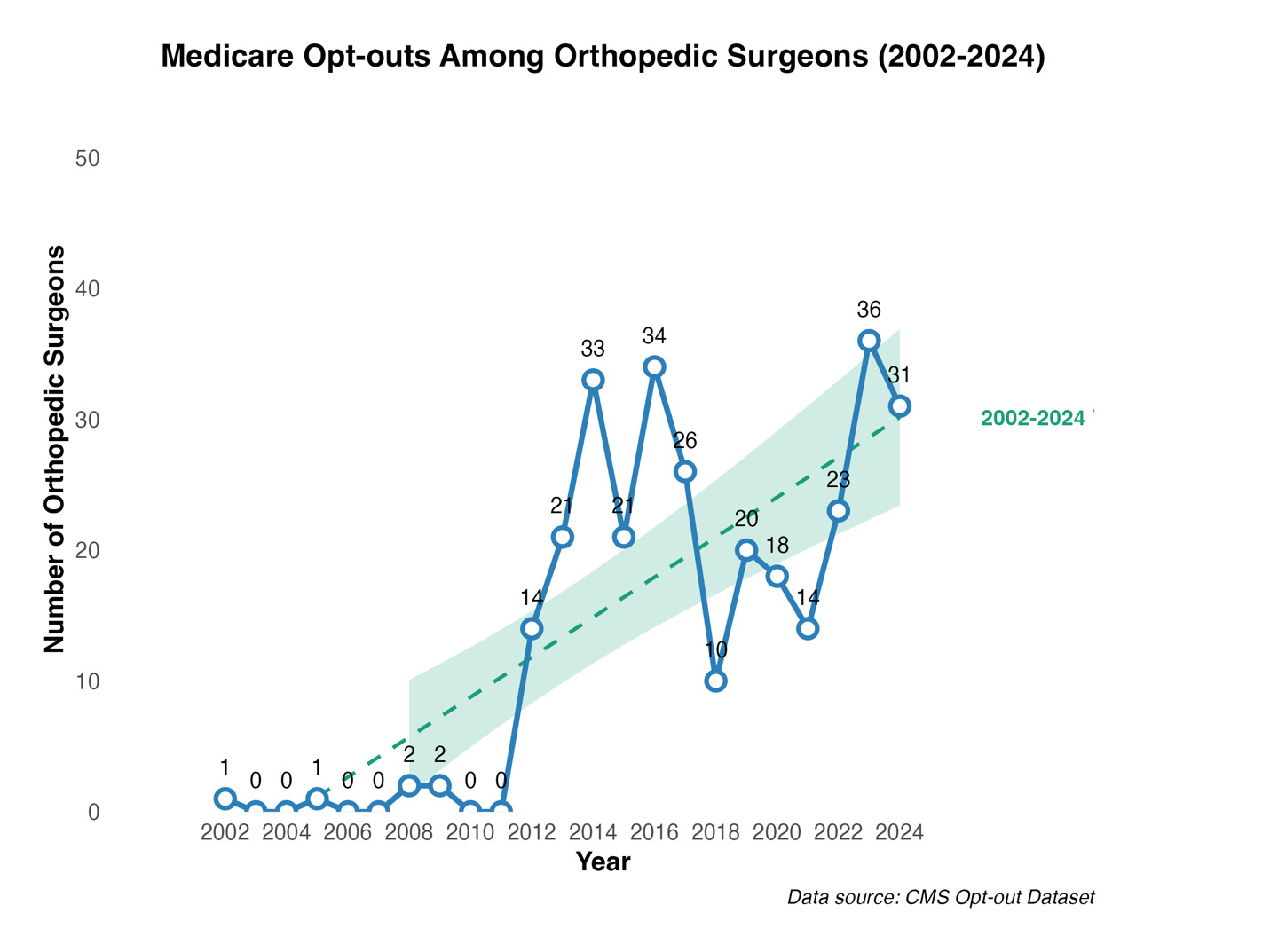
Over the 22-year study period, a total of n=311 orthopedic surgeons opted out of Medicare (0.712% of all physician specialties). Between 2002 and 2011, the number of orthopedic surgeons opting out of Medicare remained low, with fluctuations between 0 and 2 opt-outs per year. In 2012, there was a sharp increase to 14 opt-outs, marking the beginning of a steady upward trend in Medicare opt-outs. The number of opt-outs continued to climb annually, with the highest recorded in 2023 at 36 (Figure 2) . Data from 2025 was incomplete at the time of analysis, with n=4 opt-outs not shown in the graph. Regression analysis demonstrated a statistically significant upward trend from 2002 to 2024, with a slope of 1.53 opt-outs per year (95% CI: 1.002-2.053, p < 0.0001, R2 = 0.6353).
.png)
Demographic Characteristics of Orthopedic Surgeons Opting Out
The mean years in practice for those opting out was 29.2 years (95% CI: 27.9-30.5), with nearly half (49.5%, 95% CI: 43.8-55.2%) practicing for more than 30 years. The most common subspecialties among opt-outs were spine (33.1%, 95% CI: 28.0-38.7%), sports medicine (23.2%, 95% CI: 18.7-28.3%), general orthopedics (15.8%, 95% CI: 12.0-20.4%), and total joint & adult reconstruction (14.8%, 95% CI: 11.1-19.3%), with all other subspecialties comprising less than 5%. Opt-outs were distributed across practice types, with 29.6% in academic medical centers (95% CI: 24.6-35.0%), 27.3% in group practices (95% CI: 22.5-32.7%), 26.0% in independent practices (95% CI: 21.3-31.4%), and 17.0% in community hospitals (95% CI: 12.1-21.8%) (Table 1). The majority of orthopedic surgeons opting out were male (95.2%, 95% CI: 92.0-97.2%).
Geographic Distribution of Orthopedic Surgeons Opting Out
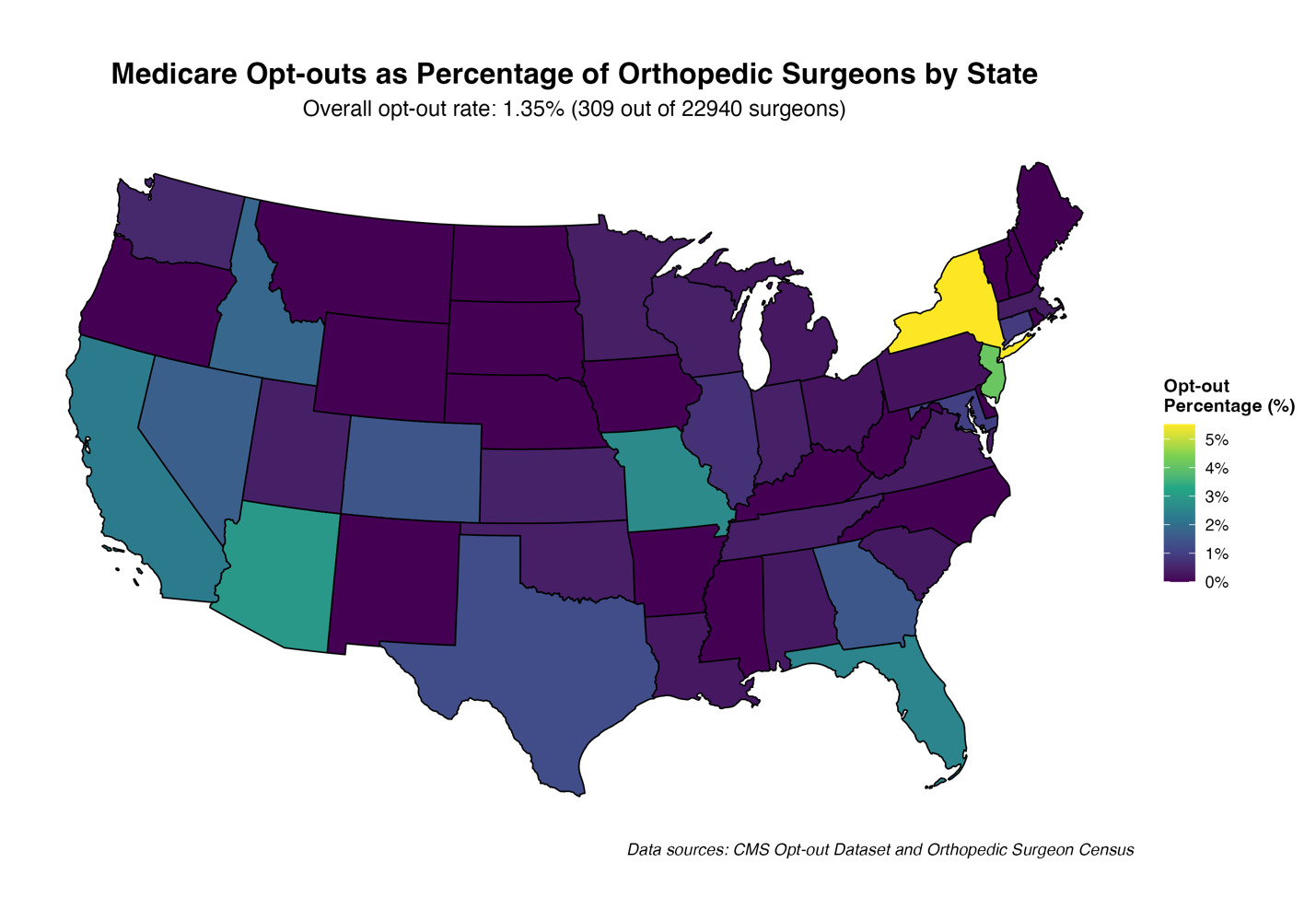
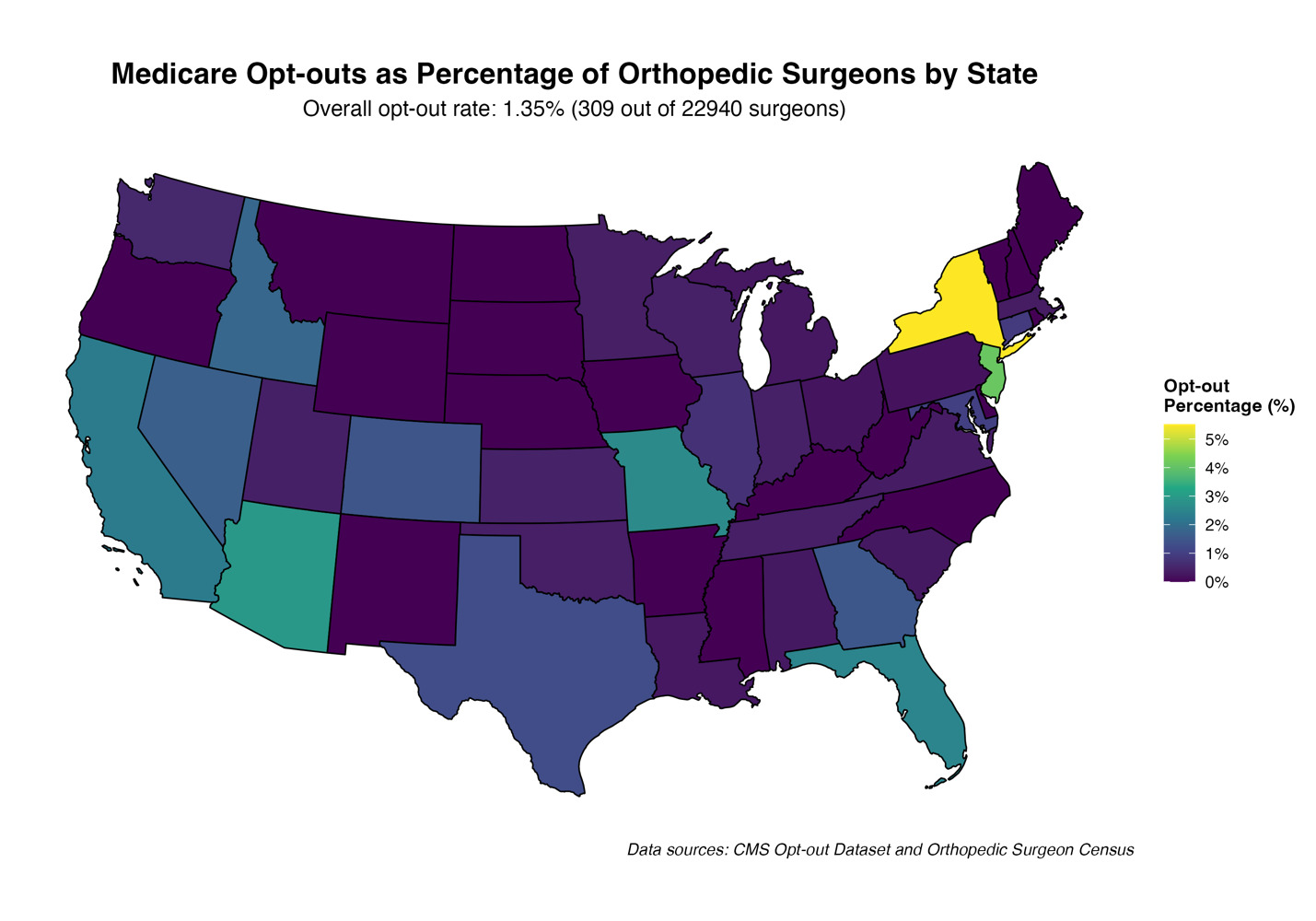
Medicare opt-outs varied modestly across geographic regions in the single digits. New York had the highest percentage of orthopedic surgeons opting out at 5.51% (n=78 out of 1,803 orthopedic surgeons), followed by New Jersey at 4.12% (n=28 out of 892 orthopedic surgeons), while all other states had rates below 3%. The overall opt-out rate among orthopedic surgeons was 1.35%, representing 309 opt-outs out of the estimated 30,141 practicing orthopedic surgeons in the contiguous United States, with an additional 2 opt-outs in Puerto Rico (Figure 3).
Predictors of Year of Orthopedic Surgeon Opt-Out from Medicare
Years in practice was significantly correlated with earlier opt-out, with a linear regression β coefficient of -0.14 (95% CI: -0.18 to -0.10, p<0.001). Among subspecialties, spine surgeons (+2.12, 95% CI: 1.03 to 3.20, p=0.049) and general orthopedic surgeons (+3.33, 95% CI: 1.06 to 5.61, p=0.004) were significantly associated with later opt-out. Within practice types, orthopedic surgeons in academic medical centers were significantly associated with later Medicare opt-out (+2.05, 95% CI: 0.68 to 3.42, p=0.003), while those in group practices opted out earlier (-1.93, 95% CI: -3.12 to -0.74, p=0.002). Sex was not significantly associated with the timing of Medicare opt-out (-0.53, 95% CI: -2.58 to 1.62, p=0.628) (Table 2).
Discussion
Medicare remains a cornerstone of reimbursement for orthopedic surgeons, given the aging U.S. population and the high volume of musculoskeletal procedures delivered to Medicare beneficiaries. While administrative and reimbursement challenges in the program are well described, little is known about the individual-level patterns and predictors of orthopedic surgeons formally opting out of Medicare. This study addresses that gap by providing a national, longitudinal overview of orthopedic Medicare opt-outs from 2002 to 2024, including demographic, practice, and geographic characteristics. Despite public discourse on physician dissatisfaction with Medicare, our findings confirm that formal opt-out remains an uncommon occurrence among orthopedic surgeons. Medicare appears to be an unavoidable payer for orthopedic practices, reflecting the high dependence on Medicare patients and the impracticality of sustaining a viable surgical practice without participation. Readers should interpret these results as a resource for understanding the structural boundaries of Medicare participation and the limited, niche circumstances under which opt-out decisions occur.
Trends in the Incidence of Medicare Opt-Outs Among Orthopedic Surgeons (2002-2024)
Between 2002 and 2011, Medicare opt-outs among orthopedic surgeons remained low, likely due to Medicare serving as a primary revenue source given the high proportion of elderly patients in orthopedic practice. Medicare opt-outs among orthopedic surgeons have increased gradually since 2012, with a notable inflection point coinciding with the implementation of the Affordable Care Act (Williamson et al. 2020). However, the total number of opt-outs remains very low relative to the overall orthopedic workforce, amounting to just over 300 surgeons over a 22-year period. This small number suggests that despite ongoing concerns with reimbursement cuts and administrative demands, orthopedic surgeons are largely unable to forgo Medicare participation. The sheer volume of elderly patients requiring orthopedic care creates a situation in which Medicare participation is not optional for most providers. While the trend line is upward, this may reflect the growing absolute number of orthopedic surgeons in the U.S. over time rather than a systemic disengagement from Medicare. Policymakers and professional societies may wish to continue monitoring this trend, but current data do not indicate widespread withdrawal from the Medicare system. However, if this trend accelerates, Medicare patients may face prolonged wait times and fewer options for specialized orthopedic care (Krueger et al. 2025).
Demographic Characteristics of Orthopedic Surgeons Opting Out
The majority of opt-out surgeons were in the late stages of their careers, with nearly half having more than 30 years of post-fellowship experience. These patterns are consistent with potential career transitions such as industry consulting, part-time work, or administrative roles, which may reduce the necessity of Medicare participation. Younger surgeons, often burdened with student loan debt and establishing their practices, may not have the financial flexibility to opt out, which could contribute to increased workload and burnout. Furthermore, the presence of academic surgeons among the opt-outs may also reflect such transitions rather than active clinical disengagement. The idea that a practicing academic orthopedic surgeon could remain credentialed while opting out of Medicare is highly unlikely, given institutional requirements. Prior literature suggests that most academic institutions require Medicare participation for credentialing and billing compliance (Medicare I of M (US) C to D a S for QR and A in and Lohr 1990). In this context, opt-out status may be more indicative of a surgeon’s shift away from full-time clinical responsibilities. Health systems and workforce planners should consider these patterns when designing strategies for succession planning and resource allocation across orthopedic departments.
Geographic Distribution of Orthopedic Surgeons Opting Out
Geographic variation in Medicare opt-outs was modest overall. States like New York and New Jersey had the highest adjusted opt-out rates, but even these did not exceed 6% of the local orthopedic workforce. Notably, New York and New Jersey together accounted for 106 of 311 total opt-outs (34.1%), representing a striking geographic concentration of opt-out activity relative to their combined share of the national orthopedic workforce. High opt-out rates in these small states may reflect localized phenomena such as higher densities of boutique, specialized practices or unique institutional cultures (Qiu et al. 2025). Institutions like the Hospital for Special Surgery and other academic medical centers in these states provide opportunities for orthopedic surgeons to focus on specialized procedures that may not heavily rely on Medicare reimbursement, which may contribute to the higher incidence of opt-outs observed at these institutions during data collection (Lantieri et al. 2023). The feasibility of operating a profitable practice without Medicare patients is variable across subspecialties, with some fields less dependent on Medicare, such as pediatrics or elective sports medicine, whereas subspecialties like total joint replacement remain heavily reliant on Medicare patients (Kocher and Wachter 2023). Some surgeons may serve patient populations who can afford private contracting arrangements, particularly in markets with an abundance of providers. The data do not support broad conclusions about limited access or increased wait times for patients due to opt-outs. In fact, in competitive urban markets, opt-outs may redirect patients to early-career surgeons looking to build a practice, thus redistributing patient load rather than creating shortages (Costello et al. 2025). From a policy standpoint, current geographic patterns do not suggest an imminent access crisis due to opt-outs.
Predictors of Year of Orthopedic Surgeon Opt-Out from Medicare
Predictors of earlier Medicare opt-out included greater years in practice and group practice affiliation. These associations may reflect differences in administrative flexibility, financial independence, or institutional constraints across practice models. Surgeons in group practices may be more empowered to make autonomous financial decisions, including disengaging from Medicare when practice viability allows (Pollock et al. 2021; Allen et al. 2025). Conversely, academic surgeons opted out later, possibly due to institutional policies requiring Medicare participation or access to alternative funding sources. While spine and general orthopedic surgeons were associated with later opt-out, this may be due to broader patient panels or delayed financial independence (Salazar et al. 2019). Ultimately, these predictors suggest that opting out is more often a formality for orthopedic surgeons who are already disengaged from clinical practice, rather than a deliberate strategy pursued by actively practicing, mid-career surgeons. For administrators and policymakers, understanding these predictors may help target interventions or support systems toward groups at higher risk for disengagement.
Limitations
This study has several limitations. First, surgeon-level data were extracted from publicly available sources such as professional profiles and practice websites, which may be incomplete or outdated. However, we minimized this limitation by manually verifying each entry and cross-referencing multiple data sources. Second, we could not determine the exact clinical status of all opt-out surgeons; some may have retired, transitioned to part-time, or taken non-clinical roles. We attempted to exclude known cases of career transition, but some misclassification may persist. Third, due to data availability, we were unable to compare opt-out surgeons to non-opt-out counterparts, limiting our ability to calculate adjusted odds ratios or relative risk. We also acknowledge the possibility that a small number of opt-outs may have been missed due to inconsistencies in public reporting or database limitations. American Osteopathic Academy of Orthopedics (AOAO) census data was inaccessible. The demographic proportions reported in this study were not adjusted for the overall U.S. orthopedic surgeon population from AAOS due to a lack of available data on practice type, subspecialty, etc., which aligns with prior studies in similar fields (Anne et al. 2025). Despite these limitations, this study is among the first to characterize orthopedic Medicare opt-outs at the national level, offering a useful descriptive foundation for future research.
Conclusions
In summary, formal Medicare opt-out remains a rare but gradually increasing occurrence among orthopedic surgeons. The findings suggest that Medicare participation is effectively mandatory for the vast majority of orthopedic surgeons, with opt-outs occurring under limited, often transitional circumstances. Policymakers and practice leaders should recognize that orthopedic surgeons remain structurally tied to Medicare despite known dissatisfaction, and reforms aimed at easing participation burdens are likely to have broader impact than changes designed to accommodate opt-outs. Future studies should explore the motivations and outcomes associated with opt-out status through mixed-methods research, including surveys and interviews with opt-out surgeons. Such work would provide more granular insights into how Medicare policy intersects with clinical decision-making and practice sustainability.
Acknowledgments
None to declare