
INTRODUCTION
Pickleball has become an extremely popular sport enjoyed by many age groups ranging from children to elderly. Pickleball is a racquet sport with regulations like tennis, but it utilizes a smaller court, lighter racket, and shorter match times. During the COVID-19 pandemic, the sport grew exponentially with the number of pickleball players increasing from 3.3 to 4.8 million within 2019-2021 (n.d.) and in 2023, the number of players had increased over three times to 13.6 million (“Pickleball Annual Growth Report | USA Pickleball,” n.d.). Affordable equipment, wide availability of courts, and relatively low amount of skill needed to play have created a low entry barrier (Wray et al. 2021). According to the 2024 Sports & Fitness Industry Association (SFIA) pickleball remains the fastest growing sport in the United States of America with an estimated 223.5% growth from 2020-2024. Now multiple pickleball professional leagues exist and one of the most recent national championships in 2023 garnered over 2.6 million TV viewers on ESPN (“Pickleball Annual Growth Report | USA Pickleball,” n.d.).
Pickleball is known to be popular among older adults. During the rapid growth of the sport in 2021, adults over 55 years old represented the largest group of total participants in the sport (Pickleheads, n.d.). Pickleball presents an opportunity for older adults to remain active but in a less physically demanding sport (Buzzelli and Draper 2020). There have also been studies that have noted the social and mental health benefits of playing pickleball (Chen et al. 2022; Heo et al. 2018). This increase in social exposure along with the benefits of physical activity has led to an appeal for pickleball within the older population.
Recent studies have highlighted a notable increase in injury risks among pickleball players, with injuries ranging from fractures to sprains and strains affecting both the upper and lower extremities. A 2024 study by Ghattas et al. reported that a considerable proportion of these injuries, particularly fractures, involve the upper extremities and are often caused by falls due to the older age and female predominance of players (Forrester 2020; Ghattas et al. 2024). Among the rapidly growing population of players, older adults (aged 60 and above) face a heightened risk of falls leading to fractures, including those of the hand, elbow, and shoulder, some of which may require surgical intervention (Firouzbakht et al. 2024; Weiss et al. 2021). This study aims to examine the estimated injury rate and trends of injuries affecting the shoulder, upper arm, elbow, and forearm, with a focus on providing demographic insights to help identify at-risk populations. In particular, this study seeks to determine the most common injury types associated with pickleball participation.
METHODS
Data Source
This study utilized data from the National Electronic Injury Surveillance System (NEISS) to identify and analyze upper extremity injuries associated with pickleball in the United States and its territories from 2014 to 2023. NEISS is a nationally recognized system that collects injury data from a representative sample of emergency departments nationwide, enabling the estimation of weighted national injury estimates (U.S. Consumer Product Safety Commission, n.d.). Each case recorded within NEISS is assigned statistical weight to ensure accurate population-level projections. To facilitate comparative analysis, injuries were categorized based on their mechanism, such as contusion & abrasion, dislocation, fracture, hematoma, laceration, strain & sprain, and avulsion. NEISS statistical weights were applied to generate national estimates of emergency department-treated upper extremity injuries for both pickleball and tennis. This approach allowed for an epidemiological comparison of injury trends across the two sports, controlling for variations in player participation and demographic characteristics.
Case Selection
Inclusion criteria for this NEISS-based study included injuries involving the shoulder, upper arm, elbow, and forearm sustained during active participation in pickleball during the study period. Cases unrelated to gameplay, such as off-court injuries, or injuries sustained during other sports were excluded. Because pickleball does not have a dedicated NEISS product code, cases were identified using the non-specific product code 3235 (“Other ball sports, activity/apparel/equipment”) in combination with a narrative-text search. Similar to the method described by Weiss et al, potential cases were identified by querying the narrative field for the terms “pickleball,” “pickle ball,” and common misspellings or variants such as “pickelball” and “pickel ball.” (Weiss et al. 2021)
Data Extraction
Data extracted included year of injury, patient demographics (age, sex, race), diagnosis (e.g., fracture, sprain/strain, dislocation), mechanism of injury (e.g., fall, blunt trauma), and national injury weight. Data was downloaded and processed in Microsoft Excel (Microsoft Corp., Redmond, WA, USA) prior to statistical analysis. Injuries were categorized by type: fracture, sprain/strain, dislocation, contusion/abrasion, laceration, hematoma, and avulsion.
Participant-Based Injury Rate
Annual participation data for pickleball were obtained from the Sports and Fitness Industry Association (SFIA), which tracks yearly player numbers and growth rates (Sports & Fitness Industry Association (SFIA) Pickleball Participation Report 2023, n.d.). These data were used to calculate estimated injury rates per 100,000 participants. Because exposure-based denominators such as hours played, athlete-exposures, and games played are not available in NEISS or SFIA participation reports, these values represent participant-based injury rates rather than true exposure-based incidence rates.
Statistical Analysis
Descriptive analysis was used to display categorical variables such as percentages and frequencies, while continuous variables were reported as mean ± SD. The significance of the data was determined using categorical Chi-square or Fisher’s exact tests. Linear regression analysis was used to assess the relationship between time and the number of pickleball injuries. Regression analysis was conducted to assess the influence of demographic and clinical factors on pickleball injury estimated injury rate. Statistical analyses were performed using SPSS Statistics for Windows, Version 28.0 (IBM Corp., Armonk, NY, USA), with significance set at p < 0.05.
RESULTS
Overall Injury Burden and Demographics
Between 2014 to 2023, an estimated 66,350 pickleball-related injuries were reported in the United States based on the NEISS national data. On average 14,916 injuries (22.5%) involved the upper extremity, with an average number of upper extremity injuries reported annually at 1,491. The mean age of injured individuals was 67.1 ± 11.5 years , with 83.1% (n = 12,389) of all upper extremity injuries occurring in patients over the age of 60. When stratified by sex, females accounted for a great proportion of injuries (59.0%, n = 8,796) of injuries, compared to males (41.0%,n = 6,120) (Table 1). The most frequently affected injured upper extremity regions were the shoulder (36.8%) and forearm (35.1%).
Trends Over Time
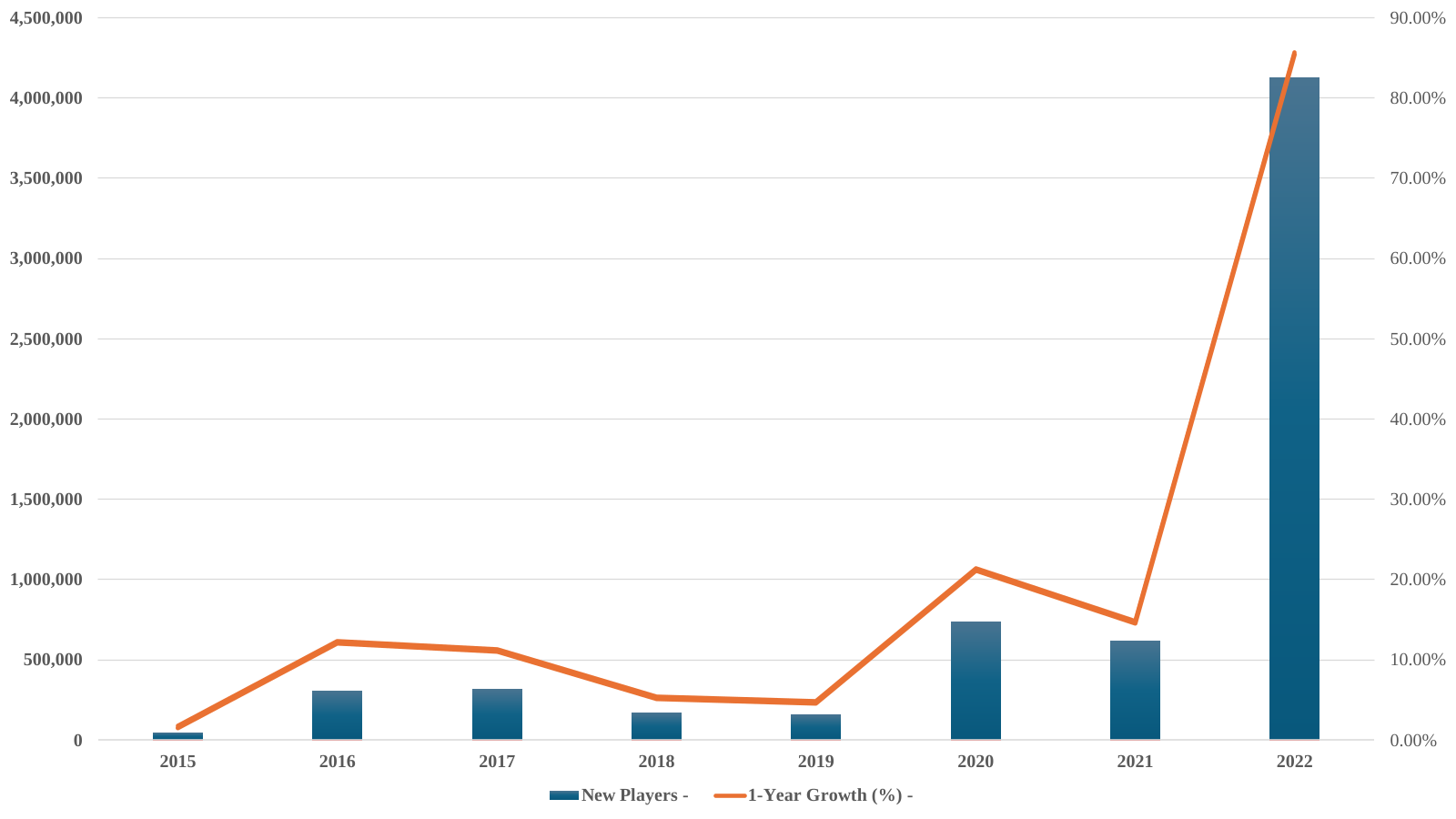
Pickleball participation grew significantly from 2.46 million players in 2014 to 8.95 million in 2022, with a mean annual growth rate of 19.7%. The most dramatic participation growth occurred in 2022, with an estimated 4.13 million additional participants compared with the prior year (Figure 1). Correspondingly, the estimated upper extremity injury rate per 100,000 participants increased from 5.27 in 2015 to a peak of 62.74 in 2021, before declining to 30.60 in 2022 (Table 2).
.svg)
Injury Type by Sex
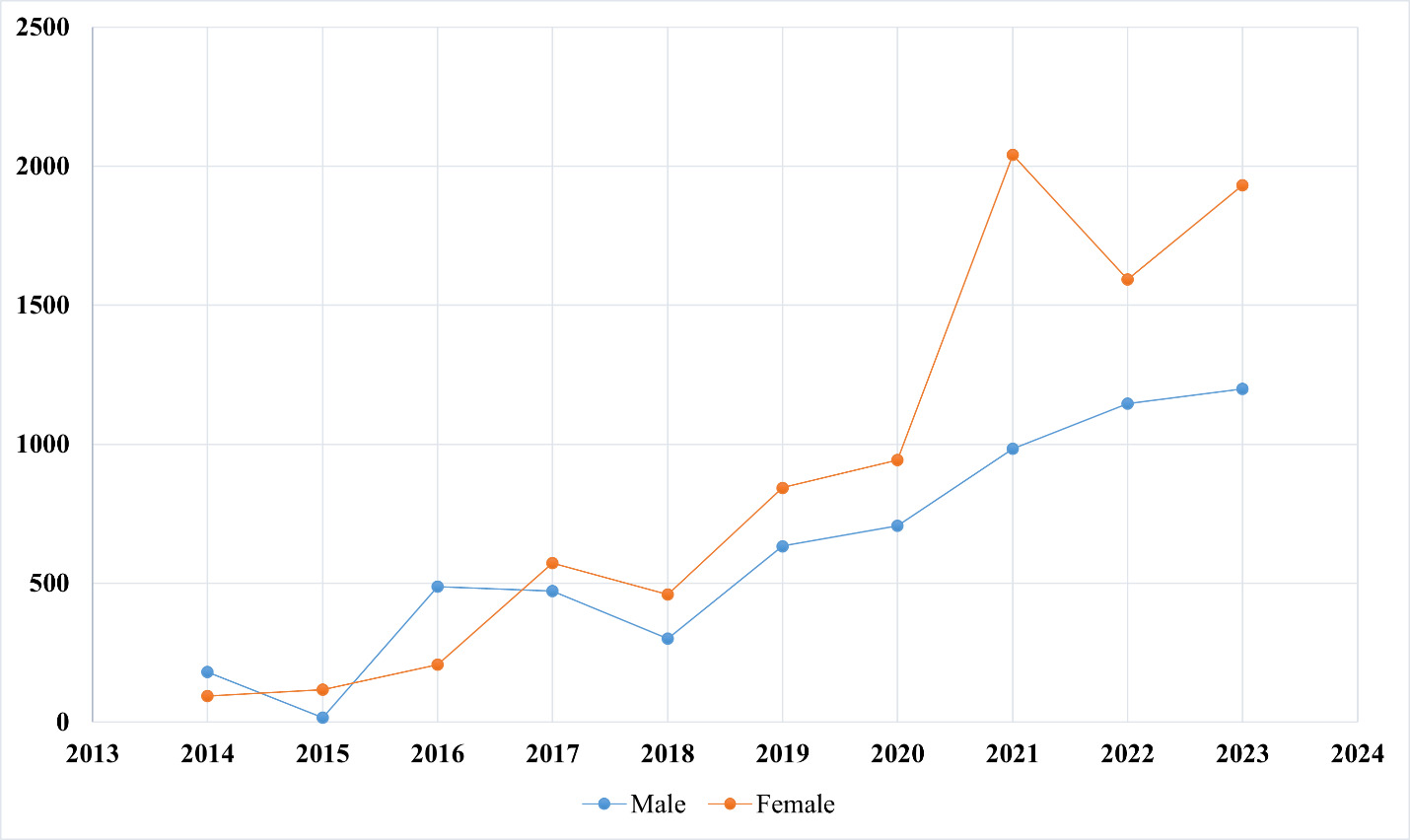
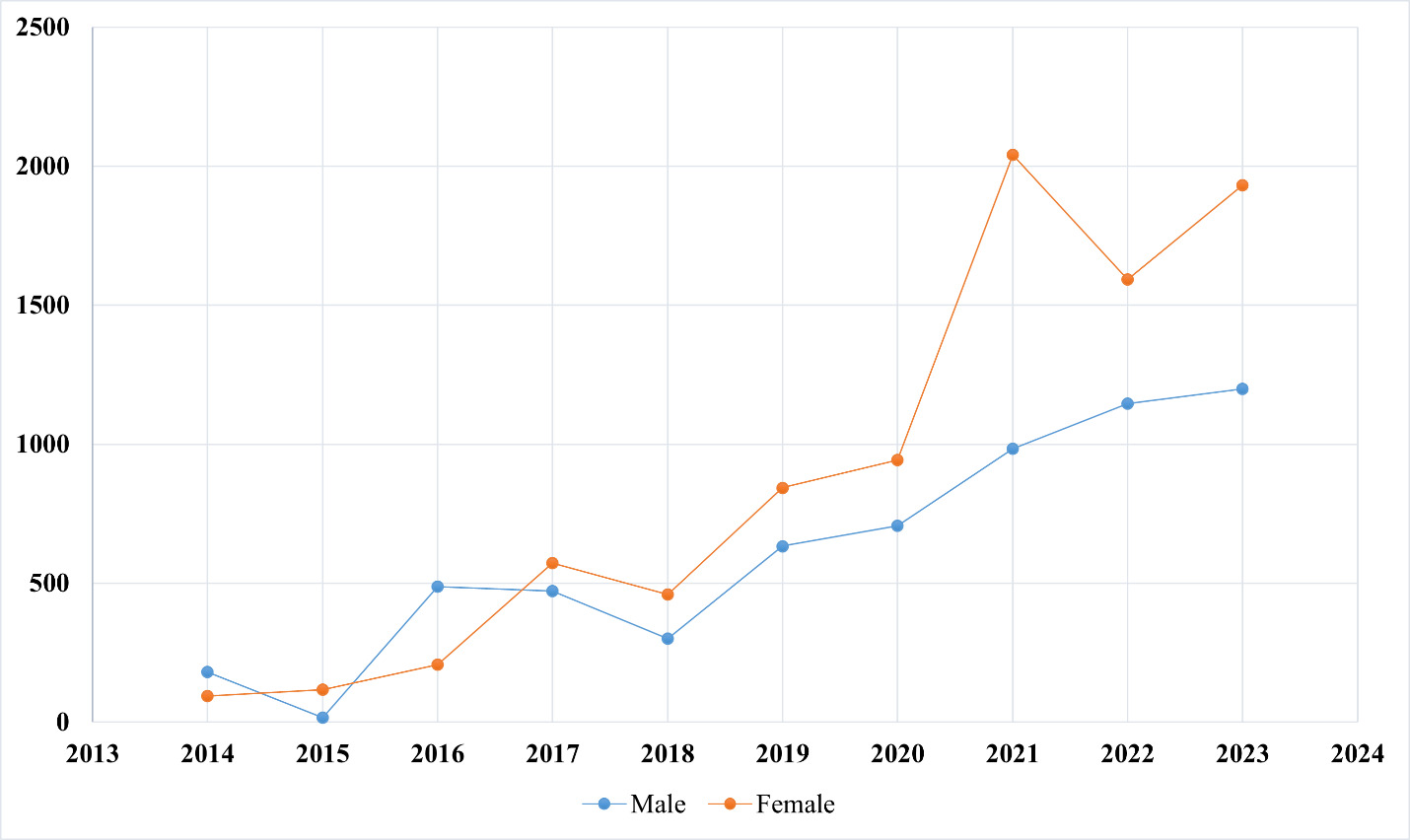
Fractures were the most frequent injury in both sexes but were significantly more common in females. Among female patients, fractures accounted for 71.7% (n = 6,311) of injuries, followed by strains/sprains (n = 724; 8.2%) and dislocations (n = 574; 5.4%). Among male patients, fractures were also the most frequent injury (39.8%, n = 2,437), followed by dislocations (n = 1,009; 16.5%) and contusions/abrasions (n = 963; 15.7%) (Table 3, Figure 2). The weighted mean number of annual injuries was 879.6 for females and 612.0 for males.
Injury Patterns by Age
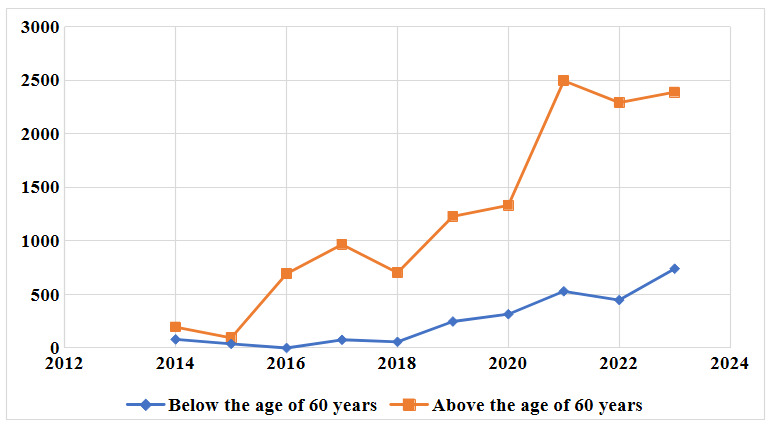
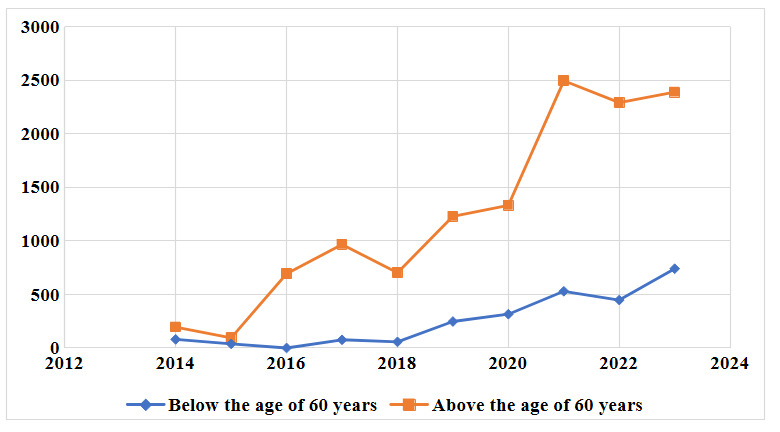
Patients over 60 years demonstrated a higher estimated injury rate and a different injury distribution compared with those under 60. Among younger patients (<60 years), the most common injuries were fractures (n = 1,198; 47.4%), dislocations (n = 465; 18.4%), and strains/sprains (n = 371; 14.7%). Similarly for older patients (≥60 years), fractures were the most common injuries (7,550 (60.9%)), followed by strain & sprains (n = 1,278; 10.3%), and then contusion/abrasions(n = 1,118; 9.6%). The weighted mean annual estimated injury rate was 1,238.8 for patients over 60 and 252.9 for those under 60. The highest injury estimated injury rateamong older players occurred in 2021 (n = 2,495; 20.1%), while younger players experienced their peak in 2023 (n = 740; 29.3%) (Figure 3).
Comparison to Tennis
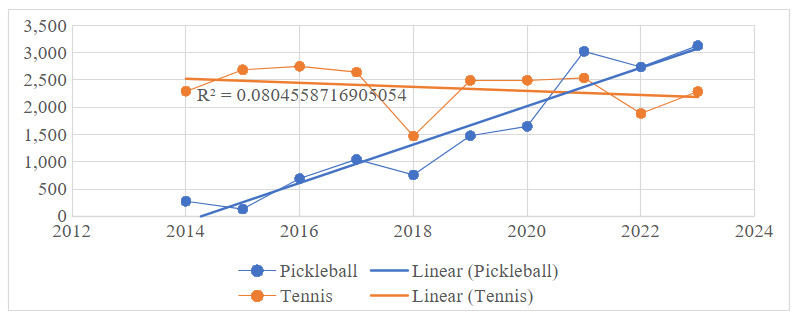
To contextualize pickleball-related injuries, upper extremity injury patterns were compared to those observed in tennis over the same period. Tennis-related injuries were more common among individuals under the age of 60 (53.0%) and in male players (54.2%), in contrast to pickleball, where the majority of injuries occurred in individuals over 60 and among females. In tennis, the shoulder was the most commonly injured body part (n = 11,117; 47.3%), followed by the elbow and forearm. Fractures were significantly more common in pickleball , representing 58.6% of all injuries (n=8,747), compared to 36.1% in tennis. Conversely, sprains and strains were more prevalent in tennis (20.6%) than pickleball (11.1%). Hospitalizations were more common following pickleball-related injuries (8.1%) compared to tennis (4.0%). Most injuries in both sports occurred in recreational or sports facilities (pickleball: 79.9%; tennis: 75.7%). Figure 4 illustrates the year-by-year distribution of upper extremity injuries for both sports, showing a generally rising trend in pickleball injuries until a recent decline (R2 = 0.90), while tennis injuries remained relatively stable (R2 = 0.08). This comparison highlights distinct demographic and injury trends between the two sports, underscoring the need for sport-specific injury prevention strategies.
.png)
DISCUSSION
Pickleball has rapidly emerged as the fastest-growing sport in the United States, attracting millions of new players, particularly older adults. While the sport offers significant health and social benefits, its surging popularity has been accompanied by a notable rise in injuries, especially among seniors. Importantly, our findings show that this rise is not evenly distributed. Women, especially those over age 60, experience a disproportionately high burden of upper extremity injuries. According to the 2023 Sports and Fitness Industry Association Pickleball Participation Report, an estimated 6.5 million new players joined the sport between 2015 and 2022, bringing total participation to 8.95 million. The most substantial year-to-year increase occurred between 2021 and 2022, with a 70.9% surge in participation (Sports & Fitness Industry Association (SFIA) Pickleball Participation Report 2023, n.d.). Prior to this surge, adults over 65 comprised approximately 21% of the pickleball community. Ryu et al. reported that players over 70 experienced higher levels of life satisfaction and social integration than younger participants, with these benefits particularly notable among female players (Cerezuela et al. 2023; Ryu et al. 2017; Weiss et al. 2021). This demographic shift toward older female participation has important implications for injury epidemiology and prevention.
This study analyzed the frequency and mechanisms of shoulder, upper arm, elbow, and forearm injuries related to pickleball from 2014 to 2023. Findings revealed a consistent increase in estimated injury rate, with annual injury rates rising from 5.27 per 100,000 participants in 2015 to a peak of 62.74 in 2021, with individuals over the age of 60 accounted for 83.1% of all reported injuries. Notably, female players not only sustained more injuries overall (59.6 percent) but experienced significantly higher rates of fractures, with more than 70 percent of all fractures occurring in women. Other studies have also demonstrated that fractures are the predominant injury type, though differences exist between sexes (Firouzbakht et al. 2024; Weiss et al. 2021; Yu et al. 2025). These results highlight significant age- and sex-related disparities in injury trends and align with prior studies on the growing public health implications of pickleball-related injuries (Firouzbakht et al. 2024; Forrester 2020; Kasper et al. 2023; Yu et al. 2025).
Several factors likely contribute to the heightened fracture burden observed in women. Plawecki et al. discusses the significant decreases of bone density in older women as a risk factor for fractures (Plawecki et al. 2017). Additionally, reduced upper extremity muscle mass, slower neuromuscular reaction times, and differences in protective reflexes may increase the likelihood and severity of fall-related injuries in older women compared to men. This further supports our results which demonstrate women suffering fractures at a higher rate when compared to male participants.
These fracture trends may, in part, be explained by the underlying mechanisms of injury observed in this population. Falls were the leading injury mechanism, and the shoulder girdle was the most frequently injured region, followed by the forearm. These patterns are consistent with previous studies on pickleball injuries (Firouzbakht et al. 2024; Kasper et al. 2023; Yu et al. 2025). These FOOSH-type patterns further support the hypothesis that diminished bone strength in older female athletes significantly influences injury outcomes. Additionally, repetitive overhead movements inherent to the sport may increase the risk of strain and tendon injuries, particularly in unconditioned or older players. A study by Yu et al. found that overuse and strain injuries were the second most common mechanism of injury in participants over 35 (Yu et al. 2025).
When compared to tennis, which shares similar rules and playing style, pickleball demonstrates a different injury pattern. Tennis has a higher estimated injury ratein players under 60, while pickleball injuries are more common in women over 60. Firouzbakht et al. reported that pickleball injuries in this age group surpassed tennis as early as 2018 (Firouzbakht et al. 2024). Our data further show that pickleball injuries overall overtook tennis between 2020 and 2021, likely due to the sport’s explosive growth during the COVID-19 pandemic. In both sports, the shoulder was the most commonly injured region of the upper extremity. However, our findings suggest a higher overall estimated injury rateof fractures in pickleball compared to tennis, where strains and sprains are more common. This divergence underscores that pickleball cannot be approached with injury prevention strategies borrowed directly from tennis or other racquet sports. Instead, prevention efforts must consider the specific physiological and functional needs of older female athletes, who represent one of the fastest-growing groups in the sport.
These findings support the urgent need for targeted prevention strategies for older pickleball players. Fall prevention may include optimizing bone health through calcium and vitamin D supplementation, resistance and balance training, and bone density screening per USPSTF guidelines (Fiechtner 2003; US Preventive Services Task Force 2025). Environmental modifications such as removing tripping hazards and encouraging use of proper footwear may also reduce risk (Greiner 2019; Vitale and Liu 2020). Warm-up routines and conditioning exercises targeting the rotator cuff and forearm muscles may reduce strain and overuse injuries, and instruction on proper paddle grip and technique may further enhance safety (Azar et al. 2024).
Given that a substantial proportion of injuries in older pickleball players are fall-related, targeted fall-prevention strategies may play a critical role in reducing injury burden. Recent work by Myers et al (Myers and Hanks 2025). demonstrated that a 10-week, multi-faceted training program incorporating balance, strength, and agility resulted in significant improvements in change-of-direction performance (p = 0.045) and reductions in fear of falling (p = 0.015). Importantly, at 5-month follow-up, only 25% of participants in the training group reported falls during play compared to 44% in the control group. These findings suggest that structured training interventions may meaningfully reduce fall risk in this population. As such, injury prevention strategies in pickleball should extend beyond sport-specific modifications to include fall-risk mitigation, particularly in older adults, through balance training, lower extremity strengthening, and movement-based conditioning programs (Myers and Hanks 2025; Phanse 2023).
Limitations
This study has several limitations. First, because pickleball does not have a dedicated NEISS product code, case identification relied on a combination of a non-specific product code and narrative-text review, which may have resulted in missed or misclassified cases. Second, NEISS captures only injuries treated in emergency departments and does not include injuries managed in urgent care centers, outpatient clinics, or without medical evaluation. Third, the participant-based denominator obtained from SFIA reflects annual participation counts rather than direct exposure measures such as hours played, athlete-exposures, or games played; therefore, the reported rates should be interpreted as estimated participant-based injury rates rather than true exposure-based incidence rates.
CONCLUSION
Pickleball-related upper extremity injuries have risen significantly over the past decade, with the highest rates observed among players over 60 and female participants. Fractures were the most common injury, disproportionately affecting women. Although often considered a low-impact sport, pickleball poses a notable injury risk-particularly for older adults. Physicians should proactively counsel patients on prevention strategies, including proper warm-up, appropriate footwear, and bone health assessments to promote safe and sustained participation as the sport continues to grow in popularity.