
Introduction
In recent years, the field of sports medicine has significantly shifted to surgical procedures that involve minimally invasive techniques and ambulatory surgical settings (Lu et al. 2020). For procedures such as Achilles tendon repairs, wound healing complications may be problematic; though uncommon for more proximal areas such as the knee, wound infection or disruption may be the most common postoperative complication for this area of the body (Zhong et al. 2024; Whitaker et al. 2024).
Incisional tension has been found to be strongly correlated with wound complications and suboptimal scarring outcomes. This may be attributed to both the mechanical effects of tension on wound outcomes and the corresponding biochemical signaling pathways (Harn et al. 2019; Barnhill et al. 1984; Bader et al. 1986). At the time of surgical intervention and during the early stages of wound healing, the natural forces of wound closure are concentrated along the suture tissue interface. This may be problematic with regard to wound ischemia and inflammation and may correspondingly increase the risk of superficial surgical site infections and wound healing complications (Capek et al. 2012; Kazmer and Eaves 2018; Pan et al. 2018; Shore 2000). Though wound complications may be absent, it has been well documented that tension across the wound is the primary cause of suboptimal scarring outcomes; tension-mediated mechanotransduction has been shown to correspond with pathologic scarring within individuals with a predisposition to these outcomes (Gurtner et al. 2008; Ogawa et al. 2012).
The psychological and societal effect of scars receive less focus than the functional outcomes of orthopedic surgeries; in sports medicine however, because of the elective nature, patients may be more concerned with aesthetic scar outcomes as incisions are commonly located in highly visible areas such as the anterior knee or shoulder (Lari et al. 2022). In particular with Anterior Cruciate Ligament (ACL) reconstruction, the younger and potentially more cosmetically inclined demographics are also the same patients where surgeons prefer to use autografts, which may necessitate larger and more visible scars (Bowman et al. 2021). Scar concerns are further elevated in patients at risk for pathological scar formation such as hypertrophic scars and keloids which can be symptomatic and difficult to treat (Kong et al. 2014).
In elective sports medicine, these aesthetic expectations frequently affect closure selection and postoperative dressing decisions. More recently, there have been increased reports of allergic reaction associated with use of liquid-based closure technologies, with or without concomitant mesh components (Geiselmann et al. 2025). For instance, 2-octyl cyanoacrylate, or such adhesives combined with a mesh, have been reported to be associated with allergic reactions up to 14% of patients in plastic surgery (Nigro et al. 2020). Recent reports in the orthopedic surgery literature show rates ranging from 0.5–9.9%, with an increasing rate of reaction with adhesive-mesh combination compared to adhesive alone (Chalmers et al. 2017; Premkumar et al. 2023; Jones et al. 2025). These, as well as other tape-type devices, can also cause a shear-stress step-off at the edges of the device which can lead to skin irritation and blistering. Indeed, it was a severe allergic reaction to cyanoacrylate-mesh in a patient after an orthopedic knee surgery procedure that stimulated us to first consider a change in incision closure management.
In order to assess the applicability and outcomes of using FMTB specifically in sports medicine, we analyzed all patients undergoing wound closure with Brijjit devices over a 24-month period. The initial use was prompted by a series of severe allergic reaction to 2-octyl cyanoacrylate–mesh combination use and concerns expressed by some patients related to scar outcomes. Accordingly, we report a single-surgeon initial experience with FMTBs across consecutive sports medicine cases, focusing on safety, feasibility, and early wound outcomes.
Methods
Force-Modulating Tissue Bridge Device
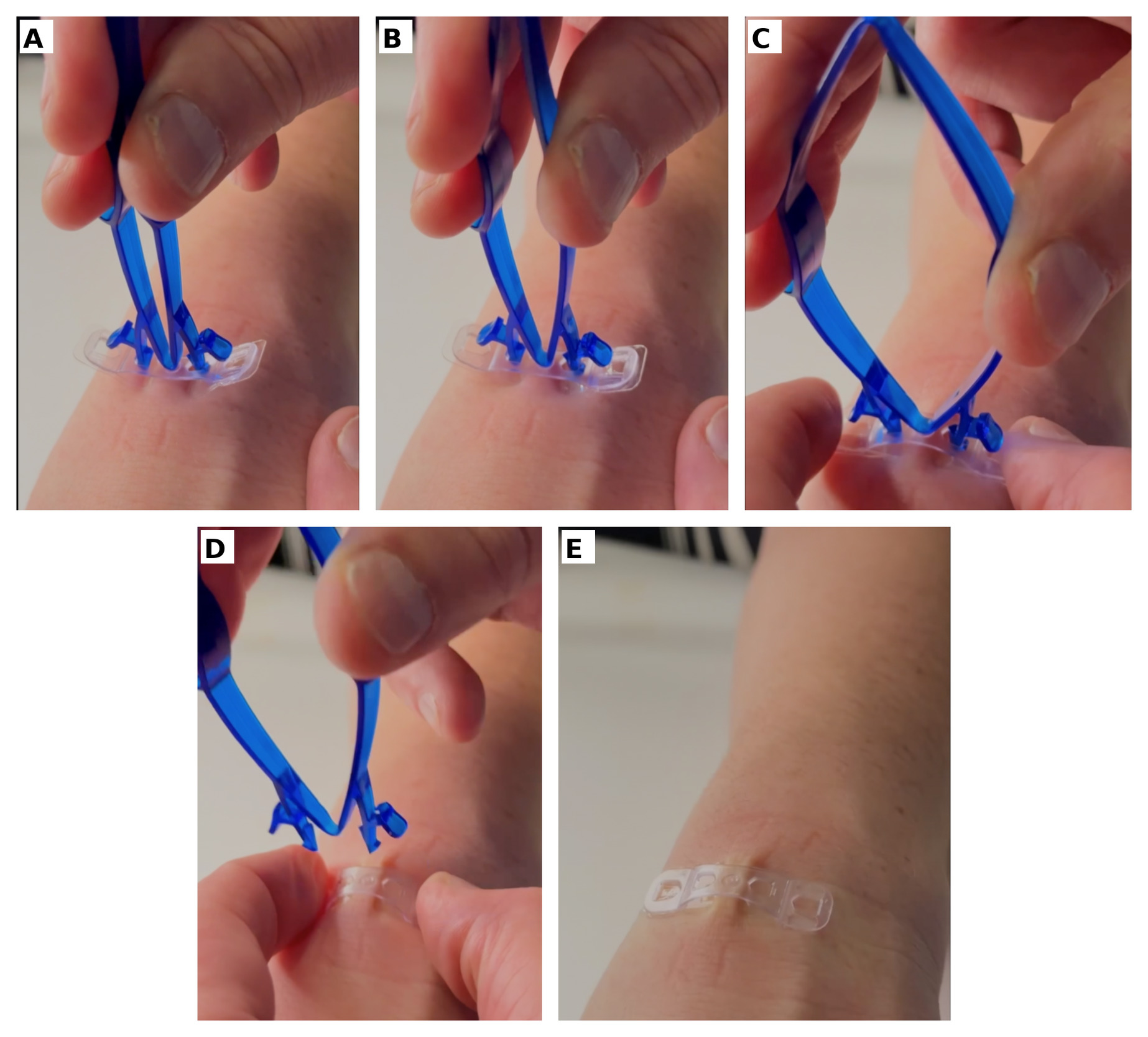
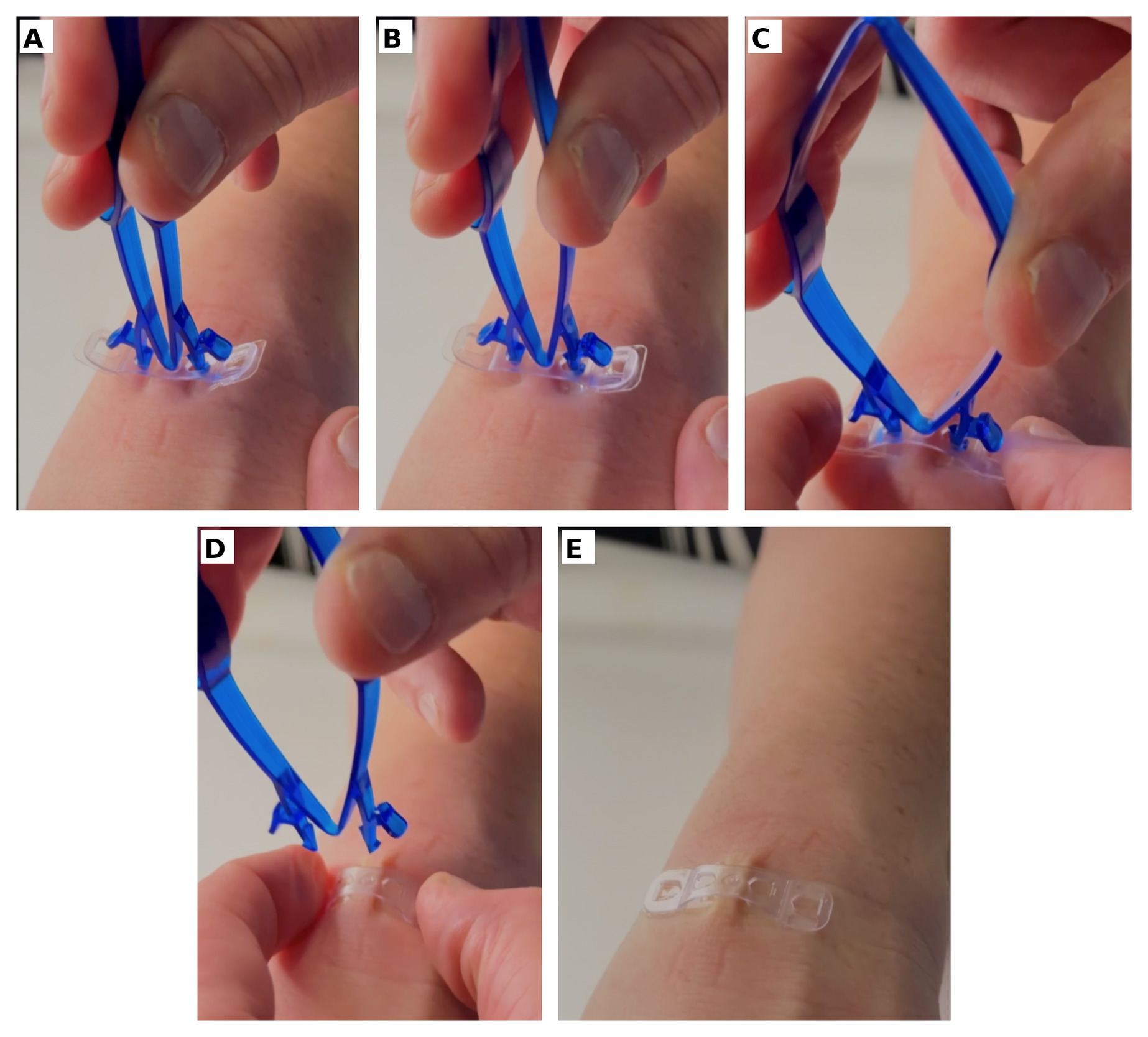
Force Modulating Tissue Bridges (FMTB; Brijjit, BRIJ Medical, Inc., Marietta, GA) are a new type of non-invasive wound closure and support systems that are aimed at approximating wounds while alleviating wound area tension both during the wound closure and ongoing during the wound healing process. The devices use a double arch rotation mechanism between the backbone and the footpad struts, creating a downward and inward force that alleviates the wound area and the tissue under the skin surface, recruiting tissue into the area while facilitating eversion , as shown in Figure 1. The wound area strain is reduced by at least 25% or more, and in the presence of eversion represents a tension-relieving effect of up to 100% in the wound area (Kazmer and Eaves 2018). Finite element modeling has shown that force concentrations in the wound area can be reduced by two orders of magnitude, due to a larger footpad contact area with the wound and alleviating tissue pressure in the wound area relative to sutures. The FMTBs have been shown to reduce open wounds in breast surgeries by 89% to 91% and are capable of providing smaller dimensions in scars where the devices are used (Kazmer and Eaves 2018). The devices are left in place for a period of 10 days to 3 weeks, depending on wound size, wound movement, anatomical location, and skin type. The non-invasive nature of the FMTBs eliminates the need for outpatient removal, as the removal can be passive or carried out in a home environment.
Study Design and Oversight
This retrospective case series was conducted in compliance with the Declaration of Helsinki. The analysis data were previously de-identified and the study was conducted in accordance with privacy and data security regulations. Due to its retrospective nature this research article was exempt from the Institutional Review Board (IRB).
Setting and Participants
Inclusion criteria were consecutive cases of sports medicine operations carried out in the hospital outpatient clinic or in an ambulatory surgical center by one surgeon. The inclusion period spanned from January 2023 to December 2025. The utilization of FMTBs was prompted by a number of serious allergic responses to 2-octyl cyanoacrylate-mesh mixes and became a standard practice for incisional care; thus, FMTBs were utilized in a vast majority of cases within the scope of this study. Incidences where FMTBs were not utilized, most often because of the unfavorable anatomical characteristics of the surgical wound making it impossible to implant the device (for example, extremely short stab incisions made only for access to a specific arthroscopic port), skin integrity concerns, or the lack of such devices available at the time of the surgery, were not taken into consideration in this study. Patients were not excluded from the analysis depending on outcomes. Body mass index, diabetes mellitus, smoking, or nicotine status, and chronic steroid use were not systematically recorded in the retrospective medical records, which was considered a potential bias in the study. The total number of participants was 100.
Closure Technique and Device Application
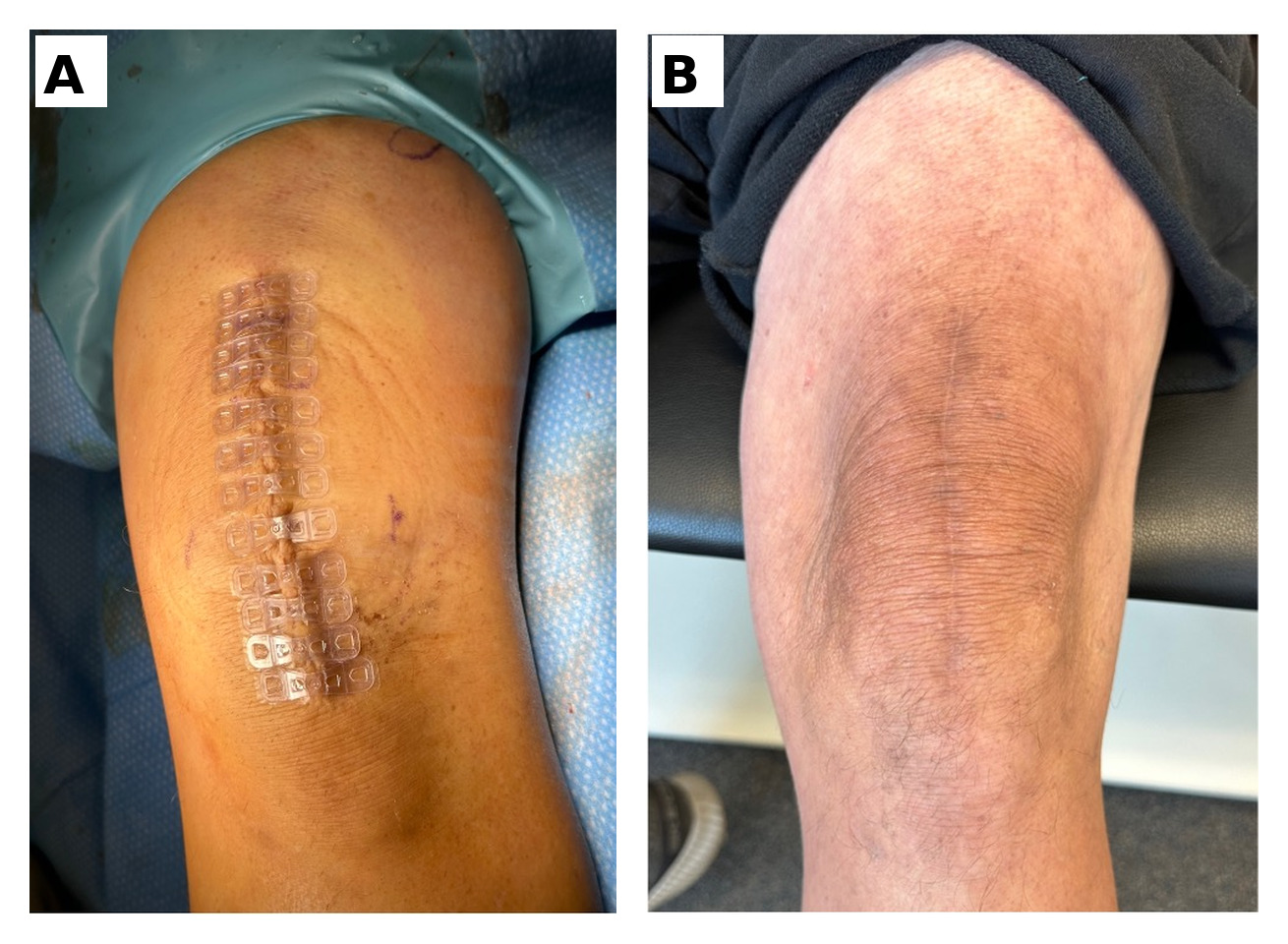
Wound closure was achieved using a standard layered closure construct, with the type of construct used based on the surgeon’s preference based on location and type of procedure. In the majority of cases, FMTBs were applied as part of the closure construct in addition to a complete layered closure, usually after a deep dermal layer and a running subcuticular superficial layer closure. In a smaller percentage of cases, FMTBs were applied as part of the superficial closure layer after a satisfactory deep dermal closure layer had been achieved. FMTBs were applied to clean, dry skin with consideration for proper spacing and alignment along the incision axis, with the goal of facilitating incisional eversion and providing even tension across the incision zone. A representative intraoperative photograph demonstrating FMTB application over a knee incision and after healing is shown in Figure 2.
_followi.png)
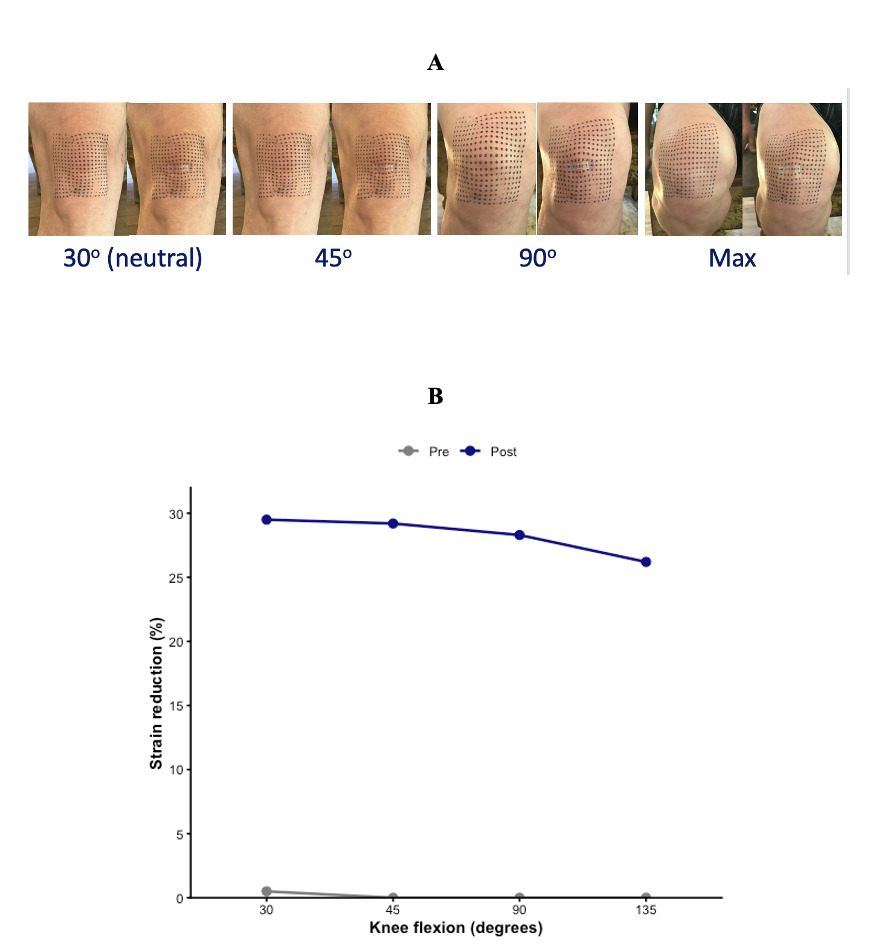
Pre-clinical modeling using finite element analysis has shown a strain reduction of >25% in the healing tissue around the incision area, with device-induced tissue forces being lowered by ~400 times compared to suture-tissue interaction, and tension relief being sustained while simulating the complete range of motion of the knee joint (Kazmer and Eaves 2018). An example illustration of strain-mapping in an uninjured control knee volunteer model is depicted in Supplementary Appendix A (Figure S1).
Postoperative Care
Postoperative dressing and rehabilitation protocols were selected accordingly on the index procedure and were not modified or replaced prior for the use of FMTBs. Standard postoperative bracing, early mobilization, and therapy progression were implemented per routine sports medicine practice patterns. During documentation, the intended duration of device wear and any issues with device adherence (e.g., premature detachment of individual devices) were noted.
Outcomes
Charts were reviewed for wound dehiscence, delayed healing, surgical site infections, bleeding, reoperation, and medical adhesive–related skin injury (e.g., allergic contact dermatitis, maceration, marginal dermatitis, blistering). Documentation of pathologic scarring (hypertrophic scar or keloid) was also recorded when noted clinically in the charts.
Statistical Analysis
All results were descriptively reported. Continuous data are expressed as mean ± standard deviation (SD) with range, while categorical data are presented as numbers and percentages. Given that this was a retrospective descriptive case series without a comparator group, no inferential hypothesis testing was performed. All wound outcome rates are reported as observed proportions. For zero-event binary outcomes, the Clopper-Pearson exact method was used to calculate the upper bound of the 95% confidence interval, providing a conservative estimate of the range of uncertainty around the observed zero rate given the sample size.
Results
Cohort Characteristics
A total of 100 outpatient sports medicine cases met the inclusion criteria and are summarized in Table 1. Most of the procedures were knee based (n=91) including major contributor ACL reconstruction. The next most common anatomic sites were respectively shoulder (n=4), elbow (n=3) and ankle/Achilles (n=2). From the total 100 outpatient cases, mean patient age was 26.82 ± 12.94 years (range, 14–67), and 60% of the cases that were included were male patients (Table 2). Mean follow-up of all cases was 8.42 ± 7.20 months and mean follow-up for 99/100 cases in weeks was 36.69 ± 31.29 weeks. Median follow-up was 6.22 months with IQR, 2.91-10.88 or 27.16 weeks with IQR, 12.49-47.38 which is shown in Tables 2–3. Total of 20 cases out of 99 (20.2%) had ≥1 year of follow-up (Table 3).
Closure Implementation and Feasibility
FMTBs were applied on a standard layered suture closure in 99% cases and 1% were used when the superficial sutures were omitted (Table 4). There was no case documentation that has indicated a mandatory change to standard post-operative bracing or any rehabilitation protocols due to incision management.
Clinical Outcomes
Wound-related results are presented in Table 5. No wound dehiscence, delayed wound healing, surgical site infection, allergic skin reaction, or mechanical skin reaction (such as blisters) was observed in any of the 100 cases (0/100; Clopper-Pearson exact 95% CI upper bound: 3.6%). No wound-related reoperations were required (0/100; 95% CI upper bound: 3.6%). These zero-event proportions are descriptive estimates; the 3.6% upper bound reflects sample-size uncertainty rather than a detected signal of harm. Two cases exhibited early premature separation of individual devices. This was attributed to inadequate attachment during an initial period. No adverse effects occurred, and there were no further detachments after this point. All cases were documented as well-tolerated in the clinical record. Based on unstructured chart documentation from routine clinical visits, patients generally reported comfort with the devices, no perceived restrictions on range of motion, and satisfactory device adherence during showering with direct water contact on the incision site. Physical therapists noted favorable wound appearance per clinical record entries and did not document concerns related to device presence during early rehabilitation. Chart notes from more than 10% of cases indicated that patients requested extended device wear beyond the standard period, describing the device as providing a sense of protection over the incision. These observations were not collected using standardized questionnaires or predefined outcome instruments and should be interpreted as informal chart-based documentation only. FMTBs represent a non-invasive closure support method that did not require an office visit for removal, unlike external sutures or staples. The devices could be removed easily by either healthcare professionals or patients themselves through gentle rolling pressure perpendicular to the long axis of the device.
ACL Reconstruction Subgroup
ACL reconstruction comprised 69/100 cases (69%) according to Table 1. The ACL subgroup had mean age 22.87 ± 7.48 years (range, 14–48) with 36 male and 33 female patients. Quadriceps autograft was most common (39/69; 56.5%), followed by bone–patellar tendon–bone autograft (26/69; 37.7%). Lateral extra-articular tenodesis was performed in 26/69 cases (37.7%), and 8/69 (11.6%) were revision ACL reconstructions (Table 6). Mean ACL follow-up was 7.46 ± 6.05 months (range, 0.20–30.97) or 32.31 ± 26.20 weeks (range, 0.87–134.19).
Discussion
In this first 100-case experience in an ambulatory sports medicine practice, force-modulating tissue bridges were incorporated into incision management across a predominantly knee-based operative mix without evidence of disruption to routine postoperative rehabilitation or bracing. In about one-fifth of the cases, follow-up lasted more than a year, and in some cases, it lasted almost 31 months. This gave researchers a chance to observe a group of patients over a long period of time. Incisions from sports medicine intervention are often in areas with a lot of movement, where early rehabilitation and swelling around the joint can put more stress on the skin. The strain-mapping demonstration (Supplementary Appendix A, Figure S1), although distinct from the clinical series, demonstrates that tension offloading is preserved across a wide spectrum of knee flexion. This observation is in keeping with the clinical observation that none of the patients in this series required a delay or modification of the physical therapy regimen.
The lack of allergic reactions in this series is significant and supports previous findings regarding FMTBs in plastic surgery. A patient who had knee surgery had a very bad allergic reaction to a 2-octyl cyanoacrylate-mesh combination, which made the senior author to rethink how to manage incision closure. There has been a growing concern about allergic reactions to cyanoacrylate-based adhesives, which can show up as either acute contact dermatitis or a type IV delayed hypersensitivity reaction. Such reactions have been documented in 0.5–14% of applications, with increased incidence observed when adhesives are used in conjunction with a mesh component; rates in orthopedic surgery literature are currently reported to be as high as 8.1–9.9%. These reactions, which can be significant and require the administration of topical or systemic steroids, can also have a profound effect on patient satisfaction with an otherwise successful outcome of surgery. It should be noted that the acrylate-based pressure-sensitive adhesives utilized in FMTBs do not cross-react and should not be confused with cyanoacrylate compounds. There was no incidence of allergic reactions or significant adhesive-induced skin injuries in the 100-case series, which correlates well with the safety of FMTBs in prior FMTB studies in breast surgery.
From a practical point of view, FMTBs were easily added to the current surgical workflow. Application was efficient and fast, measured to be as fast as surgical skin staples and faster than sutures. Once the technique was learned, application could be tasked to fellows or surgical assistants. Patients expressed their opinions favorably to the device and said they were comfortable to wear and did not describe interference with daily activities or range of motion, based on unstructured clinical chart documentation. Physical therapists documented favorable wound appearance and did not report concerns related to device presence during rehabilitation progression. These informal observations suggest that more aggressive early rehabilitation may be feasible with FMTB use, though this warrants formal prospective evaluation before definitive conclusions can be drawn. There was concern in the early stages of this study that the FMTBs would not be effective in the presence of compressive clothing and/or braces, especially in procedures in which the knee was placed on its side, such as in lateral extra-articular tenodesis. However, this was not a significant issue in this series. If anything, compression seemed to make the adhesive-skin interface better.
Sports medicine procedures can be especially challenging for surface closure devices because a lot of arthroscopic infusion fluid can make the periarticular skin cold and clammy when it’s time to close. The senior author discovered that exerting manual pressure on the devices for a few extra seconds during placement generally alleviated this issue, and that after initial adhesion was established, the bond rapidly strengthened. An adhesive enhancer (e.g. Mastisol®, Ferndale Pharma Group/Eloquest Healthcare, Ferndale Michigan) was used to help with initial adherence in less than 5% of the cases.
This study did not formally measure scar outcomes using validated instruments, and some cases had follow-up of six weeks or less, which is insufficient to assess pathologic scar formation. Within the cases with adequate longer-term follow-up, clinical observation and informal patient feedback appeared positive, though these findings should be considered preliminary. In orthopedic surgery, scar cosmesis is not given as much attention as functional outcomes. As mentioned in the introduction, scar cosmetic component carries a particular weight in the sports medicine population given the visibility of incisions and the younger demographic. Lari et al. have demonstrated that the significance attributed to cosmetic outcomes by orthopedic surgeons noticeably escalates when patients are younger, female, and actively inquire about scarring. In an earlier study with randomized controlled data from breast surgery, prolonged FMTB application with device reapplication correlated with a 38% reduction in mean scar area. Using established scar assessment tools, such as the Patient and Observer Scar Assessment Scale, will be crucial in quantifying the advantages of FMTBs in future studies.
This study has several limitations inherent to its design. It is a single-surgeon, retrospective case series without a matched comparator group, which prevents causal inference or claims of superiority over alternative closure strategies. Outcomes are dependent on the completeness and consistency of clinical documentation and follow-up intensity. The cohort is heavily weighted toward knee procedures, particularly ACL reconstruction, which may limit generalizability to other orthopedic populations, incision types, or anatomic locations. It is important to note that there was no structured information on comorbidities, which include BMI, whether the patients had diabetes, if they used tobacco/nicotine, or even chronic corticosteroids. It is assumed that since the study population is based on an outpatient sports medicine clinic, the age range is younger, hence fewer comorbidities compared to adult reconstruction cohorts. However, the lack of comorbidity data makes it impossible to evaluate risks and interpret wound healing. Incision size was also not documented in a standardized manner, thus making it impossible to correlate incision size with performance or retention. Another important limitation is the potential for detection bias: complications identified through routine clinical follow-up may underestimate true event rates compared with prospective surveillance using prespecified standardized criteria. Moreover, the time period for follow-up was too short to adequately determine whether or not there were any scar-related findings among some cases: of the 100 cases, 12 had a period of follow-up of 6 weeks or less, while another had no follow-up period recorded at all. It is known that a pathological scar, such as hypertrophic scarring and keloid, develops over months rather than weeks. Therefore, the lack of pathologic scars in this particular series can be seen as tentative and requires further investigation. A minimum follow-up threshold for scar-related outcome reporting should be defined in future prospective studies. STROBE guidelines were utilized for conducting and reporting the current observational study. Although these findings have been positive, prospective comparative studies will be necessary to fully establish the role and effect of force-modulating tissue bridges in orthopedic sports medicine.
.**_illustrative_strain-mapping_demonstration_during_knee_rang.png)