Loading [Contrib]/a11y/accessibility-menu.js

This website uses cookies

We use cookies to enhance your experience and support COUNTER Metrics for transparent reporting of readership statistics. Cookie data is not sold to third parties or used for marketing purposes.

Skip to main content
null
J Orthopaedic Experience & Innovation
  • Menu
  • Articles
    • Brief Report
    • Case Report
    • Case Series
    • Conference Proceedings
    • Data Paper
    • Editorial
    • Meeting Reports/Abstracts
    • Methods Article
    • Product Review
    • Research Article
    • Review Article
    • Review Articles
    • Systematic Review
    • All
  • For Authors
  • Editorial Board
  • About
  • Issues
  • Blog
  • "Open Mic" Topic Sessions
  • Advertisers
  • Recorded Content
  • CME
  • JOEI KOL Connect
  • Resident Research League
  • search
  • RSS feed (opens a modal with a link to feed)

RSS Feed

Enter the URL below into your favorite RSS reader.

https://journaloei.scholasticahq.com/feed
ISSN 2691-6541
Editorial
Vol. 6, Issue 2, 2025November 25, 2025 EDT

From My Perspective: Stacking Mechanisms to Control Pain Following Shoulder Surgery – A Consideration of Central Effects in the Pain Pathway

Neil Bodick, MD, PhD, MBA,
PainPain ManagementSustained-release
Copyright Logoccby-nc-nd-4.0 • https://doi.org/10.60118/001c.146324

Articles in Vol. 6, Issue 2, 2025

Vol. 6, Issue 2, 2025
  • Management of infected nonunion neck of femur fracture on an ipsilateral above knee amputation limb planned for total hip arthroplasty
    Sarbhjit Singh Lakha SinghPrabu SupramaniamMuhammad Fadhil B. Mat SallehMuhammad Azhar AbdullahAhmad Fauzey Kassim
  • Safety of Bovine and Porcine Derived Orthopaedic Implants: Growing Concern for Alpha-gal Syndrome
    Dillon ClancySteven FreyDylan Chayes
  • The Use of Curved Implants in Pelvic Ring Surgery – Early Positive Outcomes of a Multi-center Experience
    Dainn WooBijan DehghaniRown ParolaJames StannardCaleb BischoffBrett CristMatthew GardnerDerek DoneganSamir Mehta
  • Factors That Influence the Quality of Letters of Recommendations for Orthopaedic Trauma Fellowship Applicants: A Survey of Fellowship Directors
    Ashwin GarlapatyNathan CherianBrett D. Crist
  • Deep Vein Thrombosis Rates in Total Hip Arthroplasty and Total Knee Arthroplasty on an Extended Course of Tranexamic Acid: A Retrospective Study
    Andrew WicklineShivam BhattJeremy Berger
  • What A Change A Year Makes: Orthopedic Case Volume After ACS-Level II Trauma Status
    Rachel SafoEduardo Santana-BuenoLisa K. Cannada
  • ACL Reconstruction Augmented with a Novel Reinforced Bioinductive Implant: A Case Report With 18-Month Follow-Up
    Alexander OzonoffGowri ViswanathanMichael R. Redler
  • Assessing ChatGPT Ability to Answer Common Patient Questions on Distal Biceps Ruptures
    Jared N. KushnerChance ParkerAnton PeltoKatelyn KaneWilliam PallisarySamantha ReissPayton Yerke Hansen
  • Partial Wrist Denervation with Wide-Awake Local Anesthesia No Tourniquet Technique
    Bernard F. HearonWyatt S. BellVafa Behzadpour
  • Minimally Invasive Intraoperative Strategies May Influence Success Rate and Return to Sport in Arthroscopic Treatment of Patellar Tendinopathy: A Systematic Review of Prospective Studies
    Cole VelikyJames OostenGalo BustamanteYamenah AmbreenEric MillironParker CavendishRobert DuerrRobert MagnussenChristopher KaedingDavid Flanigan
  • Comparison of Audioarthrography and Magnetic Resonance Imaging for Diagnosis of Patellofemoral Cartilage Damage
    Carlos LealOmar RahmanRobert HunterJack BertJoao Espregueira-MendesRamón CugatEsteban SantosFernando RadiceCarlos Leal-Bernal
  • Equivalent Early Outcomes After Rotator Cuff Repair Can Be Achieved in Patients with Lower Shoulder-Specific Health Literacy
    David BernholtTanner PoppeCarlos Rivera-PerazaEric WestAndrew NahrTyler BrolinThomas ThrockmortonFrederick Azar
  • Characterization of Orthopaedic Surgery Research Fellowships: Public Availability, Compensation, and Association with Doximity Residency Rankings
    Bryce W. RigdenAshwin R. GarlapatyLasun O. OladejiJames L. CookBrett D. CristKylee Rucinski
  • Industry Payments to Teaching Hospitals for Orthopaedic Medical Devices: An Analysis from 2016 to 2021
    Shebin TharakanKieran MullinsBrandon KleinLucas BartlettRandy M. CohnAdam D. Bitterman
  • "In My Experience...Surgeon Control and the Evolution of Outpatient Joint Replacement: A Decade of Progress and the Road Ahead
    Michael Ast, MD
  • Hip Capsule Closure Using Absorbable Sutures Demonstrates Similar Patient-Reported Outcomes and Rates of Revision with Potentially Lower Complication Rates Compared to Nonabsorbable Suture Following Hip Arthroscopy: A Systematic Review
    Justin T. ChildersColton C. MowersBenjamin T. LackMatthew T. McKinleyChris W. HaffGarrett R. JacksonSteven F. DeFroda
  • "In My Experience...Delivering More Than Surgery: Building a Patient Experience That Matters"
    Ryan G. Molli, MD
  • Befit Patelloplasty in TKA: A Targeted Approach to Improve Pain and Function
    Mohamed ElfekkyMohamed S. Ben’MusbahSaid AbuhalgumaHiba M. ZaidanMohadese RajaeiradMoataza M. Abdel WahabMansour M. ElgassiSamih Tarabichi
  • Spine Surgeons At Risk? Examining Interventional Procedures Through the Lens of Disruptive Innovation
    Ahilan SivaganesanAdvith SarikondaAdam LeiboldSheeraz Qureshi
  • Transosseous Sutures Repair of Patellar Sleeve Fractures in Pediatric Patient: a report of two cases
    Sherif LotfyMahmoud AlmekoudAhmad Al ShamyAnas ElgaryaHosam Ghaly
  • Stability of Osteoremedies Remedy Hip Spacer for Two-Stage Revisions of Prosthetic Joint Infections: Single Center Analysis
    Carsyn DykesTimothy A Damron
  • Cementless Femoral Stems in Primary Total Hip Arthroplasty
    Ahmed SiddiqiSteven DaytonKhalid M. YousufAntonia F. Chen
  • Casting a New Light: A Systematic Review of 3D-Printed Casting for Non-Surgical Management of Orthopedic Injuries
    Emily T YanDuc Chung
  • Publication Rates of Posters from the Orthopaedic Trauma Association Annual Meeting 2017-2023: Do Posters Represent the Framework of Upcoming Orthopaedic Research and the Growing Number of Female Orthopaedic Surgeons
    Cameron GerholdJoshua BassinPavlo KravchukLisa Cannada
  • "In My Experience™...Preserving the Doctor-Patient Relationship in Practice"
    Michael Meneghini, MD
  • From My Perspective: Stacking Mechanisms to Control Pain Following Shoulder Surgery – A Consideration of Central Effects in the Pain Pathway
    Neil Bodick, MD, PhD, MBA
  • “From my Perspective™….The World of Solo Hospital Practice”
    James Womack, MD
  • "From My Perspective...The Anatomy of a Recall: A Retrospective Review of the Sulzer Recall 25 Years Later"
    Brandon OgilvieChelsea S. SicatSamuel ZverevThomas CatanzaroCharles CatanzaroPhillip SpadaforaJan A. Koenig
  • Clinical Outcomes and Cost Savings of a Novel Virtual Integrated Practice Unit (IPU) for Musculoskeletal (MSK) Conditions: A Pilot Study
    Austin CrossEmily SchnettlerAnu NairDavid WillensEric Makhni
  • Patient-reported Outcomes Following Total Knee Arthroplasty in Patients Treated with Intraosseous Vancomycin Versus Intravenous Antibiotics: A Retrospective Matched Cohort Study
    Robert BranstetterTara KorbalMichelle Veillon-BradshawMatan OzeryClaudia LeonardiAmy BronstoneVinod Dasa
  • Hospital / Ambulatory Surgical Center Cost Savings: Total Knee Arthroplasty Instrument Tray Reduction Strategy
    Chad M. HansonGregory DaubsRobert W. Eberle
  • From Around The World™...Over 55 Years of Treatment of Periprosthetic Joint Infections"
    Thorsten Gehrke, MD
J Orthopaedic Experience & Innovation
Bodick, MD, PhD, MBA, Neil. 2025. “From My Perspective: Stacking Mechanisms to Control Pain Following Shoulder Surgery – A Consideration of Central Effects in the Pain Pathway.” Journal of Orthopaedic Experience & Innovation 6 (2). https://doi.org/10.60118/001c.146324.
Save article as...▾
Download all (4)
  • Figure 1. Patents treated with RELAY underwent either Total Shoulder Arthroplasty or Rotator Cuff Repair. As noted above, all patients received cPNB through postoperative day 3 and neuromodulation through postoperative day 7.
    Download
  • Figure 2 is the comparison of Average Daily Pain over time for RELAY and Pooled LB (Sethi, 2021⁵ and Okoroha, 2016⁴).
    Download
  • Figure 3 is a fitted decomposition of the RELAY combined curve (in blue).
    Download
  • Figure 4 represents the isolated effect (in green) of Neuromodulation in this patient population.
    Download

Error

Sorry, something went wrong. Please try again.

If this problem reoccurs, please contact Scholastica Support

Error message:

undefined

View more stats

Abstract

Effective control of pain following orthopedic procedures remains a major challenge despite advances in regional anesthesia and the advent of locally delivered sustained-release formulations.

Introduction

Effective control of pain following orthopedic procedures remains a major challenge despite advances in regional anesthesia and the advent of locally delivered sustained-release formulations. Exparel, a liposomal formulation of bupivacaine (LB), extends local drug exposure but generally does not provide meaningful activity beyond ~72 hours (Shing and Tighe 2022). Recent data have demonstrated the potential of neuromodulation in the long-term treatment of postoperative pain (Ilfeld et al. 2021). These findings have prompted the clinical investigation of a platform, RELAY, which combines peripheral nerve block and neuromodulation with the aim of enhancing and prolonging analgesia following orthopedic surgery.

The RELAY System

The RELAY system (Gate Science, Moultonborough, NH) is a dual-mechanism platform that delivers simultaneous and sequential nerve block and neuromodulation to a targeted peripheral nerve or plexus. The system consists of a percutaneous lead with multiple electrodes, powered by a wearable pulse generator. Parameters such as current amplitude, frequency, and cycling can be adjusted noninvasively via a Bluetooth-enabled mobile app, Gate Keeper. This app allows dynamic titration of neuromodulation intensity. The preoperative placement of the device and subsequent deployment have been reported previously (Ilfeld et al. 2025).

Methods

The intent of this analysis is to define the interplay between nerve block and neuromodulation in controlling post-operative pain.

To isolate the effects of neuromodulation and sodium channel blockade, we analyzed six patients selected from a 20-patient safety and efficacy trial of RELAY at the University of California, San Diego (NCT06818708). The inclusion criteria for the analysis —shoulder surgery, continuous peripheral nerve block (cPNB) with bupivacaine through postoperative day three, neuromodulation through postoperative day 7, and completion of follow-up through day 14—were chosen to enable direct comparison with published outcomes for liposomal bupivacaine (LB) in shoulder procedures. Note the inclusion of patients receiving continuous peripheral nerve block (cPNB) through postoperative day three with the RELAY device was specified to match the local exposure associated with LB. Demographics for the RELAY cohort follow.

A table with text on it AI-generated content may be incorrect.
Figure 1.Patents treated with RELAY underwent either Total Shoulder Arthroplasty or Rotator Cuff Repair. As noted above, all patients received cPNB through postoperative day 3 and neuromodulation through postoperative day 7.

Randomized controlled trials of LB in shoulder surgery that were considered for this analysis included Okoroha et al. 2016; Sethi et al. 2021; Namdari et al. 2017; Abildgaard et al. 2017; and Kim et al. 2022. A pooled analysis of Sethi et al. 2021 and Okoroha et al. 2016 was chosen for comparison to RELAY data in shoulder surgery. These two studies provided favorable early analgesic effects relative to the other studies of LB, included data up to postoperative day 14 (Sethi), matched indications of Total Shoulder Arthroplasty and Rotator Cuff Repair, and had similar demographics, and had positive controls.

Consideration was also given to inclusion of cPNB without neuromodulation as the comparator to RELAY. Across randomized and prospective comparative studies in shoulder arthroplasty and arthroscopic shoulder surgery, pain scores during POD 1–3 are generally similar between cPNB and LB, with no consistent, clinically important between-group differences (>1 point on a 0–10 scale). Some trials show early advantages for the catheter within the first 24 hours, but by POD 1–3 most report non-inferior or comparable analgesia with LB; one cohort found lower day-2 pain with LB (Abildgaard et al. 2017; Kim et al. 2022; Sabesan et al. 2017; Panchamia et al. 2024; Wall et al. 2022).

Comparative Analysis

Pooled pain outcomes of LB (Sethi et al. 2021 and Okoroha et al. 2016) are compared to the pain outcomes for RELAY between post-op day 1 and 14.

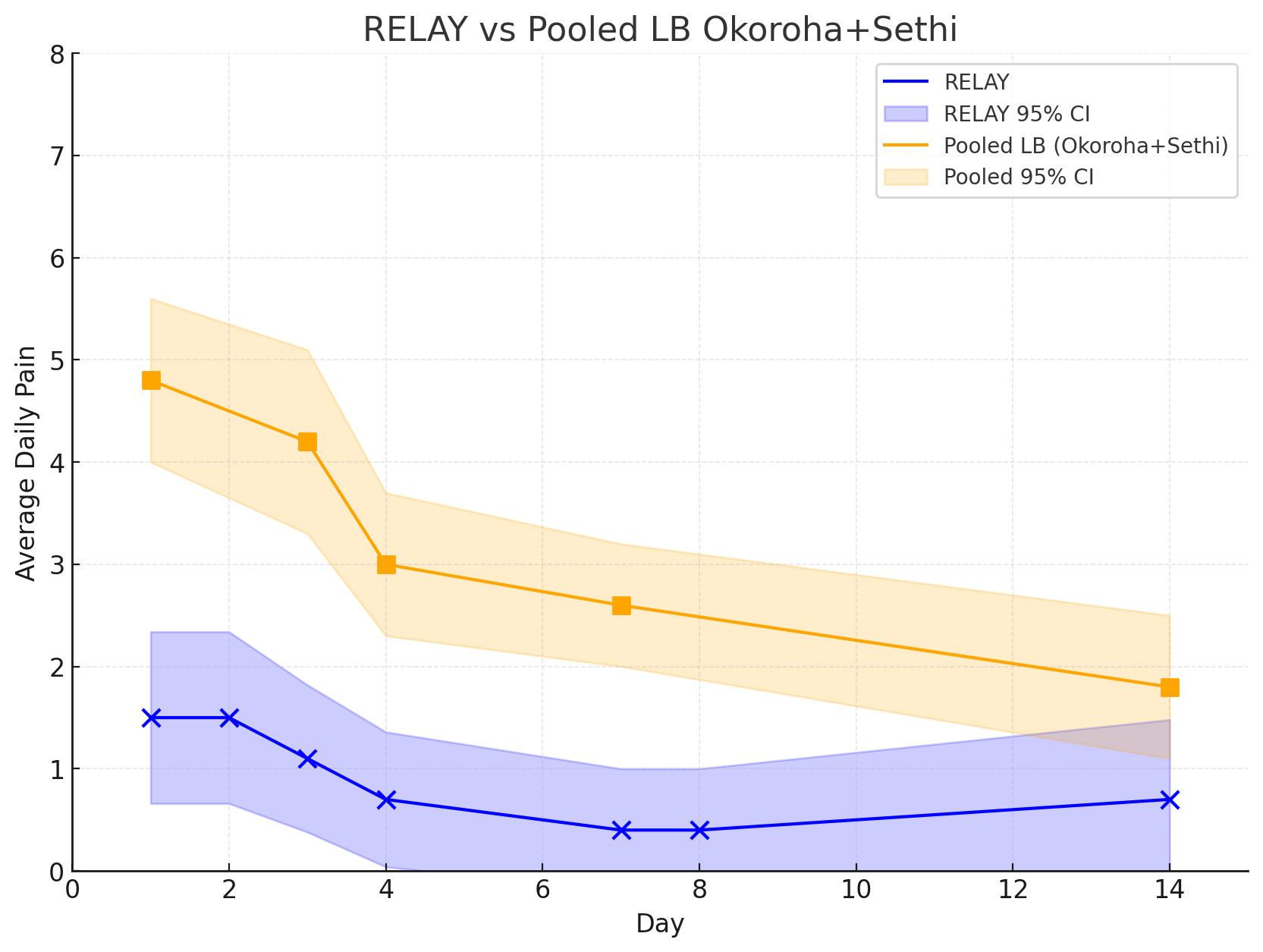
Figure 2 is the comparison of Average Daily Pain over time for RELAY and Pooled LB (Sethi, 2021⁵ and Okoroha, 2016⁴).

The LB curve demonstrates incomplete reductions in acute pain (>3-4.8 points on a 10-point scale) through the early postoperative period, with a gradual decline to ~2 by day 14. By contrast, the RELAY curve demonstrates lower scores at all time points, rapid suppression of pain within the first 48 hours, and durable control approaching floor levels (≤1) by day 7. Confidence intervals (CIs) for both LB and RELAY were estimated from published standard deviations or estimated variance, with RELAY’s CIs reflecting small-sample pilot variability and LB’s reflecting pooled RCT-derived spread.

The LB profile is in fact advantaged relative to the other available data for LB in the literature [1].

Isolating the effect of Neuromodulation

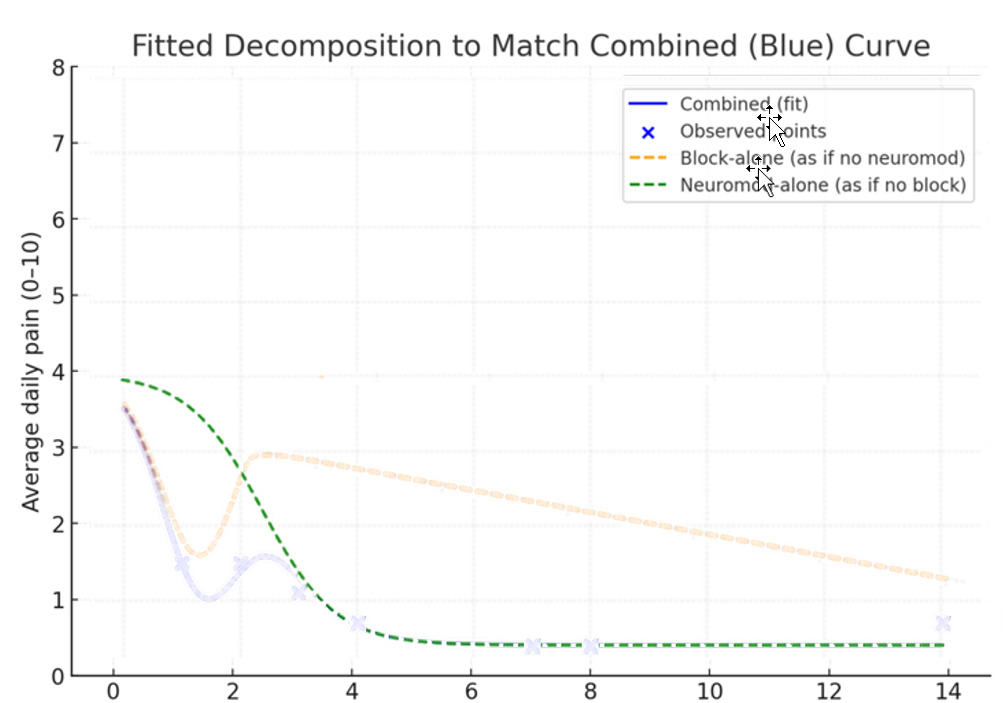
The present analysis employs fitted decomposition to isolate the contributions of nerve block x3 days and neuromodulation x7 days to RELAY’s observed analgesic trajectory over 14 days. The working assumption in the analysis is that observed differences in the pain curves can be attributed to the effect of neuromodulation.

A graph of a graph with different colored lines AI-generated content may be incorrect.
Figure 3 is a fitted decomposition of the RELAY combined curve (in blue).

The blue RELAY curve was constructed by decomposing the observed analgesic trajectory (the blue “combined” pain curve in figure 2) into two modeled components: an early, short-lived effect representing nerve block (Yellow), and a delayed, more sustained effect representing neuromodulation (Green). The sodium channel blockade contribution was parameterized as a rapid logistic decay consistent with local anesthetic pharmacokinetics, while the neuromodulation contribution was modeled as a logistic rise and plateau beginning as block effects waned. Summing these functions reproduced the observed RELAY data (represented in Figures 2 and 3 by the blue Xs) illustrating the additive interaction between the two mechanisms.

A graph of a graph
Figure 4 represents the isolated effect (in green) of Neuromodulation in this patient population.

Mechanistic Interpretation

In the nerve plexus, C fibers (small, unmyelinated fibers) carry slow, dull, burning pain signals. They are central drivers of nociception and central sensitization. Aβ Fibers (large myelinated fibers) are responsible for touch, vibration, and proprioception. Importantly, Aβ fibers project into the dorsal horn where they gate nociceptive transmission (Melzack and Wall 1965). Neuromodulation selectively activates Aβ fibers, generating non-painful input that closes the gate at the dorsal horn. This reduces transmission of C-fiber nociceptive input to higher centers, blunting central sensitization.

Early after surgery, nerve block (Sodium-channel blockade) reduces both C fiber transmission, quelling the nociceptive signal from the periphery, and Aβ input is largely silenced. This limits neuromodulation’s effectiveness, since Aβ conduction is required for therapeutic gating in the dorsal horn. As the block begins to wane, Aβ conduction recovers but C-fiber nociception also reemerges. At this point, neuromodulation suppresses spinal amplification, providing a second wave of analgesia. After the block is fully resolved, neuromodulation alone continues to provide pain relief by dampening central sensitization, a known effect in chronic indications (Lo Bianco et al. 2025; Karcz et al. 2024).

Clinical Implications

In clinical practice, nerve block provides reliable analgesia at early time points. When combined with neuromodulation, however, the analgesic effect is smoothed, deepened, and prolonged.

As the effect of the nerve block dissipates on or around day three, neuromodulation sustains control of pain, preventing rebound and extending analgesia beyond the pharmacologic window of cPNB with bupivacaine. The combination of modalities has the potential to acutely and sub-acutely lower pain scores and to reduce opioid consumption in comparison to LB or cPNB alone.

Conclusions

The role of central sensitization has only recently been demonstrated as a key driver of postoperative pain (Ilfeld et al. 2021). Without directly addressing this mechanism, peripheral nerve block alone likely cannot achieve the same depth or durability of analgesia demonstrated here by RELAY. In the acute phase (days 1–3), both modalities are active in the control intense pain. As the block dissipates, neuromodulation continues to provide relief by suppressing central sensitization, thereby maintaining control in the subacute phase (days 3–30). Also, RELAY offers the unique advantage of adjustable titration of neuromodulation without modifying the drug regimen.

The combined approach of nerve block and neuromodulation leverages independent but convergent mechanisms that stack rather than compete. Given their lack of central activity, sustained-release sodium-channel formulations, whether delivered as liposomes or other biopolymers, are unlikely to reproduce the flexibility, durability, and depth of analgesia achieved by RELAY.

RELAY is the first device to combine nerve block and neuromodulation in a single platform, and the simultaneous and sequential use of these modalities provides novel insight into an important role of central sensitization in controlling post-operative pain and the therapeutic utility of neuromodulation in controlling acute pain.

Limitations

While these initial findings are coherent, they rely upon comparing data across studies. Further confirmation in larger, controlled, prospective studies will be required before final conclusions can be drawn.


  1. Six other studies were considered for pooled analysis but not included. Sabesan et al. (2015) and Flaherty et al. (2020) showed a sharp rise in pain intensity within the first 12–24 hours, with mean scores reaching 4–5 on a 10-point scale. Namdari et al. (2017) reported more moderate pain levels (~3–4) that remained relatively stable over the first day, while Abildgaard et al. (2017) and Hillesheim et al. (2021) both documented higher initial values near 5. Vandepitte et al. (2017) observed persistently elevated pain (~6.6) at day 2. In general, each of these studies had pain scores ≥4 on day1 and lacked long-term follow-up.

Submitted: October 26, 2025 EDT

Accepted: October 26, 2025 EDT

References

Abildgaard, J. T. et al. 2017. “Continuous Interscalene Catheter vs Liposomal Bupivacaine in Shoulder Arthroplasty: A Randomized Controlled Trial.” J Shoulder Elbow Surg 26 (7): 1175–81. https:/​/​doi.org/​10.1016/​j.jse.2017.03.012.
Google Scholar
Ilfeld, B. M. et al. 2021. “Percutaneous Peripheral Nerve Stimulation (Neuromodulation) for Postoperative Pain: A Randomized, Sham-Controlled Pilot Study.” Anesthesiology 135 (1): 95–110. https:/​/​doi.org/​10.1097/​ALN.0000000000003776.
Google Scholar
———. 2025. “A Percutaneous Analgesic Device Enabling Both Local Anesthetic Delivery and Electrical Stimulation (Neuromodulation) of Peripheral Nerves: A Prospective Feasibility Case Series Investigation.” Reg Anesth Pain Med. https:/​/​doi.org/​10.1136/​rapm-2025-107029.
Google ScholarPubMed
Karcz, M. et al. 2024. “Pathophysiology of Pain and Mechanisms of Neuromodulation: A Narrative Review (A Neuron Project).” J Pain Res 17 (November):3757–90. https:/​/​doi.org/​10.2147/​JPR.S475351.
Google Scholar
Kim, D. H. et al. 2022. “Liposomal Bupivacaine vs Interscalene Block for Shoulder Arthroplasty: A Randomized Controlled Trial.” J Bone Joint Surg Am 104 (5): 414–22.
Google Scholar
Lo Bianco, G. et al. 2025. “Neuromodulation in Chronic Pain Management: Addressing Persistent Doubts in Spinal Cord Stimulation.” J Anesth Analg Crit Care 5:3. https:/​/​doi.org/​10.1186/​s44158-024-00219-6.
Google Scholar
Melzack, R., and P. D. Wall. 1965. “Pain Mechanisms: A New Theory.” Science 150 (3699): 971–79. https:/​/​doi.org/​10.1126/​science.150.3699.971.
Google Scholar
Namdari, S. et al. 2017. “Randomized Trial of Liposomal Bupivacaine vs Standard Bupivacaine for Pain Control after Shoulder Arthroplasty.” J Bone Joint Surg Am 99 (15): 1337–44.
Google Scholar
Okoroha, K. R. et al. 2016. “Liposomal Bupivacaine versus Interscalene Nerve Block for Pain Control after Shoulder Arthroplasty: A Prospective Randomized Trial.” J Shoulder Elbow Surg 25 (10): 1742–48. https:/​/​doi.org/​10.1016/​j.jse.2016.05.007.
Google Scholar
Panchamia, J. K. et al. 2024. “Continuous Catheter vs Liposomal Bupivacaine for Pain Control after Shoulder Surgery: A Randomized Controlled Trial.” J Shoulder Elbow Surg.
Google Scholar
Sabesan, V. J. et al. 2017. “Continuous Interscalene Block vs Liposomal Bupivacaine for Pain Control after Shoulder Arthroplasty: A Randomized Controlled Trial.” J Bone Joint Surg Am 99 (7): 550–56. https:/​/​doi.org/​10.2106/​JBJS.16.00296.
Google Scholar
Sethi, P. M. et al. 2021. “Liposomal Bupivacaine Provides Effective Postoperative Pain Control in Shoulder Arthroplasty: A Randomized Controlled Trial.” J Shoulder Elbow Surg 30 (5): 1083–91.
Google Scholar
Shing, M. S., and P. J. Tighe. 2022. “Liposomal Bupivacaine in Orthopedic Surgery: A Review of Current Evidence and Future Directions.” J Orthop Surg Res 17 (1): 249.
Google Scholar
Wall, B. et al. 2022. “Liposomal Bupivacaine vs Continuous Catheter for Shoulder Arthroscopy: A Randomized Trial.” JSES Int 6 (5): 824–31.
Google Scholar

Attachments

Powered by Scholastica, the modern academic journal management system