
Introduction
Orthopedic surgery is a benevolent practice. Orthopedic surgeons, particularly those specializing in joint replacement, are accustomed to profound transformations of their patients’ lives due to dramatic improvements in pain and functional capacity. However, when this predictable pattern of improvement is disrupted, and patients instead return with complaints of pain, dysfunction, or implant-related complications, unprecedented etiologies come into question. Such occurrences compromise surgeons’ clinical confidence and undermine the trust patients place in medical interventions. This troubling paradigm shift was at the forefront of the events that culminated in the Sulzer Orthopedics recall of 2000.
The sequence of events that precipitated the recall began with surgeons noting an unexpected increase in poor outcomes following total hip arthroplasty procedures. These unforeseen complications, including persistent pain and early loosening of implants, spurred conversations among surgeons, who sought to identify a common thread linking these adverse outcomes. Gradually, it became evident that the issues were associated with a specific Sulzer implant, prompting a closer investigation into its manufacturing and quality control processes.
The Sulzer recall, one of the most significant events in orthopedic history, unfolded in response to these alarming findings. More than 25,000 hip implants manufactured between 1999 and 2000 were affected, 17,500 of which had already been implanted into patients. Early investigations revealed that residues from a manufacturing process change had compromised the bond between the implant and bone. This discovery prompted a voluntary recall of the affected implants, a cascade of revision surgeries, and widespread legal and financial repercussions for the company and the medical community.
This paper aims to shed light on and explore the Sulzer recall from multiple perspectives, drawing on firsthand accounts from Mr. David Floyd, the former president of Sulzer Orthopedics and the Head of United States Sales and Marketing at the start of the recall, and Dr. Jan Albert Koenig, an orthopedic surgeon who implanted and removed a significant number of recalled implants. By examining these perspectives, we aim to elucidate the factors that contributed to the recall, the impact it had on patients, surgeons, and health systems, and the broader lessons for quality assurance and crisis management in orthopedic device manufacturing in the future.
What Happened
In a well-executed total hip arthroplasty in which everything goes according to plan, it is expected that patients have some level of mild discomfort at their first post-operative visit. This visit typically occurs within the first two weeks after the procedure. At this timepoint, most arthroplasty surgeons will evaluate the patient in the office for any signs of infection and assess range of motion about the hip. It is not uncommon to observe mild post-operative swelling, and patients continue to endorse some level of pain as their body continues to heal from the invasive procedure. Patients are provided a strict physical therapy protocol to continue progressing through the post-operative course. When patients return for their six-week post-operative visit, most of them are quite happy. If everything has gone according to plan, and they have been following closely with their physical therapy regimen, their range of motion has significantly improved, swelling has considerably decreased, and their pain has largely subsided. There are exceptions, but those cases are typically accompanied by other signs. For those that became infected, there will be redness, swelling and even discharge from the surgical wound. Patients may have a fever, and laboratory evidence can demonstrate elevated serum white blood cell count, erythrocyte sedimentation rate and C-reactive protein. Additionally, manifestations of acute infection typically present before the six-week appointment. However in the late summer of 2000, arthroplasty surgeons across the United States were noticing a new trend. “This group [of patients] was coming in stumbling, and they were crying in pain. You knew right away that they had a problem” reported Dr. Jan Albert Koenig, who is an adult arthroplasty surgeon in Long Island, NY. This observation regarding patients seen at the six-week mark, was in stark contrast to the typical presentation of post-operative patients seen at this time point. Dr. Koenig goes on to mention, “I would never see a patient at six weeks in severe pain, crying. You never see that. The implants and patients are generally really good at six weeks.”
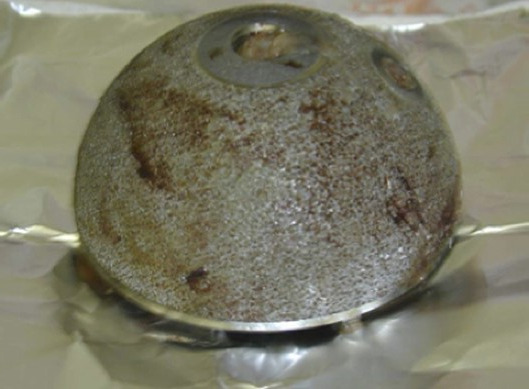
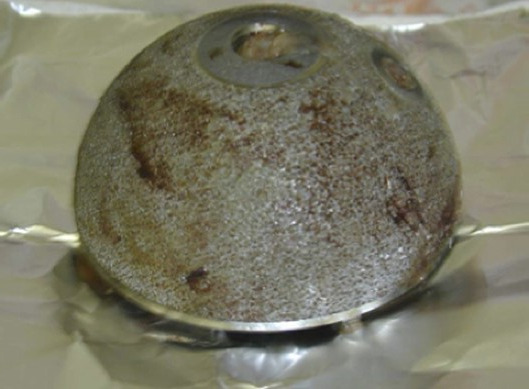
This was unfamiliar territory. These patients were neither infected nor had they fallen or sustained some other trauma. Despite adhering to their surgeons’ standardized post-operative protocols, they were not only failing to progress, but they were actively declining. With the first reports surfacing around September 2000, the subsequent 4 months would reveal a growing crisis as similar reports surfaced across the United States. When surgeons brought these patients back to the operating room to address the problem, they were faced with an interesting and unusual finding. According to Dr. Koenig, “When we went in to do the revisions, it never affected the femoral side. I would just push on the acetabular component with a Kocher and you would see clear fluid coming out from behind the cup. I wanted to call it the “Crying Total Hip”. They were loose as a goose; I didn’t have to work to get them out.” This early and unexplained acetabular aseptic loosening was unique, and soon it was discovered that each of the affected patients had undergone implantation of a specific component made by Swiss manufacturer, Sulzer Medica: the Inter-Op Acetabular shell (Figure 1).
As more reports surfaced, Sulzer quickly realized they had a problem. In an effort to determine what may be the cause of the problem, Sulzer contracted with North American Science Associates (NAMSA), a private firm that specializes in ensuring that medical implants meet safety and compliance specifications. NAMSA identified that in a specific lot of Inter-Op shells, an oily residue was found to be contaminating the porous surface. The use of this oil was a standard step in the manufacturing process as the components underwent their final cleaning. Sulzer, unable to identify another cause for their implant failure at the time, felt obligated to address the issue. Mr. David Floyd recalls his thoughts during a company-wide meeting in response to these findings, “At that time, we knew enough to know there were bad products out there, we had to recall it now and put a stop to everything.”
On December 8th, 2000, Sulzer put forth a voluntary recall on 40,000 units of the Inter-Op Acetabulum component. It was the largest recall of orthopedic implants to date, and, per United States Food and Drug Administration (FDA) guidelines, Sulzer also began to directly notify all physicians that had used their defective product. Further investigation by a multidisciplinary team would reveal that the affected lot of components had undergone a change in implant processing. The residual oily substance recognized by NAMSA was not the root cause of the problem, but a downstream effect of an alteration in how the implants were cleaned prior to final packaging and sterilization.
In hopes of improving their ecologic impact on the Austin, TX community where their implants were manufactured, Sulzer had removed the nitric acid passivation step from the sterilization process in favor of citric acid passivation. During this time, nitric acid passivation had been increasingly replaced by citric acid due to national environmental and safety concerns and regulatory pressures, despite no official mandates for the shift. Coors Brewing Company and Boeing were among the first to experiment with citric acid passivation in the early 1990s as the Environmental Protection Agency (EPA) and the Occupational Safety and Health Administration (OSHA) imposed stricter regulations on nitric acid use and disposal with the subsequent enactment of more stringent safety requirements for its handling. Sulzer followed suit.
“That was a fateful decision,” states Mr. Floyd, who would later come to learn that “Nitric acid denatures endotoxins. Citric acid does not.” Endotoxins, or lipopolysaccharides, are found in the cell wall of gram-negative bacteria and are toxic to human tissues due to their ability to activate macrophages. Endotoxins, if not properly denatured, will persist despite the death of the bacteria themselves. Sulzer’s switch from nitric acid to citric acid allowed for sufficient sterilization of bacterial contamination in their product, however, it did not adequately denature residual endotoxin. Coupled with extravasated oil on the implant, this endotoxin is chiefly implicated in the early aseptic loosening seen in the affected lots of Sulzer’s Inter-Op acetabular shell.
For Sulzer, and certainly for the affected patients and their orthopedic surgeons, identifying the cause of the problem was not the end of this crisis. Instead, the announcement of Sulzer’s recall only marked the beginning of a long and arduous legal and clinical battle. Of the 40,000 recalled components, Sulzer estimated that approximately 25,000 were affected to the level where they may cause a problem and 17,500 of these 25,000 had already been implanted into patients.
Corporate and Administrative Response
Orthopedic devices account for 12% of all medical device recalls, with the majority of these incidents resulting from implant failures that occur either during the implantation process or after the device has been placed in the patient’s body. These failures can be attributed to various factors, including design flaws, material defects, as in the case of Sulzer, improper surgical technique, or excessive mechanical stress over time. Implant failure can lead to severe complications such as pain, loss of mobility, inflammation, and the need for revision surgery, imposing additional physical and emotional burdens on patients (Pellerin, Panchbhavi, and Janney 2018).
Recalls in the orthopedic setting may result in the removal of implants and further complications if revisions and additional surgeries are required (Pellerin, Panchbhavi, and Janney 2018). In the case of Sulzer, the removal of the implants was necessary due to pain and poor functional outcomes. As with Sulzer and in any recall, it is crucial to promptly identify any defective or unsafe medical devices or implants to mitigate the risk of prolonged patient suffering, discomfort, or more severe health complications (Office USGA, n.d.). Additionally, access to appropriate and timely patient tracking tools is necessary to avoid any delays in reaching patients who may have received a recalled medical device. During high-risk recalls, companies often encounter significant challenges, such as difficulty in identifying and locating specific devices or their users, which can impede the timely correction or removal of all affected units (Office USGA, n.d.).
The responsibility for initiating and managing a product recall rests with the manufacturer. Sulzer notified all surgeons who used their implant in compliance with FDA regulations at the time. Additionally, the manufacturer is tasked with engaging in discussions with payors to mitigate the financial impact associated with the recall. According to Mr. David Floyd, Sulzer had to negotiate with both Medicare and private payors for any sort of coverage due to the recall being deemed the company’s own fault. The FDA is responsible for regulating the safety of medical devices. While the agency possesses the authority to mandate recalls in instances where there is a significant risk to public health, such actions are relatively infrequent. In most cases, like Sulzer, manufacturers voluntarily initiate recalls when a potential health hazard is identified. Once a recall is instituted, either by the FDA or the device’s manufacturer, the FDA assumes the responsibility of conducting follow-up evaluations to ensure the effectiveness of the recall and the resolution of the identified safety concerns (“Implant Device Recalls,” n.d.).
The FDA has guidelines for manufacturers to follow in order to proceed with the recall of a volatile or harmful implanted product. A firm is allowed to remove products from the market at any time. However, if they are doing so because they believe their product is volatile or a hazard to human health, they must notify the FDA. The FDA will then determine if the removal of the product meets the criteria to be considered a recall (Health C for D and R 2025).
When a product is under consideration for recall or following the initiation of a recall, the FDA or the device manufacturer conducts a Health Hazard Evaluation (HHE) to assess the potential risks associated with the product. This evaluation determines the severity and likelihood of adverse health outcomes resulting from the use of or exposure to the product. The firm is required to develop a comprehensive recall strategy that considers specific criteria outlined by the FDA. Once the plan is formulated, it must be submitted to the FDA for review. The FDA evaluates the proposed strategy to ensure its effectiveness and may recommend modifications as deemed necessary to enhance its implementation and overall impact (Health C for D and R 2025). The FDA classifies all recalls into a numerical designation (I, II, or III). Class I recalls describe “a situation in which there is a reasonable probability that the use of, or exposure to, a violative product will cause serious adverse health consequences or death.” Class II recalls, the classification of the Sulzer recall, describe “a situation in which use of, or exposure to, a violative product may cause temporary or medically reversible adverse health consequences or where the probability of serious adverse health consequences is remote.” Class III recalls describe “a situation in which use of, or exposure to, a violative product is not likely to cause adverse health consequences.” (Health C for D and R 2025)
Once a firm has initiated a recall, a letter must be sent to every affected account. The recall letter must include specific criteria and meet FDA recall letter guidelines. The recalling firm is required to submit periodic recall status reports to facilitate the assessment of the recall’s progress. The FDA determines the specific contents of these reports, which must be submitted regularly until the recall is officially terminated. The frequency of these reports is established by the FDA, taking into account the severity of the recall and the inherent volatility or risks associated with the recalled product. The FDA will terminate the recall once it has determined all reasonable efforts have been made to correct or remove the affected product (Health C for D and R 2025).
The administrative response to a recall requires the immediate dissemination of information to physicians, department heads, and all relevant personnel to ensure prompt awareness and coordinated action. Staff must receive education and training to effectively manage the recall process, covering both established procedures and lesser-known intricacies. It is essential to strictly adhere to the manufacturer’s and FDA’s recall instructions, which may involve returning, destroying, or correcting the product and conducting a comprehensive inventory check to identify and isolate affected items (Health C for D and R 2025; Magee 2006). Any adverse events associated with the recalled product should be reported to the FDA through the MedWatch program (Commissioner O of the 2024). Additionally, detailed records of all actions taken must be maintained, including the quantity of the product removed and any communication with the manufacturer or regulatory agencies. Collaboration with the manufacturer should be established to secure replacement products if necessary (Health C for D and R 2025; Magee 2006). Once the recall is resolved, a post-recall review should be conducted to assess the hospital’s response, identify areas for improvement, and implement changes to procurement, monitoring, and communication processes to mitigate future risks.
Sulzer faced numerous challenges when executing their product recall. According to Mr. Floyd, the company had to address multiple critical issues simultaneously, including removing the defective product from the market, negotiating with Medicare and private insurers to ensure coverage for affected patients, and mitigating the damage to their reputation. Additionally, they needed to develop and introduce a new hip implant that would regain the trust of both surgeons and patients. Beyond the company’s own struggles, medical practices were also significantly impacted by the recall. “Thousands of orthopedic surgeons who had never used our product were impacted because all their patients were calling them saying, ‘Hey, doctor. Did you put that bad hip in me?’” Mr. Floyd recounted.
Orthopedic surgeons faced the difficult task of manually identifying affected patients, managing their concerns, and performing invasive, costly, and time-consuming revision surgeries. The recall increased administrative burdens, strained patient-provider relationships, and disrupted normal operations as uncertainty and fear spread among both affected and unaffected individuals. As Dr. Jan Albert Koenig said “…for our own practice, we weren’t really looking for any extra compensation. We just wanted the problem to go away. We just wanted to figure out what the problem was and deal with it and get back to our happy practices.” The widespread nature of the recall not only jeopardized Sulzer’s financial stability but also placed immense pressure on the medical professionals who depended on their implants to deliver quality patient care. Both the manufacturers and the surgeons were equally dependent on each other to protect their patients.
The Impact of Technology
Prior to the electronic medical record (EMR), surgeons’ offices relied on paper charts. To identify which patients had been implanted with a potentially defective product, surgeons and their staff had to manually comb through all their patients’ paper charts and find each label associated with their implant. Dr. Jan Albert Koenig, recalling the events of his office at that time, states, “We were given a list of lot numbers that were affected. I went to medical records; I went over a year’s worth of cases until I didn’t see those lot numbers anymore. We had a big group, I think over 200, but they weren’t all affected. I think we only did 25 to 30 revisions. Those were the ones that were truly affected, and our revisions did well.”
Advancements in technology and the widespread use of electronic medical records (EMR) have significantly enhanced the ability to identify affected implants and patients. Surgical reports, along with implant identification and serial numbers, can now be quickly and efficiently retrieved by selecting the appropriate input parameters, thereby facilitating the prompt generation of these data (Mooghali et al. 2023). There are now software systems which provide notifications about potential product recalls as they are issued, often using automated data retrieval from regulatory agencies and comparing it against the user’s inventory or product records to facilitate timely responses and risk management (“Automated Recall Management Software for Healthcare | ECRI,” n.d.).
The integration of artificial intelligence (AI) in orthopedic implant monitoring and recall management may help improve patient safety and device reliability. AI models have been shown to be useful both in analyzing patient findings, i.e. imaging, and in analyzing structured and unstructured medical data. The intersection of these abilities may be leveraged to equip future AI models to assist in the management of a recall. AI-powered computer vision models have been shown to successfully analyze medical images such as X-rays, MRIs, and CT scans to detect implant misalignment, fractures, or wear before they lead to severe complications. AI is already used by radiologists to assist in accurately reading various imaging modalities and detecting abnormalities (Plesner, Müller, Nybing, et al. 2023). Additionally, AI can scan EMR, patient complaints, and surgical reports to identify patterns of implant failures, enabling early detection of defective devices (“AI Medical Record Review,” n.d.; “AI Orthopedics | Sports Medicine News,” n.d.). In this vein, private companies and federal organizations, such as the FDA, may leverage AI to scan joint registries (Clarke, Pulikottil-Jacob, Grove, et al. 2015). These registries are large databases designed to track and analyze outcomes of orthopedic surgeries by collecting data on implant survival, revision rates and patient-reported outcomes. Analysis of these data can be very powerful in monitoring implant performance, identifying complications, and ultimately improving patient care. A number of national and international registries exist, including the American Joint Replacement Registry and European Arthroplasty Register, respectively, which have been used to track outcomes during past recalls (Clarke, Pulikottil-Jacob, Grove, et al. 2015). In the event of a recall, AI may streamline the process by identifying faulty implant batches and tracking distributed units via serial numbers (Health C for D and R 2024; “Snap&Go: AI Camera for Charge-Capture and Implant Tracking” 2021). Further research and development with AI are needed to fully understand its full potential in the event of a recall.
Other Recalls
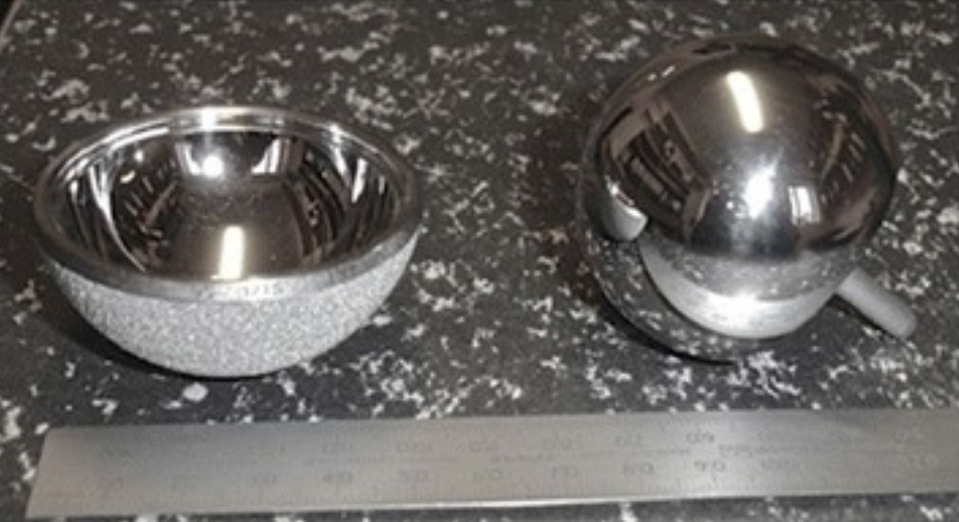
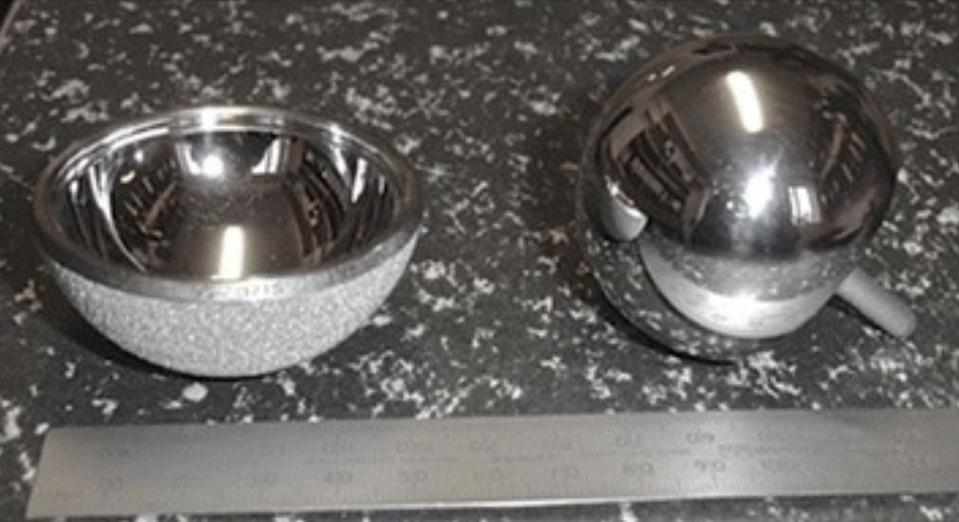
Since the Sulzer recall, several other biotechnology companies have pulled orthopedic products off the shelves. In 2010, ten years after the Sulzer hips were recalled, DePuy Orthopaedics issued a recall of its metal on metal ASR 300 Acetabular Cup System, a part of their total hip replacement apparatus (Figure 2) (Fernández-Valencia et al. 2014; “Class 2 Device Recall DEPUY ASR 300 ACETABULAR CUP SYSTEM” 2011; Wienroth, McCormack, and Joyce 2014). These systems were recalled due to higher-than-normal failure rates, potentially due to design issues causing the deposition of metal debris into surrounding tissues. Another decade later, between 2021 and 2022, Exactech, a medical technology company that develops joint replacement devices and surgical instruments, recalled knee, hip, and shoulder replacement products packaged after 2004, regardless of label or shelf life. This was due to defective packaging which led to oxidation of the plastic component in over 80% of devices causing early and excessive wear and resulting device failure. Like Sulzer, DePuy and Exactech faced significant clinical and legal campaigns and both companies issued international FDA-classified Class II recalls. Similar to the mitigation efforts of the Sulzer recall, Exactech instructed health care providers to refrain from implanting recalled devices, monitor implanted recalled devices, discuss revision surgery in symptomatic patients, and avoid removing recalled devices from asymptomatic patients (“Risks with Exactech Joint Replacement Devices with Defective Packaging - FDA Safety Communication” 2023). These notifications became increasingly robust as each subsequent recall was able to utilize more advanced data tracking systems, allowing for more efficient patient identification and notification.
Discussion
The 2000 Sulzer recall was a landmark event in orthopedic history, highlighting key lessons in crisis management, quality control, and patient safety. The recall exposed vulnerabilities in manufacturing oversight and post-market surveillance. By examining Sulzer’s response and how it compares to other major recalls, valuable lessons emerge for medical professionals, clinical administrators, and device manufacturers.
In the wake of the recall, Sulzer acted swiftly. The company proactively engaged NAMSA to investigate implant failures and voluntarily recalled 25,000 affected components. Sulzer interacted with hospitals and surgeons directly to ensure rapid awareness of and alignment with FDA guidelines. This approach helped mitigate further harm and demonstrated a level of corporate responsibility absent in other similar recalls which responded to external regulatory pressures. Sulzer’s response was considered to be significantly more proactive than DePuy’s, where alleged delayed action contributed to prolonged patient harm. Unlike Sulzer’s voluntary recall, DePuy continued to market its device despite growing evidence of high failure rates reported to them by the Australian National Joint Replacement Registry in 2007 and in 2008 and by the FDA in 2008 (“Thousands of Patients Left in Agony by Faulty Hip Replacements” 2010; Singer 2010). In 2009, the National Joint Registry of England and Wales reported high revision rates and the ASR was withdrawn in Australia and New Zealand. The biotech firm continued to deny design flaws and displaced responsibility, even advising surgeons to alter their implantation technique, until finally issuing a recall years later in 2010 (Wienroth, McCormack, and Joyce 2014).
In contrast, Sulzer enacted a rapid recall. However, it faced challenges in patient identification due to limited tracking infrastructure. While Exactech benefited from EMR and automated outreach systems, Sulzer relied on paper charts. Surgeons, like Dr. Jan Albert Koenig, were forced to comb through hundreds of physical notes in order to identify and notify affected patients.
The Sulzer recall provided several key takeaways for young attendings and trainees. It underscored the importance of thorough surgical documentation and vigilance in recognizing post-operative complications related to implant failures. Burgeoning orthopedic surgeons must familiarize themselves with recall procedures, surgical techniques for implant retrieval and revision, and warning signs of implant failure. The Sulzer recall highlighted the need for continuous education in implant safety and a proactive approach in post-operative monitoring. Awareness of manufacturer safety alerts and regulatory databases, such as the FDA’s MedWatch program, will enhance decision-making especially for newly minted orthopedic surgeons. Furthermore, trainees and attending physicians alike should advocate for institutional policies that streamline recall management and adopt technologies that may optimize patient care during similar events.
In addition to clinicians, corporations also stand to learn from the successes and failures of the Sulzer recall. The phenomenon made clear the importance of rigorous quality control, particularly when modifying manufacturing processes. Comprehensive validation testing, robust tracking systems leveraging EMRs and AI monitoring, and proactive crisis management strategies should be established as industry standards. Companies must also establish structured recall response plans that prioritize early and clear patient communication and comprehensive support programs to minimize harm and uphold public trust. Lessons from past recalls emphasize the need for transparency, swift action, and robust long-term solutions that prioritize patient well-being over corporate interests.
Conclusion
25 years later the Sulzer recall remains a critical case study in medical device safety, demonstrating both effective crisis management strategies and areas needing improvement. While Sulzer’s prompt recall and transparent communication were commendable, shortcomings in patient tracking, quality assurance, and post-recall patient support highlight the necessity for industry-wide enhancements. Comparing Sulzer’s response to other major recalls underscores the ongoing need for stringent regulatory oversight, technological advancements in patient tracking, and proactive corporate responsibility. By learning from such events, medical professionals and manufacturers can refine recall strategies, aligning their philosophies to ultimately advance patient safety and accountability in orthopedic care.
Acknowledgements
We sincerely thank Mr. David Floyd for his time, candor, and willingness to speak with us, providing invaluable insights that were essential to the development of this manuscript.
We would also like to acknowledge all those at Sulzer affected by the recall, who diligently worked behind the scenes to provide necessary equipment and information for their clinical counterparts during this trying time.
Finally, we would also like to acknowledge all of the arthroplasty surgeons and, most importantly, their patients who were permanently touched by these events.