
I’m an orthopedic-oncologist by training and my practice is a mixture of orthopedic-oncology as well as adult reconstruction, help co-direct our adult reconstruction fellowship and help run our orthopedic Northeast Research Institute. Our practice clinically mostly is half oncology, half joints, heavy on the anterior hip side and heavy on the sort of difficult revision side.
I think just naturally in the oncology world, things just start to kind of come your way. And once you get outside of the standard revisions, which I think we’ll see with the anatomic fluted stems is where they started to become relevant. Standard knee revisions with type III defects, short, cemented stem and cones, I think a lot of adult reconstruction surgeons are comfortable with that. But once you start getting into bigger defects and more challenging bone loss, less and less people want to do that. We’re here to help and take care of those problems.
I think there’s always obviously a lot of overlap with oncology and the adult reconstruction world. And I think two major areas, first is these distal femoral replacements and mega prostheses. In general, we’ve struggled with fixation over the years. Cemented stems, as we’ve known, have generally relatively poor survival around 70% of 10 years (Haijie et al. 2018; Piakong et al. 2020).
And as we look at other studies as well, some large meta-analyses, all types of fixation, whether it’s cemented, press fit, Compress, all have relatively poor longevity, around 70% of 10 years.Ffixation has always been a challenge in the distal femoral replacement world. And of course, Henderson classified the failure of endoprosthesis and aseptic loosening is the second most common cause around 20% after infection (Henderson et al. 2011). We’ve always struggled with fixation in the long-term for distal femoral replacements.
In addition, just standard revision needs are also a challenge. They’re not standard revision needs, but revision needs beyond the standard revision needs. Our type IV defects that Scuderi had classified for us and showing once the cortical bone and diaphysis starts to get thin and change, fixation becomes very difficult (Scuderi and Weinberg 2022). If you have an eggshell, very thin remaining distal femur and metaphysis, it’s hard to expect a thin cemented tube to get good fixation in there. And even impaction bone grafting has its limitations.
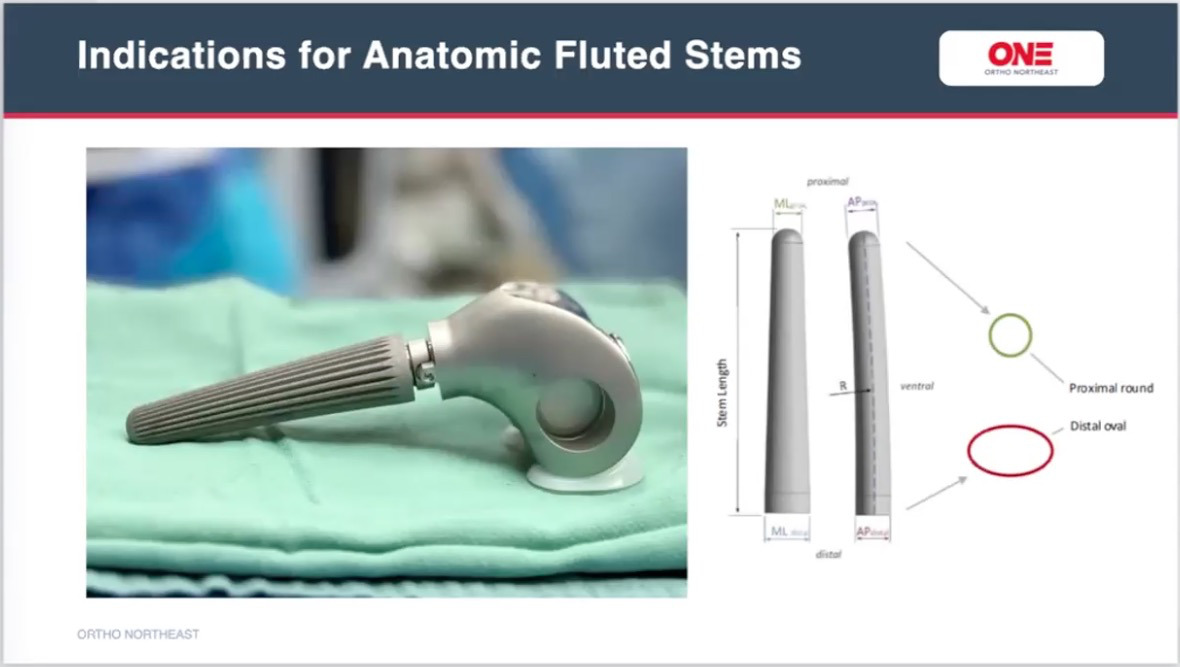
When we start to get into these areas where we have severe bone loss of the distal femoral replacement or severe bone loss of the distal femur, as well as scenarios where we need distal femoral replacement, fixation has been a challenge for us. When you look at anatomic fluted stems, and this is the OptiStem from LINK, and it’s an interesting concept because it’s no longer a cylindrical, bowed stem that’s cemented. It’s a Wagner style stem that is anatomically shaped the distal femur (Figure 1).
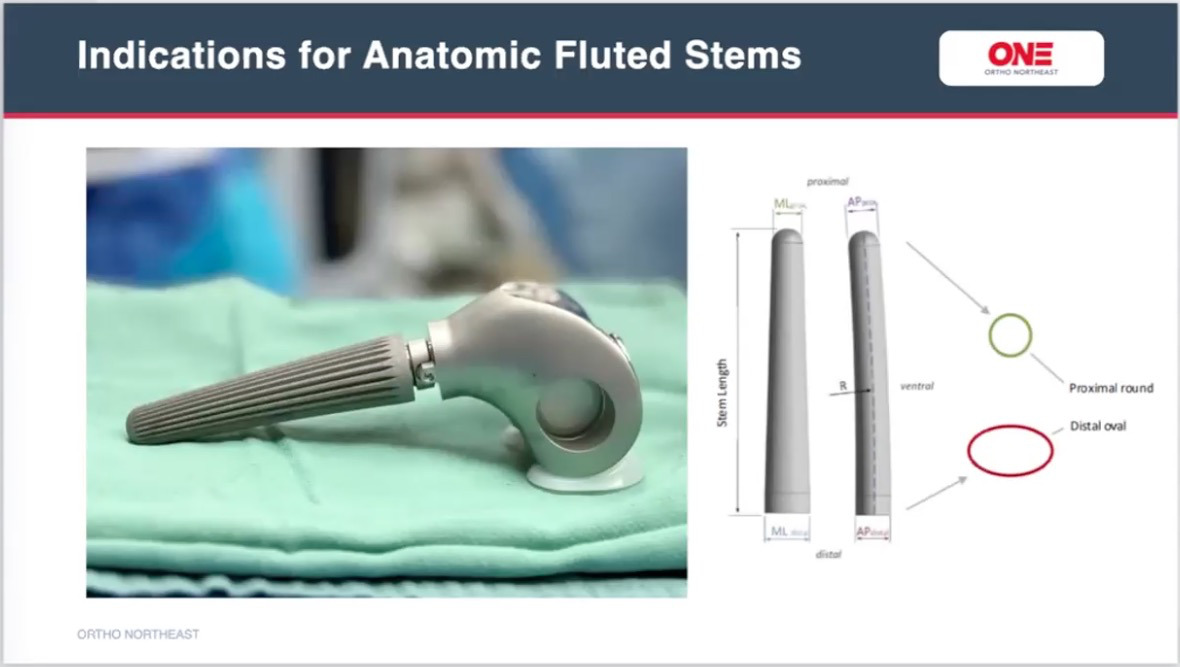
It’s elliptical, it’s wider distally, more narrow approximately, allowing it to sort of optimize the fixation of the distal femur. Somewhat similar to revision hip stems with their cone conical stems and Wagner style stems that we use all the time in revision hip, which has sort of changed the game. Well, this is now a similar concept, but more specific to the distal femur.
This is really a game changer. For someone in the orthopedic oncology world who we’ve been stuck with some of the same fixation methods for decades and very minimal improvement, this may represent a huge change in fixation options for us for distal femoral replacements and severe bone loss of the distal femur.
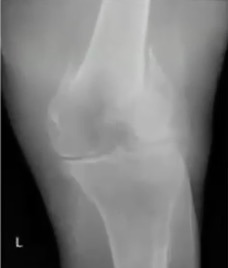
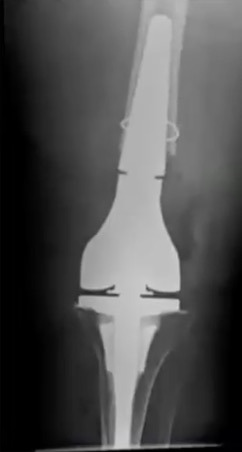
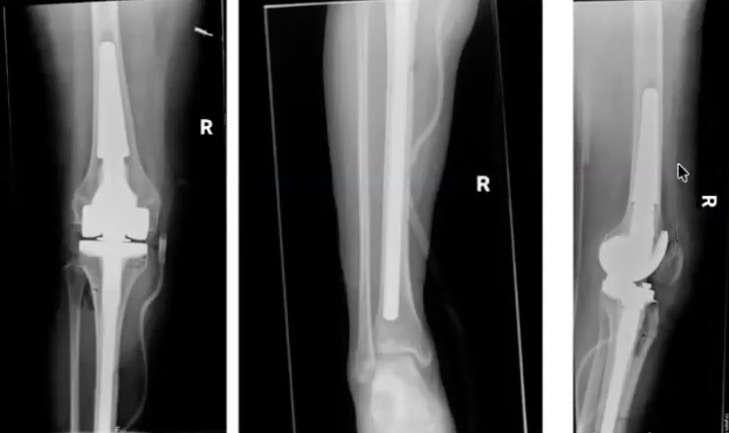
One of our most common indications that we utilize at our institution would be distal femur fractures. Patients who come in with very poor bone quality and our trauma service feels it’s not optimal to fix and they would prefer to replace. We’ve been using the anatomic fluted stem, the OptiStem now since November of '24. And I think we’ve done around 45 so far in the last nearly two years. Figures 2,3 show an example of this in an 82 year old female.
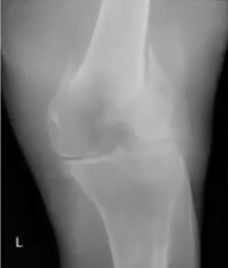
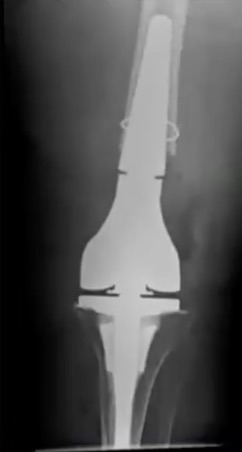
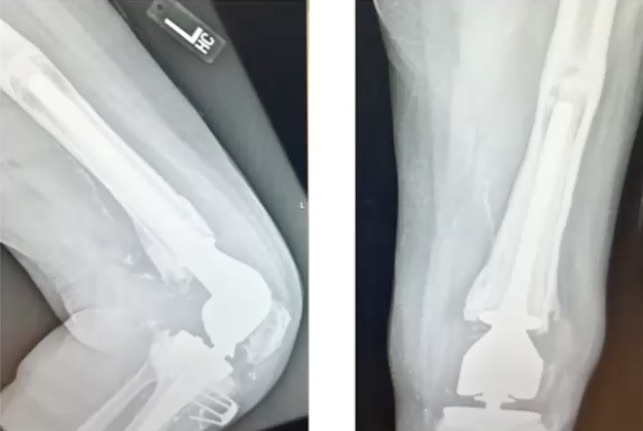
Fractures are common. What’s nice in this setting is the patients are able to angulate right away. You’re up and walking right away. If you have an elderly patient and you want to keep moving or has health issues, you certainly can bear away right away with these implants. There’s no cement, so it’s quick. Our trauma guys love it because they’re not sitting there waiting for cement to fix. You just press fit it and move on.Standard tibial fixation you’d want to do normally. We often utilize short, cemented stem and cone. Any sort of hinge style knee arthroplasty that you’d want to do tibial fixation with. For us, it’s often a comb with a short cement stem. You could also do a hybrid technique with a long stem and cement up top. There’s different fixation methods for that.Another common example for us is periprosthetic femoral fractures (Figure 4,5) Again, when the trauma service feels like fixation is difficult, we’ll often utilize anatomic fluted stems. And you can see on the x-rays, these are just post-operative x-rays, but you can see how well the implant is, the morphology is fitting the distal femur. And you have a Wagner-style stem, which we know has great track record, combined with the appropriate morphology of the distal femur.
Hinges tend to fail because of rotational failure. If you have a cemented cylindrical stem in the femur, all that torsional force, eventually it spins out and the cement gets loose. And so this provides rotational stability by the shape of the implant combined with Wagner-style implant in the fluted stem getting you really good fixation.
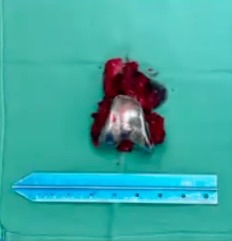
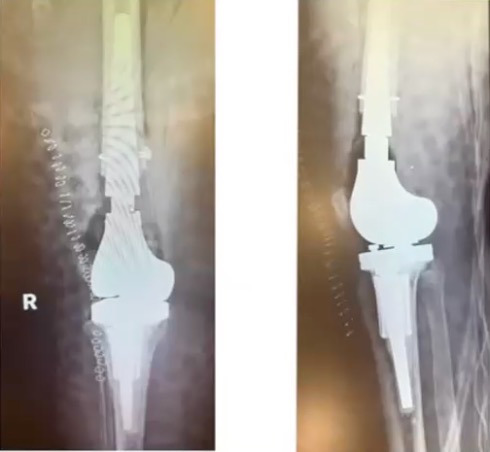
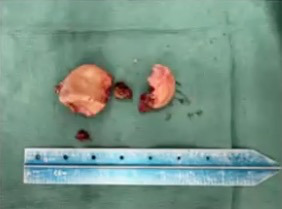
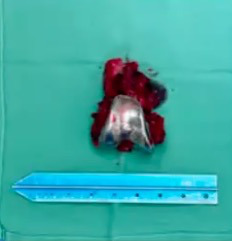
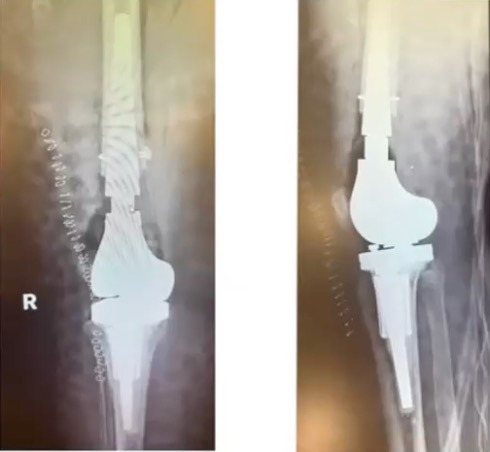
This is a 33-year-old male who presented to our emergency room. Had a pathologic fracture of the distal femur, intra-articular. You can see on the picture on the bottom left is the comminuted articular fragment. It was not amenable to a curettage. And so we ultimately did a wide excision and distal femoral replacement.
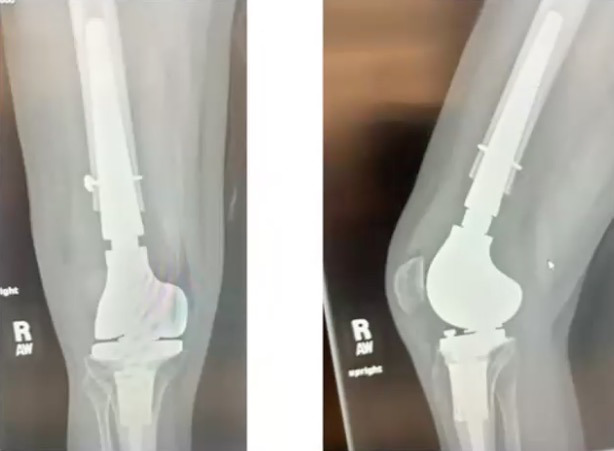
This is a great example. We have a young patient. If we would have done a cemented stem, it probably would have gotten loose over the years. Press fit stems or Compress all have similar long-term survivability. You’re looking at a patient who may require many revisions going forward in life. This is certainly a very reasonable option to try and optimize fixation for him (Figures 6,7).
So for us, the distal femoral replacement is the game-changer. In addition, the stems can be shorter. This is a 130-millimeter stem. It comes in three sizes, 100, 130, and 160. And we’ve been using a lot of 100s and 130s. We’re still experimenting with what the best length is. But shorter stems are normal. Often people would cement 150-millimeter stems. So we’re able to do shorter constructs to preserve more bone.
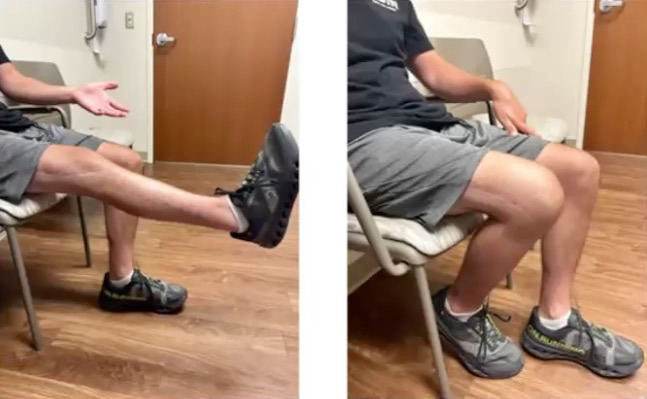
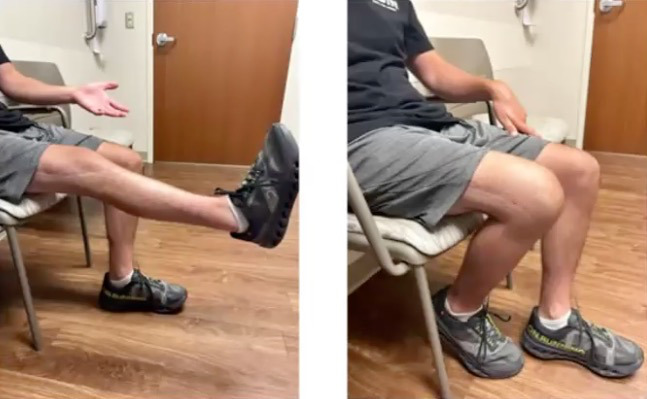
Preserving normal anatomy, optimizing fixation, and it’s press fit. You get biological fixation as well as all the challenges of cement. And here’s this patient. I think he’s about a year and a half out. You can see he’s got good range of motion. We did a lateral approach. He is doing very well (Figure 8).
Here’s another example. This is what I see all the time (Figure 9). I think this is really a concept that people maybe don’t understand or maybe don’t see as often. But this is a gentleman who has a history of multiple knee surgeries. Originally, it was a war injury and multiple revision surgeries. And you see, he’s got this cemented, narrow stem in the femur.
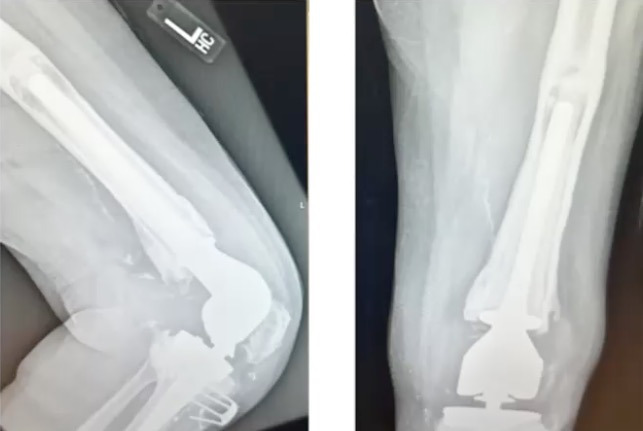
Clearly getting loose, osteolysis. So that stem is just spinning out. Once you get all that cement out, you have thin cortical bone, no cancellous bone. Trying to get fixation to that is difficult. Your options are go up much higher, more proximal cemented stem and that’s probably not going to get great fixation.
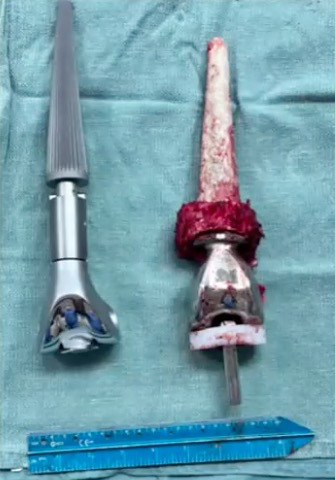
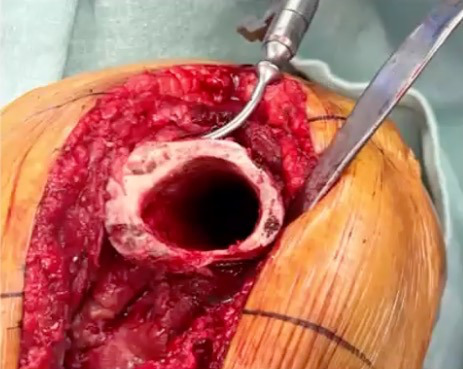
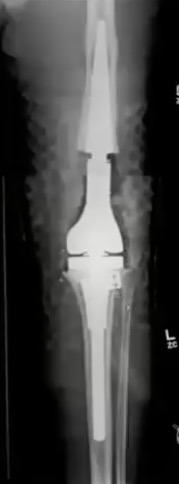
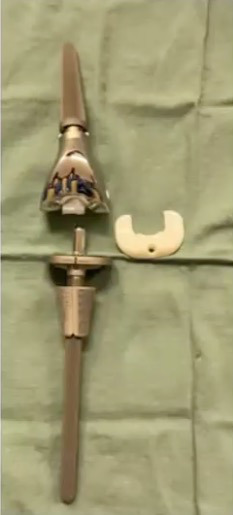
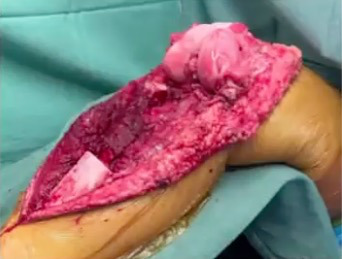
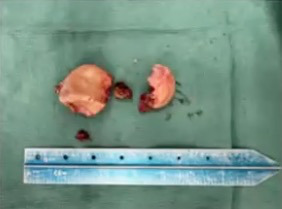
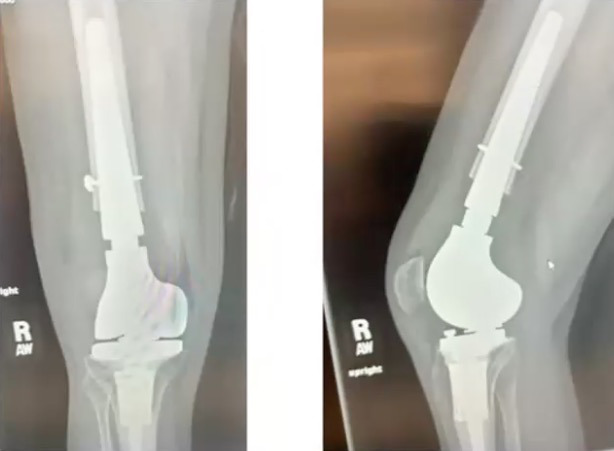
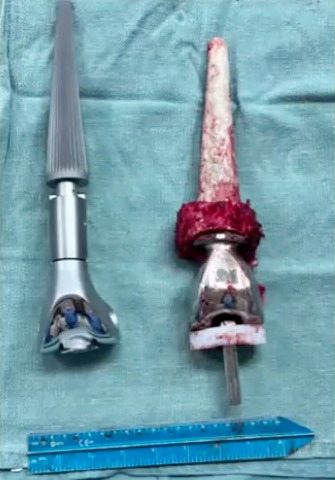
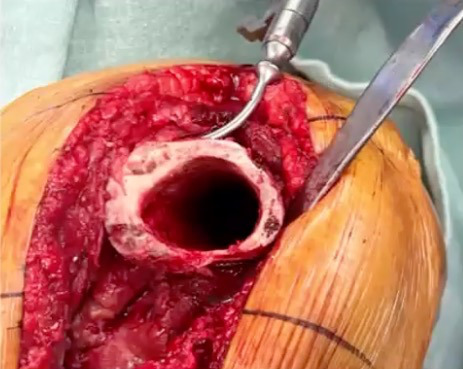
The are the implants for where I think OptiStem really works well. And you can see here, this is the implant that we removed on the right and then the implant we’re going to use to replace it (Figure 10). And you can see here intraoperative photo of the femur (Figure 11). I mean, look, as we know the shape and the morphology of the femur, it’s elliptical. Putting in a cylindrical stem in there is going to get very little contact, rely on cements, or a press fit stem is going to get fixation much more proximally in a short segment in the isthmus. And you can see our postoperative radiograph, the implant is getting much more surface area in contact from the implants. (Figure 12).
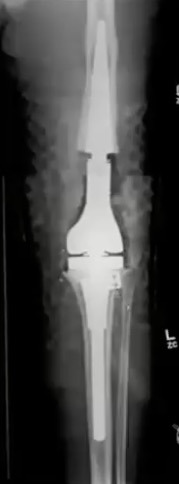
You’re optimizing your fixation in all ways.
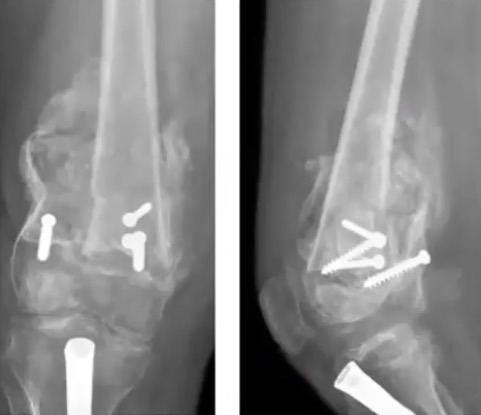
And another example, just to show you the kind of cases that you can consider, this is a unique case (Figure 13) This is a patient who had… He was a 45-year-old male. He had osteosarcoma over 20 years ago, treated with an allograft, or osteoarticular allograft, which of course has failed. The patient also had Down syndrome, so he had a lot of things to overcome. But the bone quality here is poor. You can see in this case, we elected to use the anatomic fluted stem to get fixation within that.
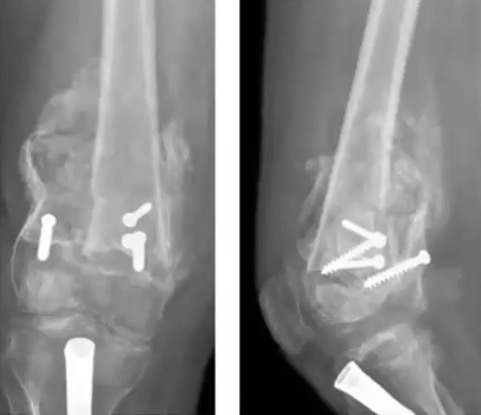
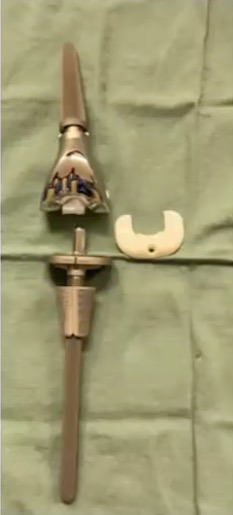
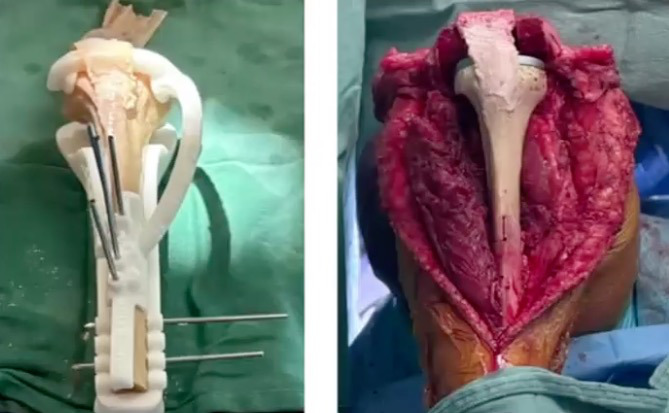
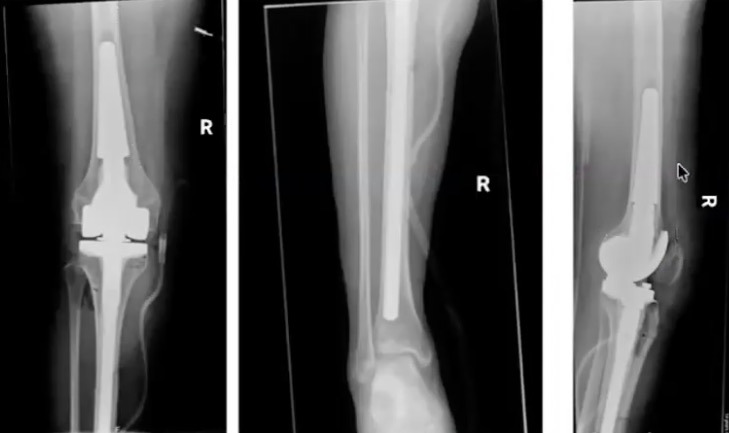
Here is a little more extreme example, but you can see other options. This is an 18-year-old with a proximal tibial osteosarcoma, and we elected to treat this with the allograft prosthetic composite (Figures 14,15).
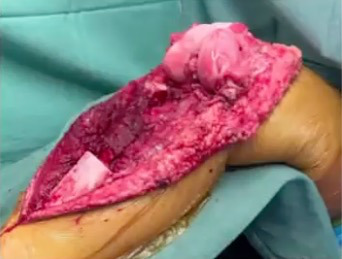
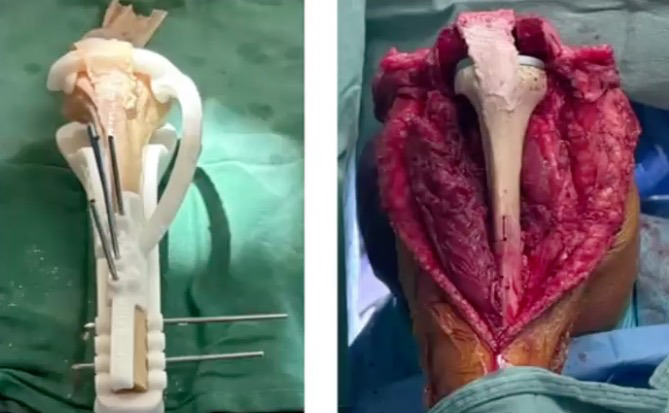
You can see after the tumor has been resected on the left, there’s a large defect, obviously, and using the cadaver bone with custom cutting guides to have a patellar tendon to reconstruct the extensor mechanism. And after it’s been press fit in on the host bone distally, and the cadaver cemented proximally, and then you can see the post-operative radiographs.
In this case, proximal tibia, you really have two options, APC or a proximal tibial replacement, and I think both are reasonable options.
In this case, the allograft is cemented to the stem, and then the distal stem is press fit. In this case, we used a spline cylindrical stem that’s press fit distally. But proximally, we used an OptiStem in a condylar fashion to achieve optimal fixation here, so another unique way of utilizing OptiStem. Otherwise, short cement stem and cone or other options would be reasonable. But you can see how well the implant fits the morphology of the distal femur (Figure 15)
When you start doing enough distal femoral replacements and disaster-type cases, the standard implants just have challenges. This is certainly one of the first unique products I’ve seen that can help maybe overcome that. And we’ve had two years of results, nearly 40-some patients.
We’ve had two reoperations for infection, then we had a tumor recurrence, but no failure of the implant itself. It’s showing we’re getting good fixation. It’s an exciting option for us. We recognize that this is our early experience and longer-term follow-up is still needed.